
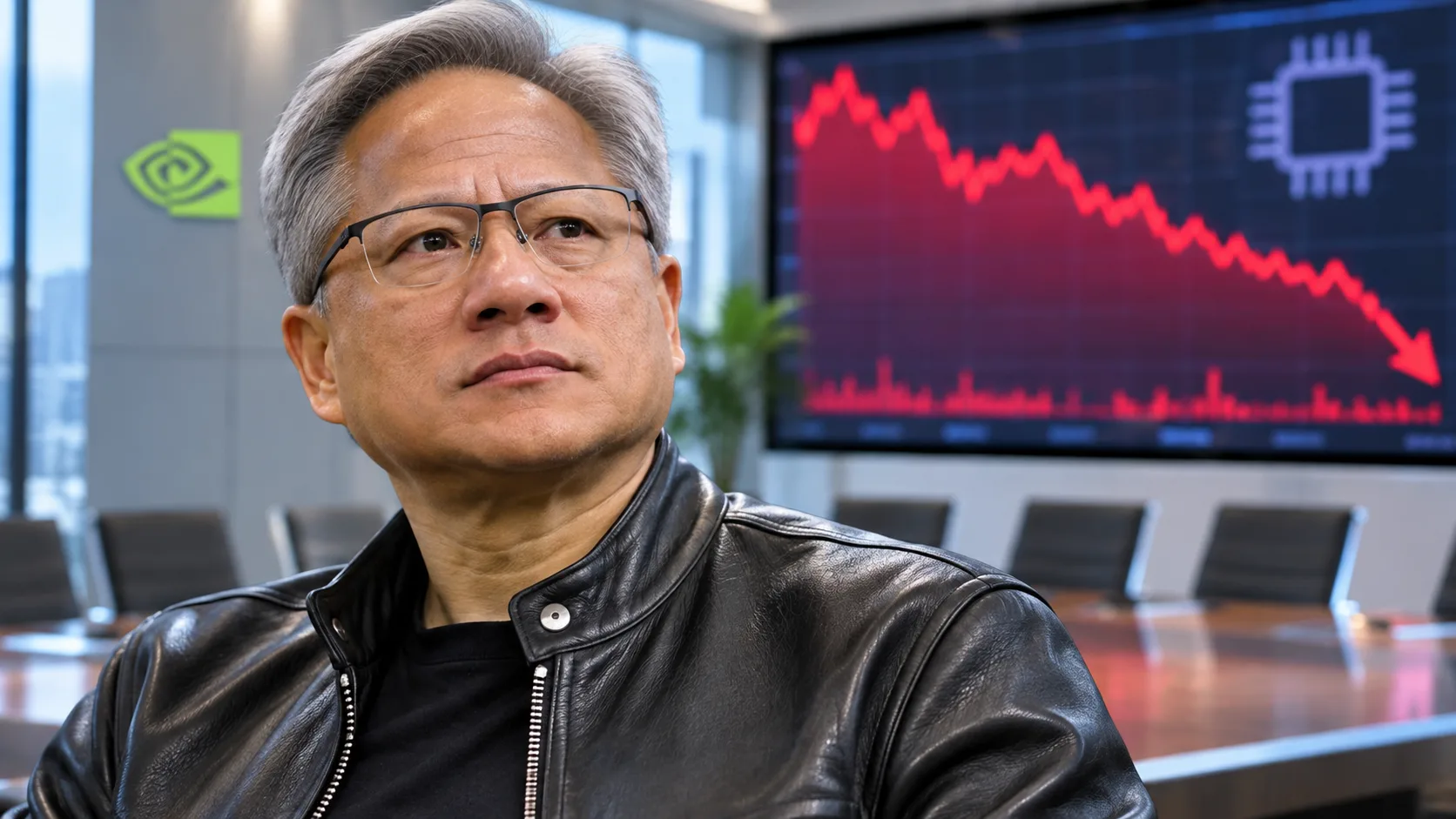
Nvidia shares plunged Monday after CEO Jensen Huang admitted to an extramarital affair amid allegations that a woman with whom he had a relationship was working for Chinese intelligence. The company’s board has launched an independent investigation, raising serious questions about national security, corporate governance, and Huang’s future at the world’s leading AI chipmaker.
Shares of Nvidia fell as much as approximately 7.5% shortly after Monday’s opening bell, temporarily wiping roughly $335 billion from the company’s market value. The stock subsequently recovered some of its losses as investors assessed the potential consequences of the controversy.
The developments have placed one of the technology industry’s most influential executives under intense scrutiny at a time when Nvidia is central to the global artificial intelligence boom.
Nvidia CEO Admits Affair as Board Launches Investigation
On Sunday, November 8, Nvidia’s board announced that it was opening an independent investigation following reports that Huang had been targeted by a foreign intelligence operation.
The announcement followed reporting that Huang had developed an intimate relationship with Alice Huang, a Chinese businesswoman and former executive at Singapore-based Megaspeed International. According to The New York Times, U.S. intelligence officials believe Alice Huang was recruited by China’s Ministry of State Security to gather information about the Nvidia chief executive.
In a message to employees on Sunday, Jensen Huang acknowledged being unfaithful to his wife and apologized to his family, colleagues, Nvidia’s board, and shareholders. He also acknowledged falling short of his responsibilities to Nvidia and pledged to cooperate with the investigation.
The company’s board said an independent committee, assisted by outside legal counsel, would review the allegations. In its official statement, Nvidia emphasized that it currently has no reason to believe company secrets or national security were compromised. The board also expressed continued confidence in Huang and his leadership team.
U.S. Intelligence Reportedly Warned About the Relationship
The controversy has become more serious following reports that U.S. intelligence officials had raised concerns about Alice Huang well before Nvidia publicly announced its investigation.
According to The New York Times, U.S. intelligence surveillance indicated that Alice Huang was providing information to Beijing. President Donald Trump was reportedly briefed roughly a year ago about intelligence concerns involving the woman.
The newspaper also reported that Secretary of State Marco Rubio oversaw preparation of a classified intelligence memorandum earlier this year describing allegations that China’s Ministry of State Security had recruited Alice Huang to target Jensen Huang.
Those reports raise questions about what U.S. officials knew, when Nvidia’s leadership became aware of the allegations, and whether appropriate precautions were taken. China has strongly denied the espionage allegations, describing the claims as unsubstantiated and characterizing them as an attempt to smear China.
There has been no public finding that Jensen Huang knowingly cooperated with Chinese intelligence or disclosed confidential Nvidia information.
Did Huang Mislead Nvidia’s Board and Investors?
For shareholders, one of the most consequential questions concerns what Huang disclosed about his relationship and when. Before publicly acknowledging an affair, Nvidia had characterized Huang’s interactions with Alice Huang as ordinary business contacts.
His subsequent admission raises questions about whether those earlier descriptions provided directors and investors with a complete understanding of the situation. The independent investigation may need to establish several important facts:
- When did the personal relationship begin, and when did Nvidia’s board become aware of it?
- Did Huang know that U.S. intelligence officials suspected Alice Huang of working for Beijing?
- Were potential conflicts of interest involving Megaspeed properly disclosed?
- Did the relationship influence any Nvidia business decisions or public policy positions?
- Did company executives make any statements that were materially inaccurate or incomplete?
These questions carry substantial implications for Nvidia’s corporate governance. Public company executives have obligations to act in the company’s interests and disclose certain material conflicts and risks.
A personal relationship does not automatically constitute a securities-law violation, even when it creates an appearance of impropriety. However, evidence that an executive knowingly concealed a material conflict, misled directors, or made materially misleading statements to investors could create significant legal and regulatory consequences.
There is currently no public finding that Huang intentionally misled Nvidia’s board or shareholders. The investigation’s importance lies in determining whether Nvidia’s leadership properly identified, disclosed, and managed any risks arising from the relationship.
Why Megaspeed Is Central to the Investigation
Alice Huang’s reported connection to Megaspeed adds a potentially significant business dimension to the allegations. Megaspeed is a Singapore-based data center company that has purchased large quantities of Nvidia’s advanced AI processors.
The company’s business has attracted scrutiny from U.S. authorities over concerns that advanced semiconductors could have reached China despite American export restrictions. Those restrictions are designed to limit China’s access to certain high-performance chips that could support military, intelligence, and advanced AI development.
Huang has been a prominent advocate for allowing Nvidia to sell more advanced products to Chinese customers, arguing that restrictions could weaken American companies’ competitiveness. His policy positions are commercially significant because China represents an important potential market for Nvidia.
Investigators may examine whether Huang’s relationship with Alice Huang created a conflict involving Megaspeed or influenced his approach to U.S. export controls. No public evidence establishes that Huang changed Nvidia’s business decisions or export-control advocacy at the direction of Alice Huang or Chinese intelligence.
Trump Defends Huang as Congress Demands Answers
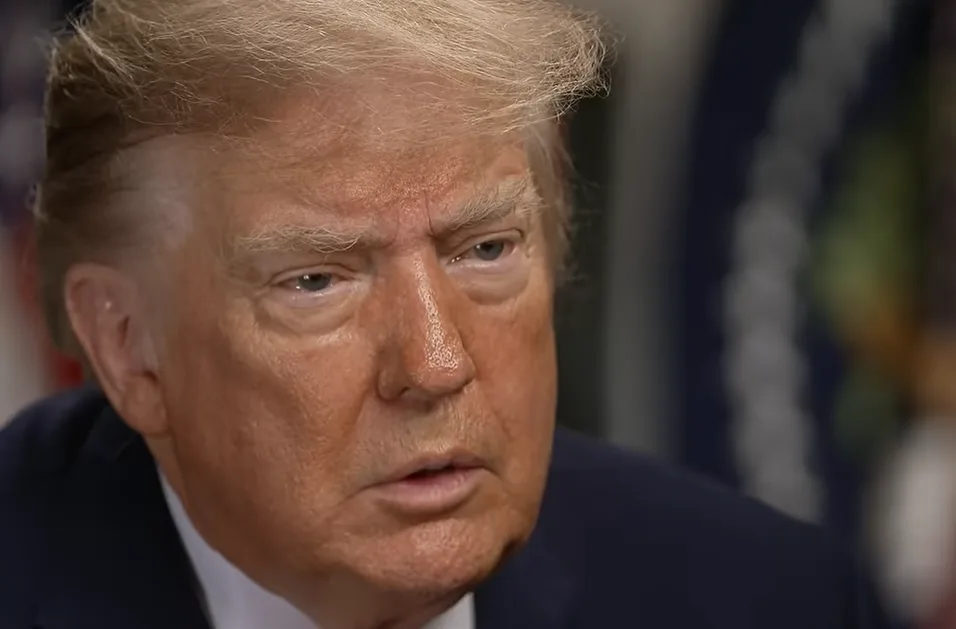
President Donald Trump publicly defended the Nvidia chief executive following the revelations. Speaking Sunday night, Trump described Huang as an honorable person and praised his contributions to American technology leadership. Trump also indicated that he believed Huang should remain Nvidia’s CEO.
The president’s support comes as congressional Republicans are preparing to examine the matter more closely. Three Republican House committee chairmen, Brian Mast, John Moolenaar, and Rick Crawford, have requested that Huang participate in a closed-door briefing on November 18.
The lawmakers want information about Huang’s interactions with Alice Huang and Nvidia’s procedures for protecting sensitive information against foreign intelligence threats. Their request was sent before Huang’s public admission.
The congressional inquiry could expand the controversy beyond Nvidia’s internal governance practices and into U.S. national security policy. Depending on what lawmakers uncover, the investigation could prompt additional questions about American semiconductor exports, relationships with overseas customers, and the security practices of major technology companies.
Why Nvidia Investors Are Concerned
Hundreds of Billions in Market Value at Risk
Nvidia shares briefly fell nearly 7.5% during Monday morning’s trading, taking the stock to approximately $172.75 compared with Friday’s closing price of $186.64. At that level, the selloff represented an approximately $335 billion reduction in Nvidia’s market capitalization.
The intraday decline illustrates how quickly uncertainty surrounding Nvidia’s leadership can affect shareholder wealth. Investors were also weighing broader concerns about AI stocks and new competitive products from Alphabet, making it difficult to attribute the entire stock decline to the Huang controversy.
Huang’s Leadership Is a Major Part of Nvidia’s Value
Huang co-founded Nvidia in 1993 and has led the company through its transformation from a graphics processor manufacturer into the dominant supplier of advanced AI computing chips. His influence extends beyond product development.
Huang plays an unusually important role in Nvidia’s relationships with major technology customers, international governments, chip manufacturers, and the broader AI industry. That makes potential disruption to his leadership particularly significant.
Technology analyst Dan Ives warned Monday that the investigation could create prolonged uncertainty for Nvidia shares, with investors increasingly focused on whether Huang will remain CEO. A departure by Huang could force Nvidia’s board to address succession planning at a critical point in the company’s growth.
For now, Nvidia’s directors have expressed confidence in Huang, and the company has indicated that he intends to continue leading its operations.
The Investigation Could Complicate Nvidia’s China Business
The allegations also arrive during a sensitive period for U.S.-China technology relations. Nvidia has sought to maintain access to Chinese customers while complying with restrictions on advanced semiconductor exports.
Further scrutiny of its overseas customer relationships could complicate those efforts. If investigators uncover weaknesses in Nvidia’s safeguards or evidence of improper technology transfers, the company could face additional regulatory attention.
However, the investigation has not established that restricted technology was transferred because of Huang’s personal relationship.
Nvidia’s Business Remains Strong, but Leadership Risk Has Increased
The controversy has not established a problem with Nvidia’s products, customer demand, or underlying technology. AI infrastructure spending remains a major source of demand for advanced computing processors, and Nvidia continues to occupy a central position in that market.
That distinction matters when evaluating the stock. Investors now face two separate considerations: the company’s operating performance and the possibility that the investigation could affect leadership stability, regulatory oversight, or investor confidence.
If the board concludes that no sensitive information was compromised, no business decisions were improperly influenced, and appropriate disclosures were made, the controversy could become more manageable. Evidence of concealed material risks, misleading statements, or improper influence would create a substantially more serious situation.
The board’s findings will help determine which outcome is more likely.
What Happens Next?
Several developments will be important for Nvidia shareholders in the coming days and weeks.
The board’s independent investigation: Investors will be watching for findings about the relationship, potential conflicts of interest, and whether sensitive corporate information was compromised.
Congressional scrutiny: Lawmakers have requested a briefing for November 18, with Huang asked to accept that date or propose an alternative by November 11.
Huang’s future as CEO: Any indication that the board is reconsidering its confidence in Huang could have significant implications for Nvidia’s valuation.
Export-control scrutiny: Investigators and regulators may further examine Megaspeed’s purchases and whether existing safeguards adequately protect restricted American technology.
Nvidia’s upcoming financial results: The company’s next earnings report will give investors another opportunity to assess whether the controversy has affected its commercial operations or outlook.
The Bigger Question for Shareholders
Nvidia’s stock selloff reflects how quickly a controversy involving a chief executive can become a major financial event. Huang has acknowledged an extramarital affair, and the company’s board has launched an independent investigation into allegations that he was targeted by a foreign intelligence operation.
What remains unanswered is whether Nvidia’s directors received a complete account of the relationship, whether any corporate decisions were affected, and whether shareholders were adequately informed about material risks.
There is no established evidence that Huang knowingly assisted Chinese intelligence or intentionally deceived investors. But for a company worth trillions of dollars and occupying a critical position in America’s AI industry, those unanswered questions carry real consequences.
The central issue for Nvidia shareholders is whether Jensen Huang’s personal conduct compromised his responsibilities to the company, its board, or its investors.
The independent investigation may determine whether Monday’s selloff represents a temporary crisis of confidence or the beginning of a much larger corporate governance problem.
About Author