
After a brutal market selloff and a dramatic rebound, Americans approaching retirement face some important decisions about their savings, investments and future income.
Wall Street just reminded investors how quickly fortunes can change. Stocks plunged following the midterm elections, then staged a powerful comeback. For Americans over 50, the sudden swings raise an uncomfortable question: Is your retirement portfolio prepared for what comes next?
The answer could depend on more than how much money you’ve saved.
With interest rates elevated, a new Social Security increase approaching and uncertainty surrounding some of the market’s biggest technology companies, the decisions investors make before the end of 2026 could affect their financial security for years.
The Stock Market Just Sent a Warning
The past week has been anything but ordinary on Wall Street.
Following the November 3 midterm elections, stocks initially rallied as investors reacted to the results. But the celebration was short-lived.
On November 5, the S&P 500 plunged 4.4%, while the technology-heavy Nasdaq Composite dropped approximately 5.5%. The selloff erased the initial post-election gains and renewed concerns about valuations, artificial intelligence spending and the enormous investments being made in data centers.
Then came another reversal.
On Monday, November 9, the Dow Jones Industrial Average surged more than 1,100 points. The S&P 500 gained 2.3%, and the Nasdaq climbed 2.7%, marking Wall Street’s strongest session since April.
Falling oil prices helped lift sentiment, while investors reassessed the economic and political outlook.
For investors with decades until retirement, these sharp moves may eventually become little more than another chapter in market history.
For those approaching retirement, however, the consequences can be far more immediate.
A portfolio that looks comfortably funded during a bull market can suddenly appear much less secure when stocks decline. And the closer an investor gets to relying on that money, the more important those fluctuations become.
Why Turning 50 Changes the Retirement Equation
Age 50 is an important turning point in retirement planning.
Many Americans enter their 50s with their highest earning years ahead of them, but also with competing financial priorities. Mortgages, college expenses, aging parents and everyday living costs can all compete with retirement contributions.
At the same time, the window for recovering from financial mistakes begins to narrow.
Consider an investor who is 52 and expects to retire at 67. That person has 15 years to build additional savings, adjust their investments and prepare for eventual withdrawals.
Someone who is 62 and expects to retire at 65 has just three years.
Both investors may own similar stocks and retirement accounts. But their ability to withstand a prolonged market decline could be dramatically different.
This is why the same investment strategy can produce very different outcomes depending on an investor’s age, income needs and retirement timeline.
A $1 Million Retirement Account Can Lose $200,000 Quickly
Imagine someone has accumulated $1 million in retirement savings.
A 20% market decline would reduce that portfolio to $800,000, assuming the entire portfolio experiences the loss.
Recovering the original $1 million would then require a 25% gain.
Now consider someone who has already retired and needs to withdraw $40,000 annually for living expenses.
If the portfolio declines to $800,000 and the retiree withdraws $40,000, the balance falls to $760,000 before any further market movement.
Returning to $1 million would now require a gain of approximately 31.6%.
How a $1 Million Retirement Portfolio Can Change
| Scenario | Portfolio Value |
|---|---|
| Starting retirement savings | $1,000,000 |
| After a 20% market decline | $800,000 |
| After withdrawing $40,000 | $760,000 |
| Gain needed to recover to $1 million | 31.6% |
Illustrative example only. Assumes an immediate market decline followed by a withdrawal, with no dividends, taxes, fees or additional market changes.
This is the danger of what financial planners call sequence-of-returns risk.
When retirees must sell investments during market declines, those withdrawals leave less money invested to benefit from a recovery.
Even if the market eventually rebounds, the retirement portfolio may take considerably longer to recover.
That makes the first several years of retirement particularly important.
The Federal Reserve Has Complicated the Decision
Stock market volatility isn’t the only concern for older investors.
Interest rates have also changed the choices available to people preparing for retirement.
At its October 28 meeting, the Federal Reserve maintained its benchmark interest rate in a range of 3.75% to 4%, citing elevated inflation and continued economic strength.
For savers, relatively high interest rates create an opportunity that was largely absent during much of the previous decade.
Certificates of deposit, Treasury securities and other high-quality fixed-income investments can offer meaningful income without requiring investors to take the same risks associated with stocks.
For example, a $250,000 investment earning an annual 4% yield would generate $10,000 in annual interest before taxes, assuming the yield remained unchanged.
That income could cover a meaningful portion of retirement expenses.
But investors face another decision: how long to lock in available yields.
If the Federal Reserve eventually cuts rates, short-term investments may earn less when they mature.
If rates rise, investors holding longer-term bonds could experience declines in their market value.
The best approach depends on when the money will be needed, the investor’s tolerance for fluctuations and how much income is already guaranteed from other sources.
For people over 50, the opportunity is worth examining as part of a broader retirement strategy.
Social Security’s 2027 Increase Adds Another Piece to the Puzzle
Social Security recipients are also preparing for a significant change.
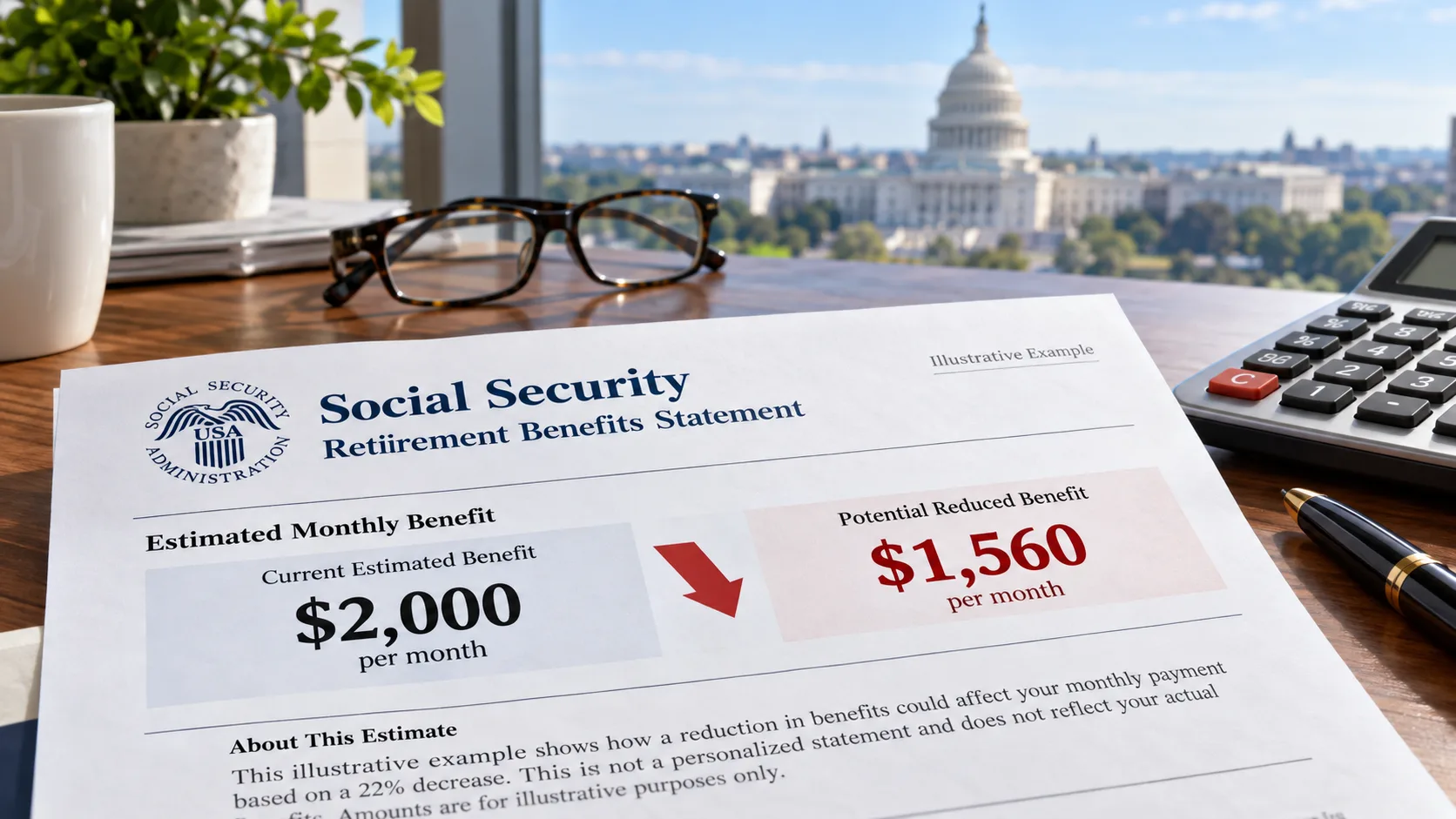
The Social Security Administration has announced a 3.6% cost-of-living adjustment for 2027.
The increase will raise the estimated average monthly benefit for retired workers from $2,095 to $2,170, an additional $75 per month.
Over a full year, that represents approximately $900 in additional benefits for the average recipient.
The increase is welcome news, particularly for retirees facing higher expenses for food, insurance, utilities and healthcare.
However, the amount retirees ultimately have available to spend may be affected by Medicare premiums, taxes and other rising costs.
Higher Social Security benefits can also affect household tax calculations in some circumstances, depending on total income.
For investors still in their 50s or early 60s, Social Security presents an entirely different decision: when to begin collecting benefits.
Claiming as early as age 62 generally results in permanently reduced monthly payments compared with claiming at full retirement age.
Delaying benefits beyond full retirement age can increase monthly payments until age 70.
The appropriate choice depends on health, household finances, marital circumstances, expected longevity and whether an individual can afford to delay receiving income.
With markets experiencing renewed volatility, guaranteed lifetime income may be especially valuable to some retirement households.
Three Retirement Decisions Worth Reviewing Before 2027
Market volatility can create anxiety, but it can also provide an opportunity to review financial decisions that deserve attention regardless of where stocks head next.
1. How Much of Your Retirement Is Exposed to Stocks?
Many investors accumulate substantial stock market exposure through years of contributions to 401(k)s, IRAs and brokerage accounts.
A portfolio that performed exceptionally well during a technology-driven rally may have become more concentrated than its owner intended.
For example, someone holding multiple mutual funds and ETFs may believe their investments are well diversified.
Yet several of those funds might own significant positions in the same handful of large technology companies.
That creates overlapping exposure that can become particularly visible during a market selloff.
Investors approaching retirement may benefit from reviewing their actual exposure to individual companies, industries and asset classes rather than relying on the number of funds they own.
The objective is to ensure the portfolio’s risk matches the amount of time remaining before withdrawals begin.
2. Do You Have Enough Cash for Upcoming Expenses?
One way retirees can reduce the risk of selling stocks during a downturn is by maintaining reserves for near-term spending needs.
Depending on the household’s circumstances, those reserves might include savings accounts, Treasury bills, money market funds or short-term CDs.
For example, a retiree expecting to withdraw $3,000 per month from investments would need $36,000 to cover one year of those planned withdrawals.
Two years would require $72,000.
Keeping that amount entirely in cash is not appropriate for everyone. The amount needed depends on other income, spending flexibility, risk tolerance and the rest of the portfolio.
Excessive cash holdings also carry an inflation risk over long periods.
Still, having a plan for meeting expenses without immediately selling depressed investments can provide valuable flexibility.
3. Could a Tax Decision Save Money Later?
For some Americans, one of the most important retirement planning opportunities has little to do with choosing investments.
It involves determining when retirement savings will be taxed.
Traditional IRA and 401(k) distributions are generally taxable as ordinary income, except for amounts attributable to previously taxed contributions or other applicable exceptions.
Under current law, required minimum distributions generally begin at age 73 for people born before 1960 who have not already reached an earlier applicable RMD age, and at age 75 for people born in 1960 or later.
That creates a potential planning window for people who retire before mandatory withdrawals begin.
During lower-income years, some investors may benefit from converting a portion of traditional retirement savings into a Roth IRA.
The converted amount is generally taxable in the year of conversion. However, qualified Roth IRA withdrawals can be tax-free, and original Roth IRA owners do not face lifetime required minimum distributions.
Conversions can also increase Medicare premiums or create other tax consequences, so calculating the full impact is essential.
For the right household, reviewing these options before year-end could prove more valuable than trying to predict the stock market’s next move.
The Biggest Retirement Mistake May Be Reacting Too Quickly
After a sharp market decline, the temptation to move everything into cash can be powerful.
But selling stocks after prices have already fallen creates another risk: missing the recovery.
Last week’s dramatic selloff and Monday’s rebound demonstrate how quickly market sentiment can reverse.
An investor who sold during Thursday’s decline and remained out of the market on Monday could have missed a substantial recovery.
This is why investment decisions based entirely on daily headlines can be especially damaging.
At the other extreme, investors who assume every market dip will recover quickly may take more risk than their retirement timeline allows.
There is a more useful middle ground.
A retirement portfolio should be designed to withstand a range of outcomes, including a prolonged downturn, a rapid recovery, elevated inflation and changes in interest rates.
Someone who is 55 and expects to work another decade may still need substantial stock exposure to support long-term growth.
Someone who is 68 and already withdrawing money may need a greater emphasis on dependable income and liquidity.
Neither person benefits from making major portfolio changes solely because of a frightening trading session.
What Investors Over 50 Should Watch Next
The next several weeks could provide important clues about the economic environment heading into 2027.
Federal Reserve policy: Investors will be watching whether inflation remains elevated and how policymakers respond. Interest rate decisions affect bond yields, savings income, borrowing costs and stock valuations.
Technology company spending: Large investments in artificial intelligence and data centers remain an important influence on the stock market. Any signs that spending plans are slowing could create additional volatility, particularly in technology-heavy portfolios.
The next inflation reports: Persistent inflation can reduce purchasing power and complicate the Federal Reserve’s ability to lower rates. That matters for both retirement spending and investment returns.
Social Security and Medicare updates: Beneficiaries should review their 2027 Social Security notices and applicable Medicare costs to understand how their actual monthly income may change.
Year-end tax planning: Investors considering Roth conversions, charitable distributions, portfolio rebalancing or capital gains decisions should review the consequences before December 31.
These developments could influence financial markets in different ways, but they share a common theme: retirement investors have important decisions to make regardless of whether stocks move higher or lower.
The Bottom Line for Americans Over 50
Wall Street’s latest swings are a reminder that retirement planning becomes more consequential as investors approach the point when their savings must begin supporting their lifestyle.
For people in their 50s, the focus may be on maximizing remaining savings opportunities, managing concentration risk and balancing growth with financial security.
For those in their 60s, the priority increasingly shifts toward coordinating Social Security, investment withdrawals, taxes and dependable income.
For people already retired, maintaining enough financial flexibility to weather market declines can help protect the savings they spent decades building.
The most important question isn’t whether the market will rise or fall next week. It’s whether your retirement plan can withstand either outcome.
Investors who can answer that question with confidence may be better positioned for whatever Wall Street delivers in 2027.
About Author