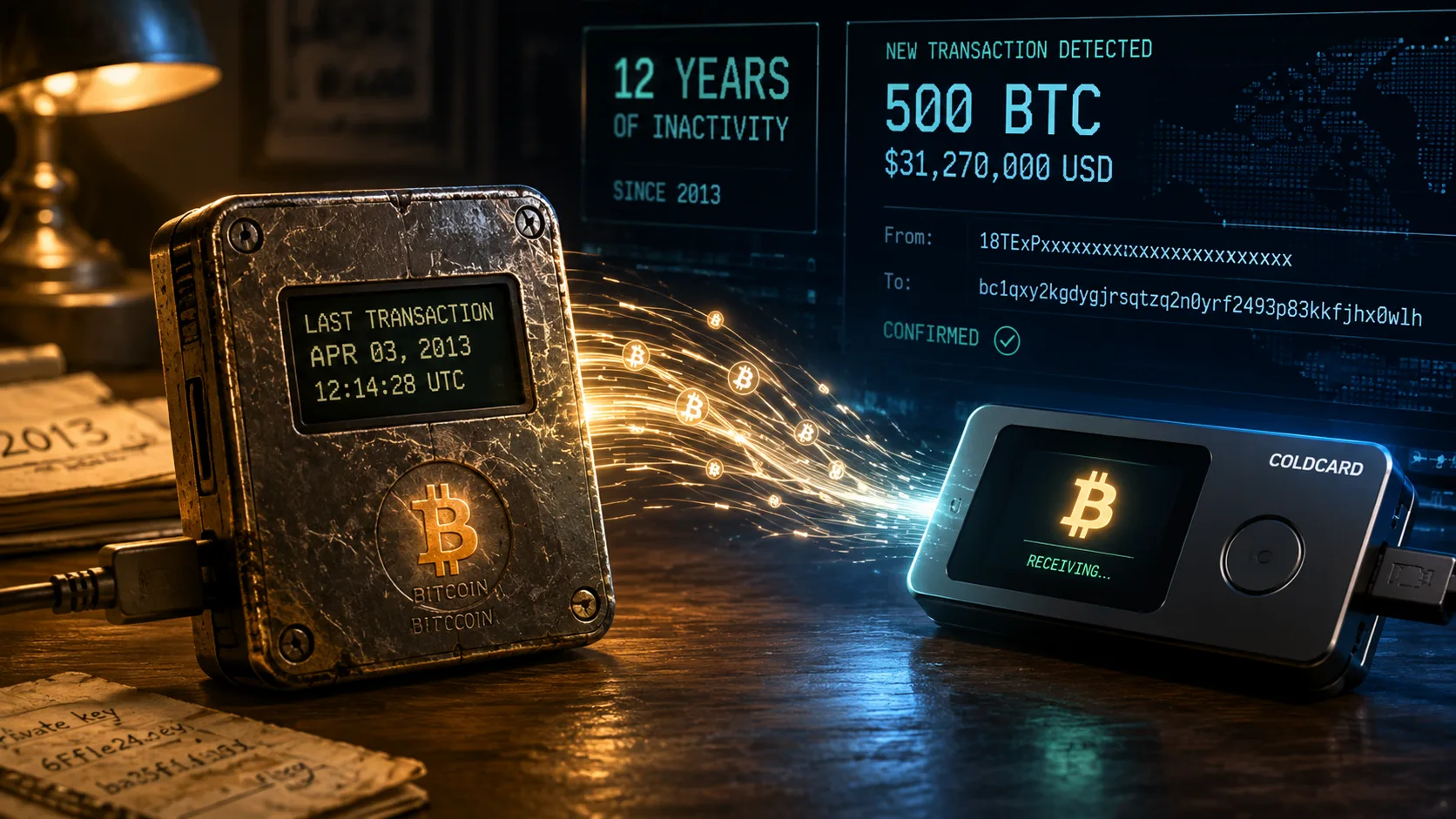
For more than 12 years, one Bitcoin wallet sat untouched as the cryptocurrency surged from around $1,000 per coin to more than $64,000. Then, without warning, it sprang back to life.
The wallet transferred 500 BTC, worth approximately $31.3 million, on Monday, according to blockchain tracking service Whale Alert. When those coins were last moved in 2013, they were worth roughly $500,000.
On its own, the transaction doesn’t prove anything. Bitcoin holders regularly move coins between wallets without selling them.
But the timing has caught the attention of crypto analysts because it comes amid an ongoing security crisis involving one of Bitcoin’s most trusted hardware wallets.
Why Old Bitcoin Wallets Are Suddenly Moving
The transaction occurred just days after the Coldcard hardware wallet hack began making headlines.
Coldcard has long been considered one of the safest Bitcoin-only hardware wallets, but researchers say attackers exploited a vulnerability dating back to March 2021, allowing them to drain wallets created with compromised keys.
According to researchers at Galaxy, the attack has already resulted in an estimated $130 million worth of stolen Bitcoin.
Blockchain analytics firm Lookonchain believes the owner of the 12-year-old wallet may have simply been taking precautionary action.
“Wallet 18TExP, holding 500 BTC ($31.27M), transferred all 500 BTC to a new wallet after over 12 years of inactivity. The owner may have moved the funds to a new wallet due to security concerns following the Coldcard hack.”
If that’s the case, the move may have been less about selling Bitcoin and more about protecting it.
It Wasn’t Just One Wallet
What makes the transaction especially notable is that it wasn’t an isolated event.
On-chain data from CryptoQuant shows a sharp increase in older Bitcoin moving across the network immediately after the Coldcard incident.
Among the biggest shifts:
- 935 BTC that had remained dormant for 10 years or longer moved on August 3, the largest one-day total since March.
- Roughly 6,388 BTC that had been inactive for five to seven years moved on July 31, just after news of the hack spread.
While dormant Bitcoin moves for many reasons, including estate planning, institutional custody changes, and exchange transfers, the concentration of activity immediately following the security breach has raised eyebrows across the crypto community.
Does Moving Bitcoin Mean Investors Are Selling?
Not necessarily.
One of the biggest misconceptions in crypto is that a wallet transfer automatically signals an impending sale.
In reality, Bitcoin holders frequently:
- Upgrade to newer hardware wallets
- Rotate private keys after security concerns
- Consolidate multiple wallets
- Transfer assets into institutional custody
- Move coins to multisignature storage
None of those actions require selling a single Bitcoin.
However, some market observers have also noticed increased Bitcoin deposits flowing onto cryptocurrency exchanges since the Coldcard breach, suggesting at least some investors may be preparing to liquidate positions or reposition assets.
Why This Matters for Bitcoin Investors
The recent wallet activity highlights an often-overlooked reality of cryptocurrency investing: security risks don’t disappear simply because coins have been sitting untouched for years.
When vulnerabilities emerge, even investors who have held Bitcoin for a decade or more may decide it’s worth updating their storage methods rather than taking unnecessary risks.
For long-term holders, the Coldcard incident serves as another reminder that self-custody requires ongoing vigilance, regardless of how long assets have remained safely stored.
The Bigger Picture
The movement of a 12-year-old, $31 million Bitcoin wallet is eye-catching on its own.
What’s more significant is that it appears to be part of a broader wave of long-dormant Bitcoin becoming active in the days following the Coldcard security breach.
Whether these transfers ultimately represent simple wallet upgrades, precautionary security measures, or the beginning of broader selling activity remains to be seen.
For now, blockchain data suggests one thing is clear: some of Bitcoin’s oldest holders are no longer leaving their coins untouched.
About Author