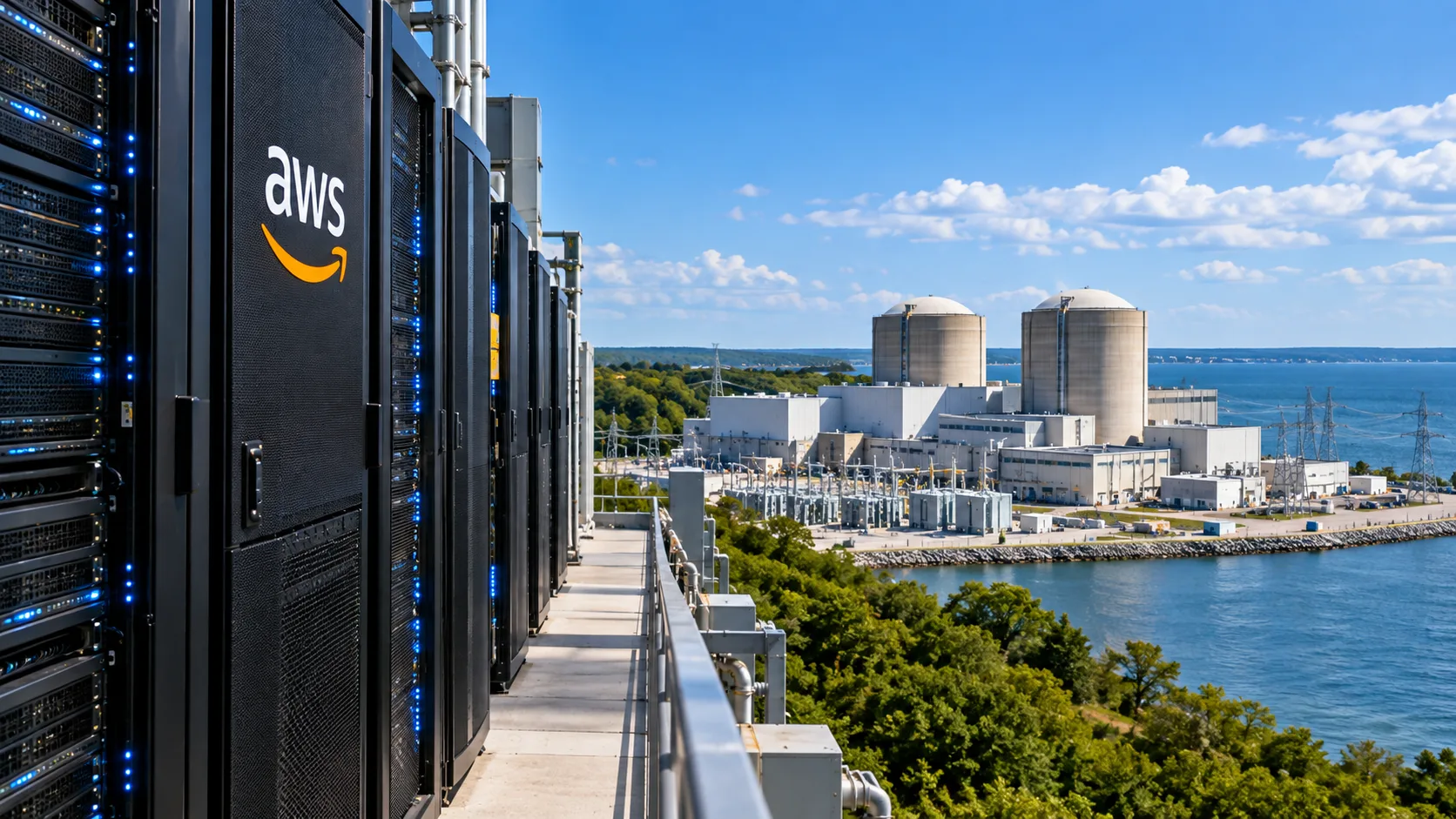
The artificial intelligence race is no longer just about software or semiconductors. It is quickly becoming a fight over electricity, infrastructure, and who pays the bill.
President Donald Trump is bringing leaders from America’s largest technology companies to the White House to formalize a new agreement designed to prevent rising electricity costs from being passed on to American households as AI data center construction accelerates across the country.
Executives from Amazon, Google, Meta, Microsoft, xAI, Oracle, and OpenAI are expected to participate in a March 4 event where companies will sign what the administration calls a “Rate Payer Protection Pledge,” committing to generate or secure their own power supplies for new artificial intelligence data centers.
The initiative reflects growing concern inside Washington that the explosive growth of AI infrastructure could strain America’s aging electrical grid and drive higher utility prices for consumers.
The AI Boom Meets America’s Energy Reality
Artificial intelligence development requires enormous computing power. Training large AI models and operating cloud-based services demands vast networks of data centers running continuously, consuming electricity at levels comparable to small cities.
Energy analysts estimate that AI-driven data center demand could double U.S. electricity consumption from data centers within the next several years. Utilities across multiple states have already warned regulators that new grid investments may be necessary to keep pace.
The Trump administration’s response is to shift responsibility directly onto the companies benefiting most from the AI expansion.
White House spokeswoman Taylor Rogers told Fox News Digital:
“Major Tech companies will join President Trump at the White House next week to formally sign the Rate Payer Protection Pledge that he announced during his historic State of the Union address.”
She added:
“Under this bold initiative, these massive companies will build, bring, or buy their own power supply for new AI data centers, ensuring that Americans’ electricity bills will not increase as demand grows.”
The policy aims to prevent traditional ratepayers from subsidizing infrastructure upgrades required by private AI expansion.
Trump’s Argument: The Grid Cannot Handle AI Alone
During his State of the Union address, Trump framed the issue as both an economic and infrastructure challenge.
“Tonight, I’m pleased to announce that I have negotiated the new rate payer protection pledge,” Trump said. “You know what that is? We’re telling the major tech companies that they have the obligation to provide for their own power needs.”
He emphasized that America’s electrical system was not built for the scale of computing demand now emerging.
“We have an old grid,” he said. “It could never handle the kind of numbers, the amount of electricity that’s needed. So I’m telling them, they can build their own plant. They’re going to produce their own electricity. It will ensure the company’s ability to get electricity, while at the same time, lowering prices of electricity for you.”
The administration argues that allowing utilities to socialize these infrastructure costs would effectively transfer AI expansion expenses onto households through higher electric bills.
Why Data Centers Are Suddenly Everywhere
The United States is seeing a rapid geographic expansion of AI infrastructure, particularly in energy-rich states.
Texas, Louisiana, and Pennsylvania have emerged as major hubs due to relatively low energy costs, favorable regulatory environments, and access to land suitable for large-scale server campuses.
Several factors are driving this surge:
- Competition with China for AI leadership
- Exploding demand for generative AI services
- Cloud computing expansion
- Enterprise AI adoption across industries
- Government and defense AI investments
Major hyperscale companies are racing to secure long-term energy access before power shortages become a bottleneck to growth.
Some firms have already begun exploring nuclear partnerships, natural gas microgrids, and renewable energy projects dedicated solely to data center operations.
The U.S.-China Technology Rivalry Adds Urgency
The policy also reflects broader geopolitical competition.
Since early 2025, the Trump administration has prioritized maintaining American dominance in artificial intelligence amid accelerating investment by China. Chinese tech firms, supported by state-backed energy planning, have rapidly scaled AI computing capacity.
U.S. policymakers increasingly view energy availability as a strategic national security issue.
Ensuring reliable electricity for AI development is now seen as just as important as semiconductor manufacturing or software innovation.
Administration officials argue that requiring companies to supply their own energy removes a key vulnerability while accelerating infrastructure investment without taxpayer funding.
What the Companies Are Agreeing To
According to administration officials, participating companies will commit to:
- Building dedicated power generation facilities
- Purchasing long-term energy capacity contracts
- Investing in grid-independent energy sources
- Protecting consumers from electricity price increases tied to AI expansion
A White House official said the administration had been developing the initiative for months, including discussions dating back to January posts by Trump on Truth Social highlighting concerns about AI-driven power demand.
The pledge is expected to become a framework for future data center approvals.
Why Investors Should Pay Attention
This development has major implications across multiple sectors.
1. Energy Infrastructure Becomes the Next AI Trade
Investors have largely focused on semiconductor companies like Nvidia during the AI boom. However, power generation and infrastructure may represent the next major investment wave.
Potential beneficiaries include:
- Natural gas producers
- Nuclear energy developers
- Grid modernization companies
- Industrial equipment manufacturers
- Utility-scale battery storage firms
AI growth may increasingly drive energy-sector earnings rather than purely technology-sector profits.
2. Big Tech Capital Spending Is About to Rise Further
Requiring companies to self-fund power generation adds another layer of capital expenditure.
Hyperscalers are already spending tens of billions annually on AI infrastructure. Building dedicated energy capacity could significantly increase long-term spending commitments.
While this may pressure margins in the short term, it also strengthens competitive moats by raising barriers to entry for smaller rivals.
3. Utilities Avoid Political Backlash
Utilities had faced growing scrutiny over potential rate hikes tied to data center expansion. By shifting responsibility to tech firms, regulators may reduce political pressure while still enabling infrastructure growth.
This could stabilize regulatory risk for publicly traded utilities.
4. Regional Economic Winners Are Emerging
States attracting AI infrastructure may see:
- Job growth
- Construction booms
- Increased tax revenue
- Industrial expansion
Real estate, construction, and regional banking sectors could benefit alongside energy providers.
Cost of Living Messaging Signals Political Strategy
The White House has framed the initiative primarily around protecting household finances.
Officials say the event will emphasize cost-of-living concerns, positioning AI development as compatible with lower consumer energy costs rather than a driver of inflation.
The administration is attempting to balance two priorities:
- Accelerating AI leadership and economic growth
- Preventing voter backlash over rising utility bills
That political framing suggests energy pricing will remain a central policy battleground as AI adoption accelerates.
The Bigger Picture: AI’s Hidden Constraint
For years, analysts assumed computing chips would be the main bottleneck to AI expansion. Increasingly, electricity appears to be the real constraint.
Without sufficient power:
- Data centers cannot scale
- AI training slows
- Cloud capacity tightens
- Innovation timelines stretch
This reality is forcing policymakers and corporations to rethink infrastructure planning on a national scale.
The White House initiative signals that future technological leadership may depend less on algorithms and more on megawatts.
Bottom Line for Investors
The agreement between the Trump administration and major technology firms marks an early attempt to redefine how America funds the AI revolution.
If successful, it could:
- Accelerate private investment in energy infrastructure
- Protect consumers from energy price shocks
- Create new winners across energy and industrial sectors
- Increase long-term capital commitments from Big Tech
The AI boom is no longer just a software story. It is becoming one of the largest infrastructure buildouts in modern economic history.
And for investors, the companies supplying electricity may soon matter as much as the companies building artificial intelligence itself.
Sources
https://www.foxnews.com/politics/trump-brings-big-tech-white-house-curb-power-costs-ai-boom
https://www.whitehouse.gov/briefing-room/speeches-remarks/
https://www.eia.gov/todayinenergy/detail.php?id=61183
https://www.iea.org/reports/electricity-2024-analysis-and-forecast-to-2026
About Author