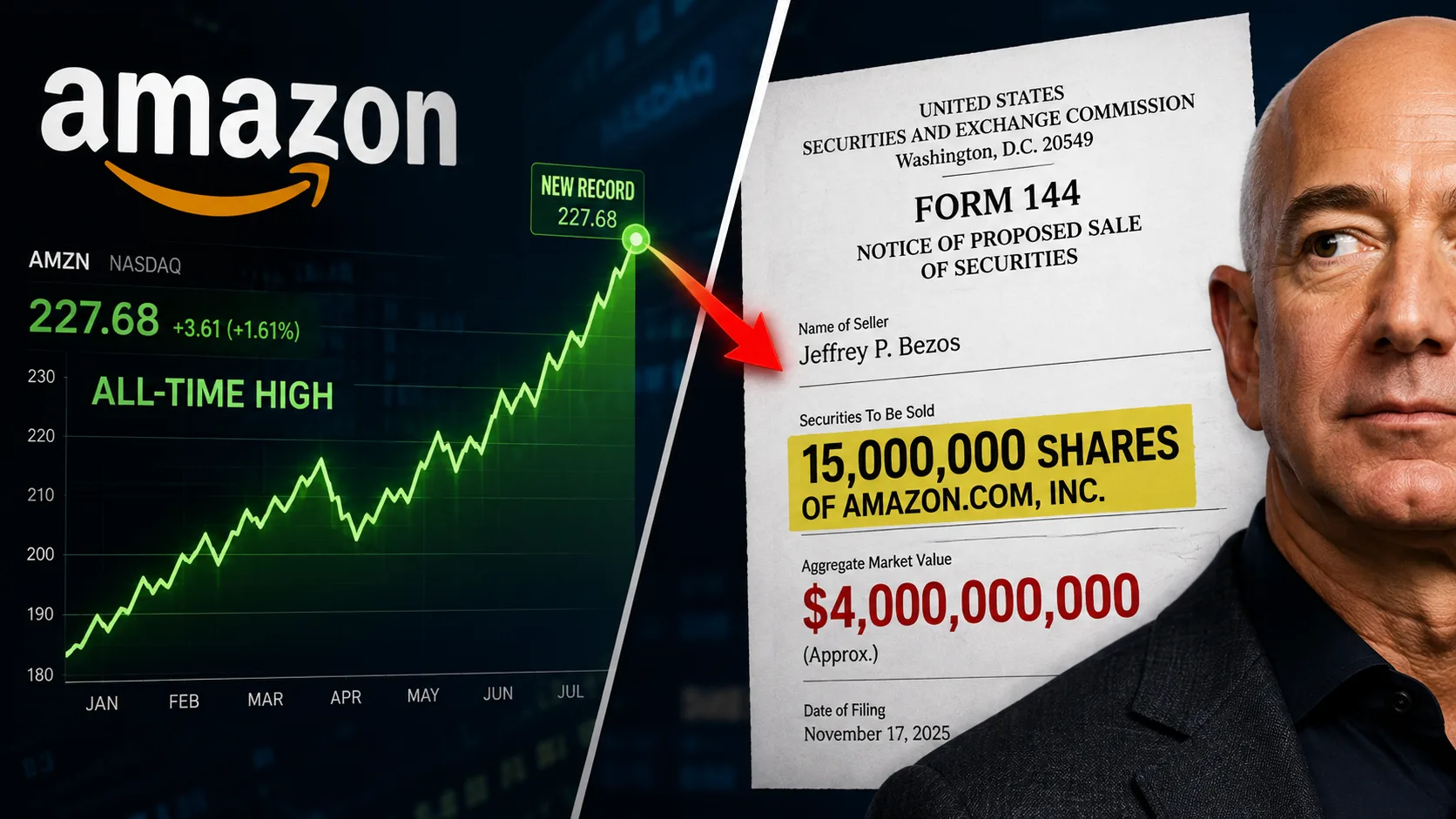
Amazon shares slipped Tuesday after founder Jeff Bezos disclosed plans to sell roughly $4.1 billion worth of Amazon stock, just one day after the company reached a fresh all-time high.
The filing comes on the heels of a blockbuster earnings report that pushed Amazon’s market value above $3 trillion, highlighting a familiar pattern for investors: major insider selling often follows periods of exceptional stock performance.
Bezos Plans to Sell 15 Million Amazon Shares
According to a new SEC filing, Bezos intends to sell 15 million Amazon (NASDAQ: AMZN) shares under a pre-arranged Rule 10b5-1 trading plan that was adopted on November 14, 2025.
The planned sale is valued at approximately $4.07 billion, based on Monday’s closing price. The filing indicates the shares being sold are part of Bezos’ original founder stock acquired in 1994, before Amazon became one of the world’s most valuable companies.
The transactions were executed Monday through Morgan Stanley.
Amazon Stock Pulls Back After Record High
Amazon shares fell more than 2% Tuesday morning after the filing became public, giving back a portion of Monday’s gains.
The stock had just reached an all-time high, fueled by a stronger-than-expected second-quarter earnings report.
Investors cheered several key developments:
- Better-than-expected cloud computing growth
- Continued strength in Amazon Web Services (AWS)
- Rising confidence that Amazon’s massive AI investments are beginning to generate meaningful returns
- Improving profitability across the business
Even after Tuesday’s decline, Amazon shares remain up roughly 23% year to date, significantly outperforming the S&P 500’s approximately 11% gain.
Why Investors Watch Insider Sales
Large insider sales often grab headlines, but they don’t necessarily signal that an executive believes a stock has peaked.
Rule 10b5-1 plans are designed to allow executives to sell shares according to a predetermined schedule, helping avoid concerns about trading on material nonpublic information.
Bezos has routinely used these plans over the past several years while remaining one of Amazon’s largest shareholders.
In many cases, founder stock sales are used for:
- Portfolio diversification
- Funding philanthropic efforts
- Personal liquidity
- Tax planning
The SEC filing also disclosed that Bezos donated approximately 220,200 Amazon shares to nonprofit organizations in May, with those organizations potentially selling the shares during the previous three months.
Amazon’s AI Bet Continues to Drive Optimism
The timing of the filing is notable because it follows one of Amazon’s strongest earnings reactions in years.
Wall Street has become increasingly optimistic that Amazon’s aggressive spending on artificial intelligence infrastructure is beginning to pay off.
Strong AWS growth reinforced the view that enterprise demand for AI computing remains robust, helping investors look past the company’s elevated capital spending.
That optimism pushed Amazon above the $3 trillion market capitalization milestone before Tuesday’s modest pullback.
What Investors Should Watch Next
The key question is whether Tuesday’s decline proves to be nothing more than a short-term reaction to a large insider sale.
Historically, Bezos has sold billions of dollars in Amazon stock while the company has continued to grow, making these transactions relatively common for long-term shareholders.
Going forward, investors are likely to focus less on the founder’s planned sale and more on whether Amazon can continue delivering the cloud growth, AI momentum, and earnings expansion that recently sent the stock to record highs.
About Author