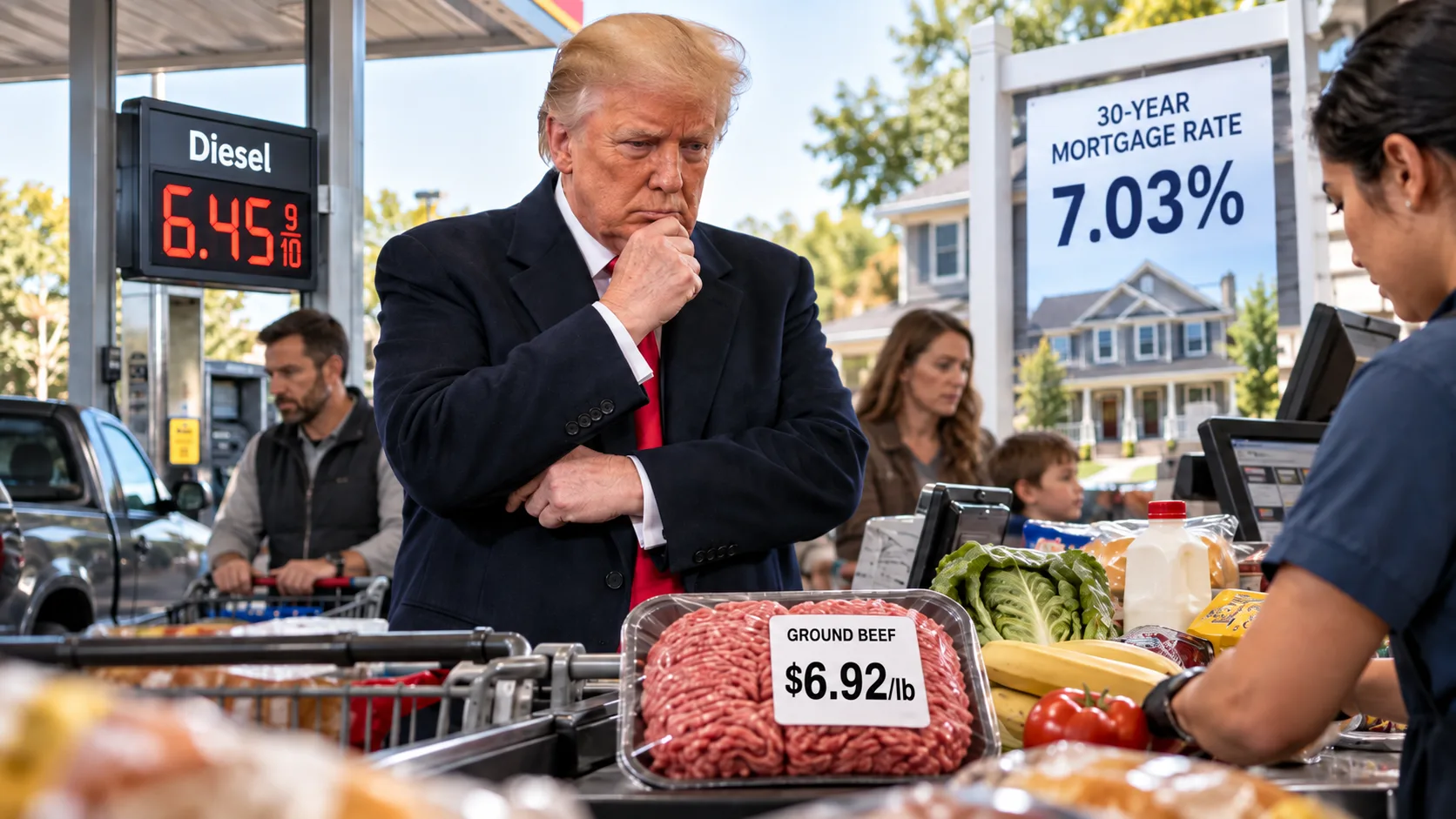
One of America’s largest and most disciplined retailers has just entered one of the most important trade law battles in decades. Costco Wholesale has filed a lawsuit against the Trump administration, challenging the legality of tariffs imposed under emergency presidential powers. While the move may appear procedural on the surface, the financial and political implications are massive. At stake is not only the future of billions of dollars in import duties, but also the limits of executive authority over U.S. trade policy.
For investors, this is not an abstract legal dispute. It directly affects retail margins, supply chain pricing, consumer inflation, federal revenue, and the balance of power between Congress and the White House. Costco’s decision to sue is a calculated financial move with ripple effects that could extend across the entire U.S. economy.
What follows is a full breakdown of what Costco is challenging, why it is suing now, what happens next at the Supreme Court, and why this case matters for markets far beyond the retail sector.
What Costco Is Suing Over
Costco’s lawsuit targets tariffs imposed using the International Emergency Economic Powers Act, or IEEPA. That law was passed in 1977 to give the president authority to act during national emergencies that threaten national security or foreign policy. It was never explicitly designed to serve as a blank check for permanently reshaping U.S. trade policy through tariffs.
Under the Trump administration, IEEPA was used to justify sweeping import tariffs across multiple product categories and foreign trading partners. These tariffs raised costs on everything from consumer electronics and apparel to industrial parts and household goods.
Costco argues that the president does not have the legal authority under IEEPA to impose broad based tariffs of this nature without Congressional approval. The company is asking the court to declare the tariffs unlawful, to block their continued enforcement, and crucially, to preserve Costco’s right to recover tariffs it has already paid if the administration ultimately loses.
This is not simply about future policy. This is about clawing back money already collected by the federal government.
Why Costco Is Acting Now
The timing of Costco’s lawsuit is not coincidence. Under U.S. customs law, imported goods go through a process known as liquidation. Once liquidation is finalized, the amount of tariff paid becomes legally locked in. At that point, even if a court later rules that the tariff itself was unlawful, companies may lose the ability to recover their money.
Costco recently faced the prospect that its recent import entries were nearing final liquidation. If the company had waited for the Supreme Court to rule without filing suit, it risked permanently forfeiting its right to seek refunds.
By filing now, Costco is freezing that clock. This preserves its ability to recover potentially hundreds of millions of dollars in tariff payments if the courts rule against the administration.
This move alone signals that Costco believes there is a serious probability the tariffs will ultimately be struck down. Corporations of Costco’s size do not enter federal litigation without extensive legal modeling and probability analysis.
The Legal Battle Already Underway
Several lower courts have already expressed skepticism about the administration’s use of IEEPA for tariff authority. In earlier rulings, judges questioned whether emergency powers can legally substitute for Congress’s constitutionally defined authority to levy tariffs.
That authority is being tested at the highest level. The issue is now before the Supreme Court of the United States, where justices have shown concern about the scope of presidential power being exercised.
The central legal question is simple but profound. Does IEEPA actually authorize the president to impose tariffs at all, or was it created purely for sanctions, asset freezes, and emergency economic restrictions during wartime or national security crises?
If the Court rules that IEEPA does not authorize tariffs, then the legal foundation beneath the Trump administration’s tariff regime collapses.
Why Refunds Are the Real Financial Earthquake
Many investors focus only on whether the tariffs will remain in place going forward. But the real financial impact lies in what happens to tariffs already collected.
If the Supreme Court rules that the tariffs were illegally imposed, companies that preserved their refund rights through litigation could recover massive sums. That could trigger one of the largest forced revenue reversals in modern U.S. history.
Costco is one of the first Fortune caliber companies to formally secure its refund rights. If it succeeds and the Court rules against the administration, a wave of similar filings is likely to follow.
The U.S. Treasury could be forced to return billions in revenue to corporate importers. That would not only affect federal budget projections but also instantly reshape corporate earnings across retail, manufacturing, transportation, and logistics.
Why Costco’s Involvement Changes Everything
Smaller importers and trade associations have already challenged the tariffs. What makes Costco’s lawsuit different is scale, credibility, and signaling power.
Costco is one of the most tightly managed operators in retail. Its margins are famously lean, its pricing discipline unmatched, and its balance sheet among the strongest in the sector. When Costco decides to litigate, other boardrooms take notice.
This signals to institutional investors, NGOs, and trade coalitions that the risk reward balance has shifted. It also tells Wall Street that at least one Fortune tier retailer believes the legal odds are now favorable enough to justify aggressive recovery action.
Once a company like Costco moves, competitors often follow not because they suddenly believe differently, but because the legal precedent and investor expectations shift overnight.
What This Means for Retail Margins
Tariffs are effectively taxes on imported goods. Retailers can either absorb those taxes, pass them along to consumers, or share them with manufacturers. In reality, all three happen simultaneously.
If the tariffs collapse and refunds are secured:
- Retail gross margins instantly improve.
- Inventory costs fall on future imports.
- Promotional flexibility increases.
- Price competition intensifies.
- Discretionary demand rises as consumer prices ease.
Costco in particular operates on razor thin margins by design. Even a modest recovery of prior tariff expenses could materially lift operating income in a single fiscal year.
For consumer facing retailers, this lawsuit has more earnings impact potential than most quarterly earnings reports.
The Inflation Angle Most Investors Are Missing
Tariffs act as a hidden inflation tax on consumers. While they may be framed as foreign trade penalties, the economic reality is clear. American companies pay the tariffs at the border. Those costs get embedded into retail pricing chains.
If tariffs fall and refunds hit corporate cash flow, it creates two inflation relieving effects:
- Forward looking pricing pressure eases.
- Balance sheets strengthen, reducing the need for defensive price hikes.
This matters for the Federal Reserve, interest rate policy, and inflation expectations. A major tariff unwind would act like a negative inflation shock at a time when policymakers are highly sensitive to consumer price momentum.
The Government Revenue Risk
The federal government collects tariffs as revenue. At peak levels, Trump era tariffs generated tens of billions of dollars per year.
If the Supreme Court invalidates those tariffs retroactively and companies successfully recover prior payments, the revenue reversal could materially affect federal cash flow and deficit projections.
That creates political pressure in two directions at once:
- Lawmakers seeking to reclaim tariff authority.
- Fiscal officials scrambling to preserve revenue streams.
In an election year environment, sudden multi billion dollar federal revenue shortfalls carry real political consequences.
The Separation of Powers Issue
Beyond retail and inflation, this case goes to the heart of constitutional governance.
The U.S. Constitution grants tariff authority to Congress. Over time, portions of that authority were delegated to the executive branch through trade statutes. The Trump administration expanded that delegation aggressively under IEEPA.
If the Supreme Court reins in that authority, it would mark one of the most significant judicial resets of executive economic power in decades. It would reshape how future presidents manage trade disputes, sanctions policy, and geopolitical economic leverage.
For investors, this affects how predictable future tariffs will be, how quickly trade conflicts can escalate, and how durable presidential trade strategies really are when courts intervene.
What Happens If Costco Wins
If Costco prevails and the tariffs are struck down, several outcomes follow almost immediately:
- Costco and possibly other retailers recover large tariff refunds.
- Retail earnings revise higher.
- Import pricing structures reset.
- Consumer goods inflation slows.
- Federal tariff revenue contracts.
- Congress regains leverage over future trade actions.
Equity markets generally prefer legal clarity and reduced pricing friction. This outcome would be broadly positive for retail, logistics, and global supply chain stocks.
What Happens If the Administration Wins
If the Supreme Court upholds the Trump administration’s use of IEEPA:
- Tariffs remain in force.
- Costco likely loses its refund effort.
- Executive tariff authority becomes permanently expanded.
- Future presidents gain a powerful unilateral trade weapon.
Markets would then price in a new long term risk premium for global trade volatility driven by executive discretion rather than congressional negotiation.
That outcome would favor protectionist policy regimes but increase uncertainty for supply chain dependent industries.
How Investors Can Position Around This Case
While the case itself is binary in legal outcome, its probability path creates multiple investment angles.
Retail stocks with major import exposure would benefit most from a tariff unwind. Logistics and freight forwarders could see volume expansion. Consumer discretionary names could experience demand tailwinds from falling prices.
Conversely, domestic manufacturers protected by tariff barriers could face renewed foreign competition if trade walls weaken.
More broadly, any shift that undermines unilateral trade authority tends to reduce geopolitical pricing risk across equity markets.
The Strategic Message Hidden in Costco’s Lawsuit
Costco’s lawsuit is not reactive. It is proactive, defensive, and opportunistic at the same time. It locks in refund optionality while applying legal pressure to a trade regime that constrains pricing power and margin flexibility.
It also acts as a signal flare to other institutional players. The first mover often defines the litigation map. Others either follow or risk missing their chance to recover sunk costs.
In that sense, Costco is not just protecting itself. It is shaping the next phase of the tariff litigation cycle.
About Author