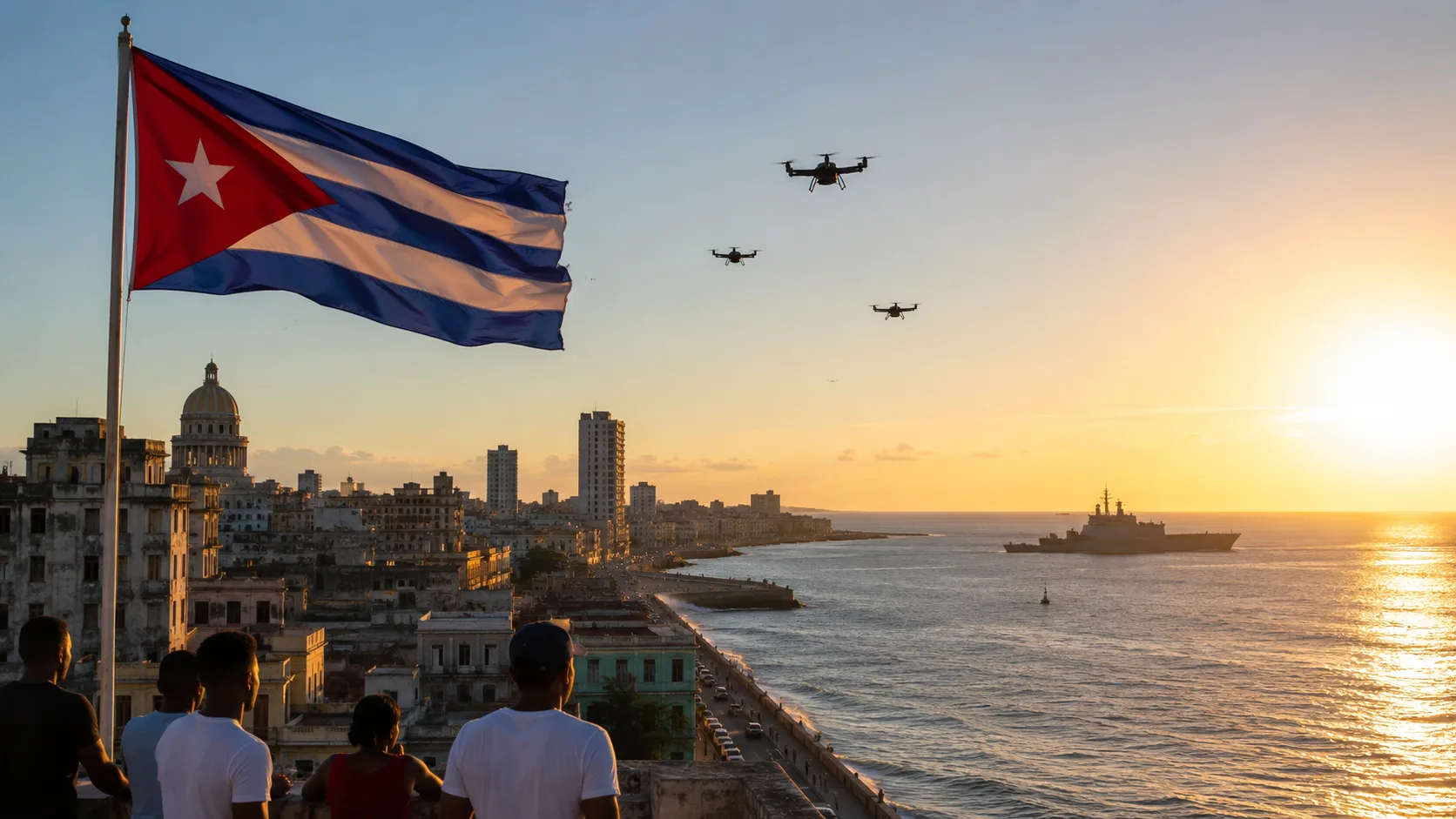
The standoff between the United States and Cuba is rapidly shifting from sanctions theater into something markets can no longer casually dismiss. Fresh U.S. sanctions, intelligence reports involving military drones, and increasingly aggressive rhetoric from both Havana and Washington are raising the possibility that Cuba could become the next geopolitical flashpoint directly off America’s coastline.
For investors, this is bigger than another Cold War-style headline cycle. The Caribbean sits near critical shipping lanes, energy routes, military infrastructure, and tourism networks. Any escalation involving Cuba immediately touches oil markets, defense stocks, emerging market debt, cruise operators, airlines, and broader Latin American risk sentiment.
The White House is clearly tightening the screws. Cuba is now signaling it believes Washington may be preparing the groundwork for something far more aggressive.
Washington Turns Up the Pressure
Cuban President Miguel Díaz-Canel condemned the latest U.S. sanctions Tuesday, calling them “immoral, illegal, and criminal” while accusing Washington of trying to economically suffocate the island.
The sanctions campaign has accelerated dramatically since early this year. The Trump administration has moved to isolate Cuba economically by targeting energy access, foreign investment channels, and financial relationships tied to Havana’s government.
The latest measures sanctioned 11 Cuban officials along with the country’s main intelligence agency. That follows broader efforts to choke off fuel supplies after Venezuelan leader Nicolás Maduro was reportedly seized earlier this year in a military operation that dramatically reshaped regional power dynamics.
The pressure campaign now appears to be moving beyond economics.
According to an Axios report citing classified intelligence, Cuba has allegedly acquired more than 300 military drones from Russia and Iran and discussed plans involving potential attacks against U.S. targets. Those targets reportedly included Guantanamo Bay, U.S. military vessels, and possibly Key West.
That changes the psychology of the situation immediately.
Once direct threats to U.S. territory or military assets enter the conversation, markets begin pricing in tail risks that previously felt remote.
Díaz-Canel escalated the rhetoric further Monday, warning that military aggression against Cuba “would trigger a bloodbath with incalculable consequences.”
Meanwhile, Cuban Foreign Minister Bruno Rodríguez Parrilla accused Washington of constructing “a fraudulent case” to justify future military action.
Why Investors Should Take This Seriously
Most geopolitical stories fade because they remain geographically isolated. Cuba is different.
The island sits just 90 miles from Florida. Any military escalation or blockade scenario would instantly dominate U.S. political discourse and financial headlines.
Energy markets are particularly sensitive here.
If tensions intensify near Cuban waters or broader Caribbean shipping lanes, oil traders could begin layering geopolitical premiums back into crude prices. That matters because markets have recently been attempting to normalize after Middle East volatility tied to Iran.
A second major geopolitical hotspot involving a country linked to Russia and Iran complicates that picture.
Defense stocks also become immediate beneficiaries in this environment. Investors will likely continue monitoring companies tied to drone defense systems, naval operations, surveillance technology, cybersecurity, and missile systems.
Cruise operators and tourism-related equities could face pressure if the region becomes associated with rising military risk. Airlines with strong Caribbean exposure may also see sentiment weaken if travel advisories escalate.
The bigger issue, however, is political.
If the Trump administration begins framing Cuba as a direct national security threat tied to Russian and Iranian military cooperation, markets may need to reprice the possibility of a far more interventionist U.S. foreign policy approach heading into 2027.
That has implications for defense spending, energy security policy, sanctions enforcement, commodity markets, and Latin American investment flows.
The Market May Be Missing the Real Signal
The drone allegations matter. The sanctions matter.
But the real signal may be the language coming from Washington.
President Trump has repeatedly floated unusually aggressive rhetoric toward Havana, including references to a potential “friendly takeover” and comments suggesting the U.S. could turn its attention toward Cuba following the Iran conflict.
Investors should understand what often happens before major geopolitical escalations: governments begin shaping public perception months in advance.
Narratives around weapons systems, hostile alliances, military threats, and humanitarian concerns typically emerge before any significant policy shift occurs.
That does not mean military action is inevitable.
It does mean the probability distribution is changing.
Markets have spent years assuming Cuba was strategically irrelevant outside of tourism and old sanctions disputes. That assumption may now be outdated if Washington increasingly views Havana through the lens of Chinese influence, Russian cooperation, Iranian military technology, and regional security.
The White House also understands the domestic political optics involved. A hardline stance on Cuba remains politically powerful in key parts of Florida, especially among Cuban-American voters.
At the same time, speculation around possible regime change is beginning to enter mainstream discussion more openly.
Jorge Mas, chairman of the Cuban American National Foundation, told CNBC: “I think that we’re getting closer to seeing a regime change in Cuba in the next few months.”
That is an extraordinary statement considering how long the Cuban government has survived under sanctions pressure.
Catalysts Investors Should Watch Closely
Here are the developments that matter most over the coming weeks:
- Additional U.S. sanctions targeting Cuban energy imports or shipping
- New intelligence disclosures involving Russian or Iranian military cooperation
- Naval movements near Cuba or Guantanamo Bay
- Oil price volatility tied to Caribbean security concerns
- Escalation in Trump administration rhetoric toward Havana
- Cuban domestic unrest tied to worsening fuel shortages and economic stress
- Potential Chinese diplomatic involvement behind the scenes
- Defense sector momentum tied to regional military preparedness
Investors should also monitor whether markets begin rotating back into geopolitical hedges including defense contractors, energy producers, gold, and cybersecurity firms.
The Bigger Picture for Markets
This story is ultimately about proximity.
A hostile geopolitical confrontation in Eastern Europe affects markets differently than one unfolding 90 miles from the United States.
That proximity changes media coverage, political urgency, military posture, and investor psychology.
If tensions continue escalating, Cuba could evolve from a largely ignored sanctions story into one of the most important geopolitical risk narratives in the Western Hemisphere.
And if markets wait until military assets are already moving, they will be late.
Bottom Line
The Cuba situation is no longer just about sanctions or Cold War symbolism. The combination of alleged military drone acquisitions, increasingly hostile rhetoric, and expanding U.S. pressure creates a far more dangerous setup than investors have seen in years.
Markets may still be underestimating how quickly this could become a dominant macro story.
If Washington continues framing Cuba as a direct security threat tied to Russia and Iran, investors should expect volatility across energy, defense, tourism, and broader geopolitical risk assets.
The market’s biggest mistake right now may be assuming this is all political noise.
About Author