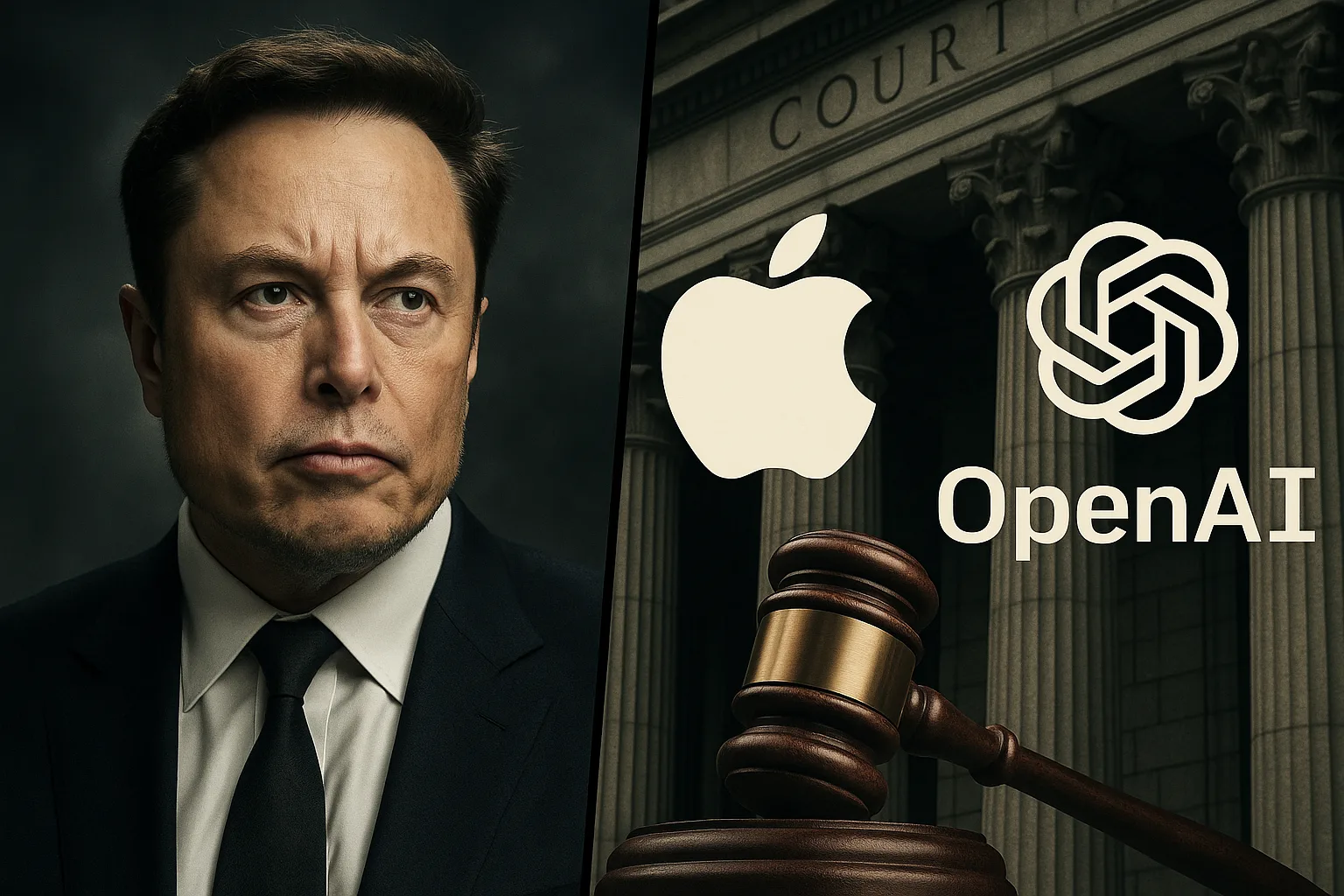
Elon Musk has ignited yet another high-stakes battle in Silicon Valley—this time, not against regulators or short sellers, but against Apple and OpenAI. His lawsuit, filed in Texas federal court on behalf of his ventures xAI and X, accuses the two giants of monopolistic collusion. Musk’s argument is simple: Apple controls smartphones, OpenAI controls AI chatbots, and their exclusive partnership shuts out competition and stifles innovation.
This is more than just a legal fight—it’s a defining moment for technology markets. For investors, the case signals where power, profits, and innovation may concentrate in the next wave of the digital economy. Whether you hold Apple (AAPL), Alphabet (GOOGL), Tesla (TSLA), or any of the growing number of AI-related stocks, the implications of this lawsuit could ripple across portfolios.
Breaking Down the Lawsuit
Musk’s companies allege that Apple and OpenAI violated federal antitrust laws, specifically Sections 1 and 2 of the Sherman Act. The complaint claims:
- Monopolization: Apple (65% U.S. smartphone share) and OpenAI (80% chatbot market share) have “locked up” their markets.
- Exclusive dealing: Apple integrated OpenAI’s ChatGPT into iOS, iPadOS, and macOS, giving it default status across devices.
- Consumer harm: Users effectively have no choice but to use ChatGPT if they want native AI functionality on Apple devices.
Musk argues this deal mirrors the infamous Google–Apple search engine agreement, where Google paid billions to remain the default search provider on iPhones. That deal is already under attack by the Justice Department, which last year won a landmark ruling that Google illegally dominated search through such contracts.
By connecting Apple’s smartphone dominance with OpenAI’s chatbot dominance, Musk’s lawsuit paints the picture of two entrenched monopolies conspiring to freeze out challengers like his xAI and its chatbot, Grok.
Apple’s Strategy: Locking Down AI in the iPhone Ecosystem
At its Worldwide Developers Conference (WWDC) in June, Apple announced a partnership with OpenAI to make ChatGPT available natively in Siri and Apple’s systemwide writing tools.
For Apple, this move is strategic. Its smartphone sales growth has slowed, and regulatory scrutiny over its App Store practices has intensified. By baking in AI, Apple locks in users and creates stickier demand for iPhones and MacBooks. The integration also means Apple can bypass app-based competition—where Musk’s Grok or Anthropic’s Claude might otherwise compete head-to-head.
Investor takeaway: Apple is betting that AI will help extend its “walled garden” ecosystem. If successful, this could increase iPhone upgrade cycles and boost long-term services revenue. But legal risks could also result in fines, divestitures, or forced changes to its business model.
Musk’s Counterattack: AI Super Apps as Disruptors
The lawsuit goes beyond claims of unfair competition. Musk argues that Apple sees AI as an existential threat to its smartphone dominance.
His vision: AI-powered super apps that could replace many functions currently tied to smartphones. Think of WeChat in China—a single app that integrates payments, messaging, e-commerce, and more. If xAI’s Grok were deeply integrated into such a platform, it could theoretically reduce the importance of iOS or Android as operating systems.
From an investor’s perspective, Musk is framing the fight as the next disruption to the mobile market. If AI super apps succeed, Apple and Google could lose their grip on digital distribution, potentially reshaping trillion-dollar valuations.
Why Antitrust Regulators Are Watching
The U.S. Justice Department’s case against Google looms large here. That trial, which Google lost in 2023, focused heavily on its exclusive contracts with Apple to keep Google Search the default. The parallels are obvious: Apple is once again accused of striking an exclusive deal that limits consumer choice.
European regulators, too, are tightening rules under the Digital Markets Act (DMA). Apple has already been forced to make changes to iOS in Europe, including allowing third-party app stores. The OpenAI partnership could draw further scrutiny abroad.
Investor takeaway: Any ruling against Apple and OpenAI could result in fines, forced restructuring of contracts, or even opening the door to broader AI competition. That could impact revenue streams not only for Apple and OpenAI but also for the ecosystem of chipmakers, cloud providers, and app developers around them.
Market Dynamics: AI Data Flywheels
One of Musk’s central arguments is about data feedback loops. Generative AI models improve by training on user prompts. By giving ChatGPT exclusive integration, Apple ensures billions of new data points will flow to OpenAI, making its models smarter—and widening the gap with rivals like Grok.
This phenomenon is sometimes called the “AI flywheel effect”:
- More users → more prompts → better training → better features → more users.
For investors, this raises critical questions: Will AI markets consolidate into a few dominant players? Or will antitrust interventions open space for challengers? The outcome could dictate which companies command trillion-dollar valuations in the coming decade.
How This Impacts Key Stocks
- Apple (AAPL): The integration of ChatGPT could strengthen Apple’s ecosystem, but antitrust risks loom. Legal setbacks could weigh on its services strategy and force revenue model changes.
- Microsoft (MSFT): As a key backer of OpenAI, Microsoft indirectly benefits from Apple’s partnership. However, a legal crackdown could limit OpenAI’s growth trajectory.
- Alphabet (GOOGL): Google stands to gain if Apple’s deal is blocked, as it has its own AI ambitions. But it also remains under antitrust fire for its search monopoly.
- Tesla (TSLA) / xAI-adjacent plays: While not directly tied, Musk’s AI vision feeds into his broader ecosystem (Tesla’s autonomous driving, xAI’s chatbot). Any traction for Grok could lift sentiment for Musk-related ventures.
- AI chipmakers (Nvidia, AMD): Regardless of legal outcomes, AI adoption drives demand for chips. But consolidation around OpenAI could centralize buying power, potentially shifting pricing dynamics.
Investor Playbook: Navigating the Uncertainty
For investors, here’s how to approach the unfolding battle:
- Monitor regulatory signals: If regulators move quickly, expect volatility in AAPL and MSFT. Legal outcomes could reshape competitive dynamics.
- Diversify AI exposure: Instead of betting solely on OpenAI-linked plays, consider broader AI beneficiaries (semiconductors, cloud providers).
- Look for challengers: Companies like Anthropic, Cohere, and even Musk’s xAI may benefit if regulators push back against exclusivity deals.
- Brace for volatility: Antitrust cases are multi-year processes, but news headlines can move stocks in the short term.
Historical Parallels: When Monopolies Break
Investors can look to history for context. When Microsoft was sued in the late 1990s over its Internet Explorer bundling, many feared its dominance was unshakable. The case ultimately opened the door for competitors like Google to thrive.
Similarly, if Apple and OpenAI are forced to scale back their partnership, it could unleash new opportunities for smaller AI players—and significant revaluations across tech markets.
The Stakes for Investors
Elon Musk’s lawsuit isn’t just about ChatGPT versus Grok. It’s about who controls the next wave of digital infrastructure. Apple and OpenAI are betting on a future where AI is tightly integrated into hardware ecosystems. Musk envisions AI super apps that could bypass the smartphone model altogether.
For investors, the case highlights both risk and opportunity. On one hand, entrenched monopolies may face years of legal and regulatory scrutiny. On the other, challengers could ride a wave of disruption similar to how Google overtook Microsoft in search.
The bottom line: This lawsuit is a canary in the coal mine for AI market structure. Investors who pay attention now will be better positioned to capture the upside—or avoid the fallout—as the AI revolution collides with antitrust law.
About Author