In a growing clash between industrial policy and real-world supply constraints, Ford Motor is reportedly seeking relief from aluminum tariffs imposed under Donald Trump, after a series of fires at a critical U.S. supplier disrupted the flow of key materials used in its best-selling vehicles.
The situation highlights a broader tension investors need to understand. Tariffs are designed to strengthen domestic manufacturing, but when supply chains break, those same policies can quickly turn into a headwind for American companies.
A Supply Shock Hits at the Worst Time
According to reporting first surfaced by The Wall Street Journal, Ford and other U.S. automakers have quietly approached the administration in recent weeks, requesting temporary relief from aluminum import tariffs.
The reason is straightforward. A major aluminum rolling facility operated by Novelis in Oswego, New York, suffered two fires last year. That plant is not just another supplier. It is the largest domestic producer of aluminum sheet used in U.S. auto manufacturing.
The damage has been significant enough that the facility is expected to remain offline until at least June, creating a bottleneck for automakers that rely heavily on its output.
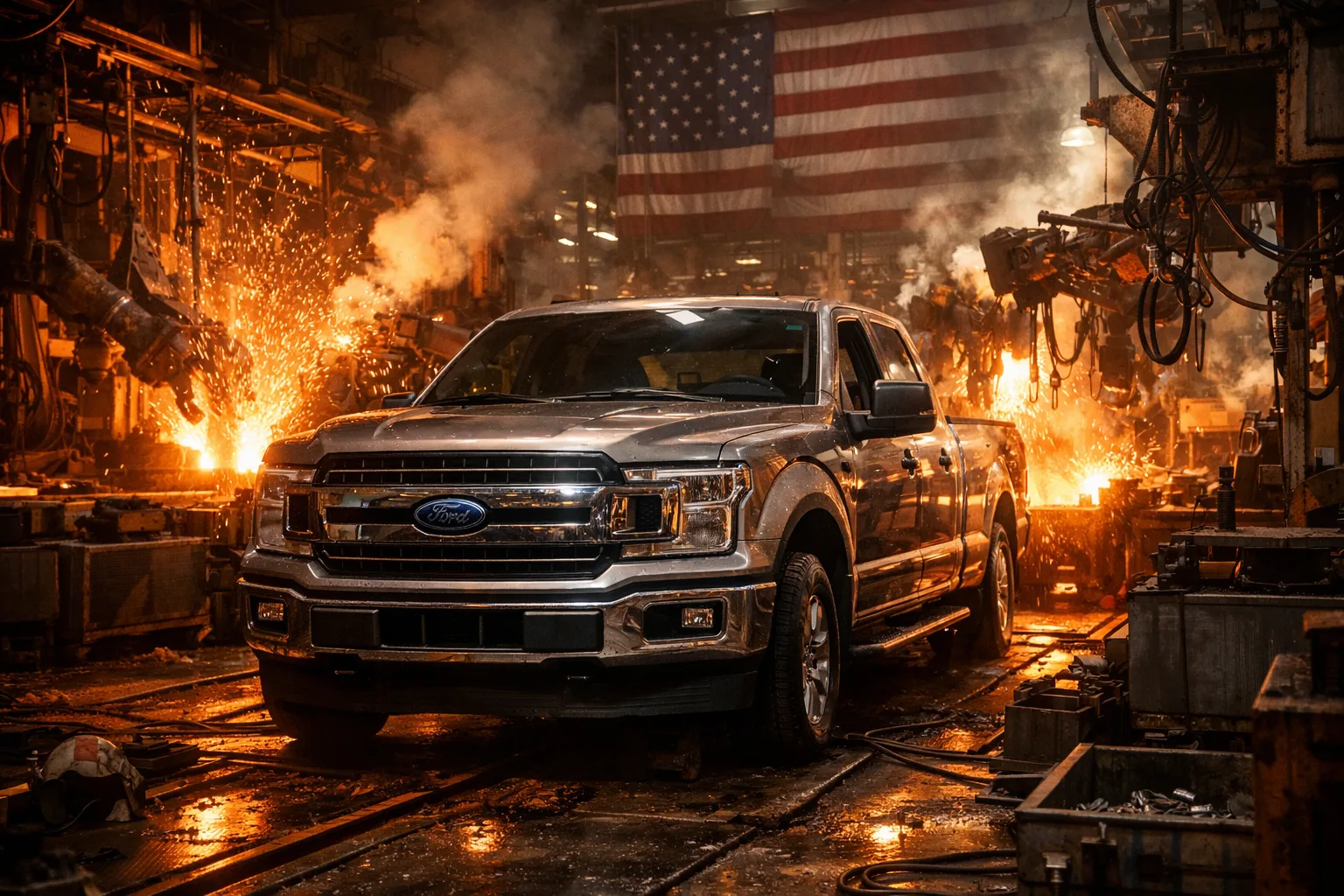
Ford is particularly exposed. Its flagship pickup line, including the F-150, is built using aluminum-intensive body structures. That design choice, which has helped improve fuel efficiency and performance, now leaves the company vulnerable to disruptions in aluminum supply.
Tariffs Meet Reality
To keep production moving, Novelis has shifted sourcing to facilities in South Korea and Europe. But here is where policy collides with practicality.
Those imported materials are now subject to tariffs as high as 50 percent under the current administration’s trade framework. That dramatically increases input costs for automakers already navigating a volatile macro environment.
Ford’s request is not for a permanent rollback. Instead, the company is reportedly seeking temporary relief until the Oswego plant returns to full production.
So far, the answer from Washington has been no.
The Administration’s Position
A White House official told FOX Business:
“the Administration is committed to a nimble and nuanced approach to reshoring manufacturing that’s critical to our national and economic security. While Ford and other automakers have raised supply concerns in light of the Novelis incident, they have not requested tariff relief on this matter in a particularly pronounced way.”
Officials have also pointed out that automakers previously received partial relief tied to national security tariffs, allowing them to recover some of the 25 percent duties on auto parts.
In other words, from the administration’s perspective, the industry has already been given flexibility and is now expected to adapt.
Why This Matters for Investors
This is not just a niche supply chain story. It is a clear example of how policy, infrastructure risk, and global trade are colliding in real time.
Here are the key takeaways investors should be paying attention to:
1. Margin Pressure Is Building
Higher aluminum costs feed directly into vehicle production expenses. If Ford cannot secure tariff relief, it faces a tough choice. Absorb the costs and take a hit to margins, or pass them on to consumers and risk weakening demand.
Either outcome is not ideal, especially in a market where affordability is already stretched.
2. Supply Chain Fragility Is Back in Focus
The Novelis fire underscores a reality many investors hoped was behind us after the pandemic. Supply chains are still fragile, especially when they depend on highly specialized facilities.
A single plant going offline can ripple across an entire industry.
3. Tariffs Are a Double-Edged Sword
Tariffs are often framed as a long-term strategic win for domestic production. But in the short term, they can amplify disruptions when domestic capacity is constrained.
This situation is a textbook case. The policy is meant to support U.S. manufacturing, yet it is currently making it more expensive for U.S. automakers to operate.
4. Watch for Policy Shifts
If the disruption persists or worsens, pressure could build for the administration to revisit its stance. Temporary carve-outs or targeted exemptions are not off the table, especially if production delays begin to impact jobs or economic output.
Investors should monitor headlines closely. Policy changes in this environment can move stocks quickly.
The Bigger Picture for the Auto Industry
This issue does not stop with Ford. The Novelis plant also supplies General Motors and Stellantis, meaning the ripple effects could spread across multiple major manufacturers.
At the same time, the industry is already dealing with several overlapping challenges:
- The transition to electric vehicles, which requires massive capital investment
- Persistent inflation in raw materials and labor
- Shifting consumer demand as interest rates remain elevated
- Ongoing geopolitical tensions affecting global trade flows
Layer tariff-related cost pressure on top of that, and the margin for error gets very thin.
What to Watch Next
For investors tracking Ford and the broader auto sector, there are several key developments to keep on your radar:
- Status of the Novelis plant: Any updates on repair timelines or earlier-than-expected reopening could ease supply concerns
- Tariff policy adjustments: Even minor exemptions could materially improve cost structures
- Vehicle pricing trends: Watch whether automakers begin passing higher input costs onto consumers
- Production guidance: Any downward revisions could signal that supply issues are worsening
Bottom Line
Ford’s push for aluminum tariff relief is more than a corporate lobbying effort. It is a real-time stress test of U.S. industrial policy.
When domestic supply fails and global alternatives are penalized, companies get squeezed. That squeeze eventually shows up in earnings, pricing, and potentially stock performance.
For investors, the takeaway is simple. Pay attention to the intersection of policy and supply chains. That is where the next wave of winners and losers is being decided.
About Author