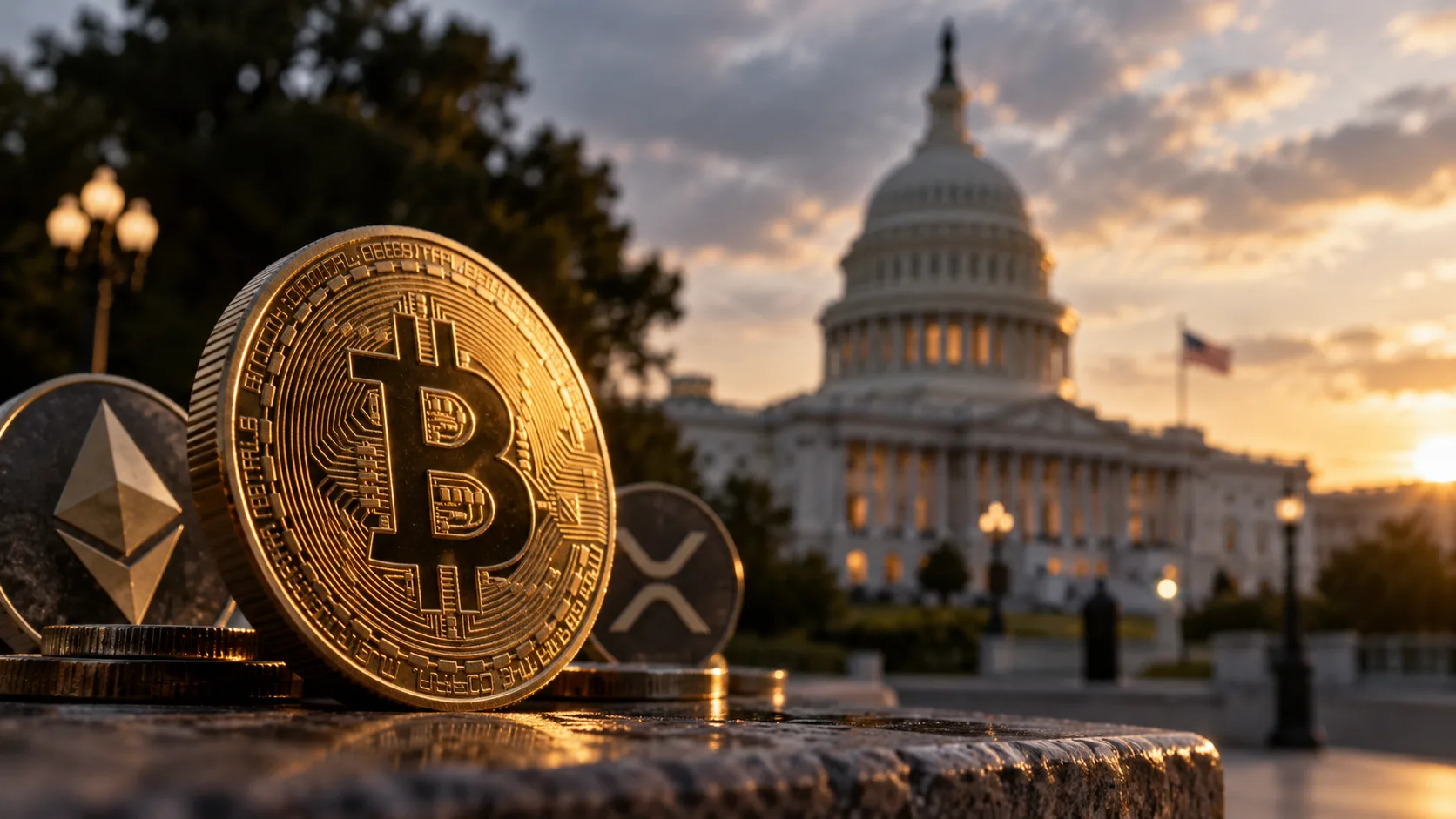
The U.S. crypto market may have just crossed one of its most important turning points yet.
In a major regulatory shift, the U.S. Securities and Exchange Commission under Chairman Paul Atkins has clarified that most digital assets are not securities, marking a dramatic departure from years of uncertainty, lawsuits, and aggressive enforcement.
For investors, this is not just another policy update. It could reshape how crypto markets operate in the United States, unlock institutional capital, and determine which tokens thrive or disappear.
Here’s what just happened, what changed, and how investors should think about it going forward.
A Long-Awaited Reset for Crypto Regulation
For years, the biggest problem facing crypto in the U.S. wasn’t technology or adoption. It was regulation.
Under previous SEC leadership, many tokens were treated as potential securities, exposing projects to enforcement actions, delistings, and legal risk. The lack of clarity forced companies offshore and made institutional investors hesitant to fully engage with the space.
Now, that approach is shifting.
The SEC has introduced a more structured framework for evaluating digital assets, effectively acknowledging that not all crypto assets function like stocks or investment contracts.
This is a major philosophical change.
Instead of assuming most tokens fall under securities law, regulators are now recognizing that crypto assets can serve multiple roles, including commodities, utilities, and digital infrastructure.
The New Crypto Framework: Five Asset Categories
At the center of the SEC’s updated stance is a classification system that separates digital assets into distinct categories.
1. Digital Commodities
Assets like Bitcoin and Ethereum fall into this category. These are decentralized, widely used, and not controlled by a single entity.
2. Digital Tools
Tokens used to access or operate within a platform, rather than for investment purposes.
3. Digital Collectibles
NFT-style assets representing ownership of digital items or experiences.
4. Stablecoins
Tokens pegged to fiat currencies or other assets to maintain price stability.
5. Digital Securities
The only category subject to traditional securities regulation. These include tokens that function like investment contracts, typically tied to a centralized entity promising profits.
The key takeaway is simple:
Only a subset of crypto assets are now considered securities
That clarity removes a massive overhang that has weighed on the market for years.
Major Tokens Get Regulatory Relief
One of the most market-moving aspects of the SEC’s announcement is that several high-profile cryptocurrencies are now widely viewed as digital commodities rather than securities.
That includes:
- Bitcoin
- Ethereum
- Solana
- XRP
- Dogecoin
- Cardano
This is a major development.
For years, investors worried that some of these tokens could face enforcement actions that would limit trading or force exchanges to delist them. That risk has now been significantly reduced.
For institutional investors, this matters even more. Many large funds avoided crypto exposure due to regulatory ambiguity. With clearer classifications, those barriers are starting to fall.
The Howey Test Still Matters
Before investors assume this is a regulatory free-for-all, there is an important caveat.
The SEC made it clear that how a token is used and marketed still determines whether it becomes a security.
This principle comes from the long-standing Howey Test, which defines an investment contract based on:
- An investment of money
- In a common enterprise
- With an expectation of profit
- Derived from the efforts of others
Even if a token itself is not inherently a security, it can be treated as one if it is sold or promoted in a way that meets these criteria.
In other words:
A token can shift categories depending on how it is used
That nuance is critical for investors evaluating risk.
New Clarity on Staking, Mining, and Airdrops
Another major win for the crypto industry is the SEC’s updated guidance on activities that were previously in regulatory gray zones.
The agency clarified:
- Mining is not a securities transaction
- Staking is not automatically a security
- Airdrops are not securities if users are not required to invest money
These distinctions matter because they remove uncertainty around core crypto activities.
For example, staking has become a key yield-generating strategy for investors. Under previous regulatory ambiguity, there were concerns that staking services could be classified as securities offerings.
Now, those fears are significantly reduced, although platform-specific implementations still need to be evaluated carefully.
The “Safe Harbor” Proposal Could Spark Innovation
Buried within the broader announcement is another development that could have long-term implications.
Chairman Paul Atkins introduced the concept of a crypto safe harbor.
This would allow early-stage projects to:
- Raise a limited amount of capital
- Operate with reduced regulatory burden
- Build decentralized networks over a defined time period
The goal is to give startups room to innovate without immediately triggering full securities compliance requirements.
For years, one of the biggest criticisms of U.S. regulation was that it pushed crypto innovation overseas. This proposal signals an effort to reverse that trend.
If implemented effectively, it could lead to a wave of new U.S.-based crypto startups and increased venture investment.
Why This Shift Is Happening Now
This policy change is not happening in a vacuum.
The broader political and economic environment is playing a major role.
Under the current administration led by Donald Trump, there has been a clear push to position the United States as a leader in digital assets.
That includes:
- Encouraging domestic crypto innovation
- Reducing regulatory barriers
- Competing with jurisdictions like Europe and Asia
At the same time, regulators like the SEC and the Commodity Futures Trading Commission are beginning to align more closely on crypto oversight.
That coordination reduces regulatory fragmentation, which has been a major issue in the past.
What This Means for Crypto Markets
From a market perspective, this is a structurally bullish development.
1. Regulatory Risk Is Falling
One of the biggest risks priced into crypto assets has been the threat of enforcement actions. With clearer rules, that risk premium is declining.
2. Institutional Capital Could Accelerate
Large investors require regulatory clarity. This move makes it easier for:
- Pension funds
- Hedge funds
- Asset managers
to increase exposure to crypto.
3. Exchange Listings Become More Stable
If tokens are not classified as securities, exchanges face fewer legal risks in listing them. That supports liquidity and market depth.
4. U.S. Competitiveness Improves
Crypto companies may now be more likely to build and operate within the U.S., rather than relocating abroad.
The Risks Investors Should Not Ignore
Despite the bullish narrative, there are still real risks.
Regulatory Evolution Is Ongoing
This guidance is not final law. Congress is still working on broader crypto legislation that could alter the landscape again.
Enforcement Has Not Disappeared
Fraud, market manipulation, and deceptive practices remain firmly in the SEC’s crosshairs.
Token-Specific Risk Still Matters
Not all projects will benefit equally. Tokens tied to centralized teams or aggressive marketing strategies may still face scrutiny.
Investor Takeaways: How to Position From Here
For investors, this shift creates both opportunities and responsibilities.
Focus on High-Quality Assets
Projects with strong decentralization, real-world utility, and established ecosystems are best positioned to benefit.
Watch Institutional Flows
If large capital begins entering crypto at scale, it could drive sustained price appreciation.
Pay Attention to Regulation
This is a moving target. Staying informed on policy developments will be critical.
Avoid Hype-Driven Tokens
Just because the regulatory environment is improving does not mean all projects are safe.
The Bottom Line
The SEC’s updated stance represents a turning point for crypto in the United States.
After years of uncertainty, the message is becoming clearer:
Most digital assets are not securities unless they are structured or marketed that way
That shift could unlock capital, accelerate innovation, and reshape the competitive landscape for crypto globally.
For investors, the opportunity is real. But so is the need for discipline.
Because while regulation may be easing, the market is still as unforgiving as ever.
About Author