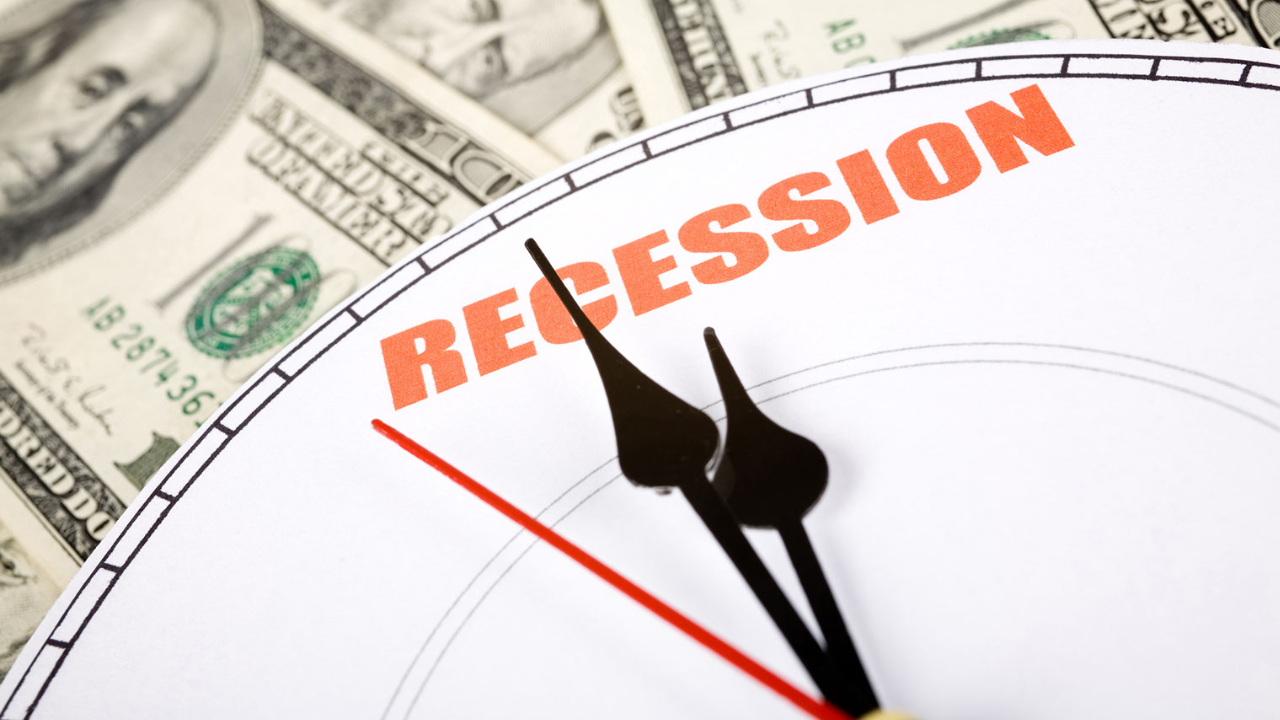
According to Moody’s Analytics, the likelihood of a recession within the next 12 months was already sitting at 49% before the escalation of the Iran conflict. With oil prices now surging and economic data weakening, that probability is expected to move above 50%.
For investors, that shift matters. Once recession odds cross that threshold, markets tend to reprice risk quickly and often aggressively.
A Fragile Economy Meets an Energy Shock
Moody’s Analytics chief economist Mark Zandi pointed to a combination of weakening economic data and rising energy costs as the main drivers behind the rising recession risk.
“Behind the recent jump are primarily the weak labour market numbers, but almost all the economic data has turned soft since the end of last year.”
This is not just a single weak data point. The softness is broad-based.
Consumer sentiment has weakened. Housing indicators such as building permits have declined. Business confidence is showing signs of strain. Together, these trends suggest the economy has been losing momentum for months.
Now, the Iran war is adding a new layer of pressure.
Oil prices have climbed toward the mid-$90 range, and concerns remain elevated about supply disruptions through the Strait of Hormuz. That narrow waterway handles roughly one-fifth of global oil shipments, making it one of the most critical chokepoints in the global economy.
If disruptions intensify, oil prices could move significantly higher.
Why Oil Still Drives Recessions
Despite the United States producing large amounts of oil domestically, higher prices still hit the economy hard and fast.
Zandi explained why the impact is asymmetric.
“Higher oil prices hurt US consumers much harder and cause them to turn more cautious in their spending much faster than it convinces US oil producers to increase investment and production.”
That dynamic is key.
Consumers immediately feel the effects through higher gasoline prices and rising costs across goods and services. Businesses, however, are slower to respond by increasing production or hiring.
This gap creates a drag on economic activity.
Historically, that pattern has been a reliable warning sign. Nearly every U.S. recession since World War II, aside from the pandemic-driven downturn, was preceded by a sharp rise in oil prices.
The current setup is beginning to mirror those conditions.
The Labor Market Is Sending Warning Signals
While oil prices are grabbing attention, the labor market may ultimately determine whether a recession occurs.
Zandi emphasized that employment trends are the most important indicator of real-time economic activity.
“Employment in February fell, and has gone more or less sideways for the past year. Employment is the best measure of coincident economic activity.”
Recent data from the U.S. Bureau of Labor Statistics supports this concern.
Job growth has slowed, and revisions to prior reports have shown weaker hiring than initially reported. For example, in the latest release, payroll gains for previous months were revised lower, reinforcing the idea that the labor market is not as strong as it appears at first glance.
Zandi warned that these revisions may indicate deeper weakness.
“If anything, it suggests the job market is even weaker and recession risks are even higher than the current data shows.”
If employment begins to decline more meaningfully, the probability of a recession increases sharply.
A Self-Reinforcing Downturn Could Take Hold
What makes the current environment particularly risky is how these forces interact.
Higher oil prices reduce disposable income. Consumers cut back on spending. Businesses respond by slowing hiring or reducing their workforce. That, in turn, further weakens consumer demand.
This cycle can accelerate quickly.
Zandi described it as a “self-reinforcing negative cycle,” where economic weakness feeds on itself.
Importantly, he noted that inflation alone would not be enough to trigger a recession. The real danger comes from the combination of rising costs and weakening employment.
If the labor market holds steady, the economy may avoid a downturn. If it deteriorates, the path to recession becomes much clearer.
Markets May Be Underestimating the Risk
One of the biggest concerns right now is that markets may not be fully pricing in the potential impact of the Iran conflict.
Energy analysts warn that prolonged disruptions could push oil prices significantly higher. Some scenarios suggest prices could approach $120 per barrel, while more extreme forecasts place $140 as a tipping point for a global downturn.
Oxford Economics has identified that level as a threshold where the global economy could slip into a mild recession, with major regions such as Europe and Japan contracting.
The International Monetary Fund has also highlighted the broader impact of rising energy costs.
Every 10% increase in oil prices can push global inflation higher while reducing overall economic output. Those effects compound across economies and can tighten financial conditions worldwide.
Global Implications Are Significant
A U.S. recession would not stay contained.
Europe would likely see reduced demand for exports and tighter financial conditions. Japan and other developed markets could experience slower growth or contraction. Emerging markets would face additional pressure from higher energy costs and currency volatility.
Global growth would slow, and investor sentiment would likely deteriorate alongside it.
Why Supply May Not Catch Up
One key factor keeping oil prices elevated is the reluctance of U.S. producers to rapidly increase output.
Zandi explained that many producers view the current price spike as temporary and are hesitant to commit capital to long-term expansion.
“We are a long way from the point where higher investment and hiring would offset consumer pain.”
This hesitation means supply may remain constrained even as demand holds relatively steady.
That imbalance could keep energy prices elevated longer than expected.
What Investors Should Watch Closely
The next several weeks will be critical in determining the direction of the economy.
Key indicators to monitor include:
- Monthly employment reports and jobless claims
- Consumer spending and retail sales trends
- Oil price movements and developments in the Strait of Hormuz
- Federal Reserve policy signals and inflation data
If oil prices remain elevated and labor market data continues to weaken, recession odds will likely move decisively higher.
The Bottom Line
The U.S. economy is entering a vulnerable phase.
Rising energy costs, weakening employment trends, and escalating geopolitical tensions are aligning in a way that has historically led to recessions.
Moody’s warning reflects more than just a short-term concern. It highlights a broader shift in economic momentum that investors cannot afford to ignore.
The environment is changing. And with it, the risks are rising.
Sources
https://www.euronews.com/business/2026/03/18/moodys-says-a-us-recession-is-increasingly-hard-to-avoid-amid-iran-war
https://www.bls.gov/news.release/empsit.nr0.htm
https://www.imf.org/en/Publications/WEO
https://www.oxfordeconomics.com/resource/iran-war-scenarios-the-oil-price-that-breaks-parts-of-the-economy/ to prepare for volatility.
About Author