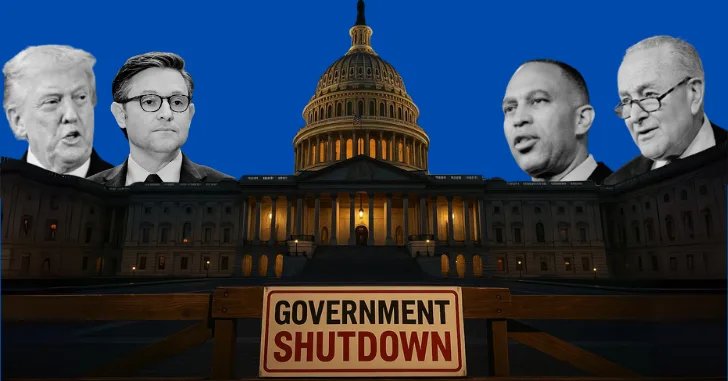
The federal government is once again on the brink of a shutdown, with just hours left for lawmakers to reach a deal. President Donald Trump is set to host top congressional leaders at the White House on Monday in a last-ditch effort to avoid a funding lapse.
If no agreement is reached, the government will partially close at 12:01 a.m. on Wednesday, October 1. A shutdown typically means nonessential federal services grind to a halt, hundreds of thousands of government workers are furloughed without pay, national parks and museums close their doors, and data releases such as Friday’s key September jobs report may be delayed, something that already happened during the 2013 shutdown.
What’s Driving the Stalemate
At the heart of the deadlock is one issue: whether to extend subsidies that keep health insurance affordable for the roughly 24 million Americans enrolled in Affordable Care Act (ACA) plans. Democrats want the subsidies to continue, while Republicans are resisting the extension.
Earlier this month, House Republicans passed a short-term spending bill to keep the government funded through late November. The measure was rejected in the Senate, where it will likely face another vote as soon as Monday. Because Republicans hold only 53 Senate seats, they would need at least seven Democratic votes to clear the 60-vote threshold required to move the bill forward.
Who’s at the Table
Monday’s White House meeting brings together the four most powerful figures on Capitol Hill: Senate Majority Leader John Thune, House Speaker Mike Johnson, Senate Minority Leader Chuck Schumer, and House Minority Leader Hakeem Jeffries. The high-stakes session is seen as the last real opportunity to reach a deal before the deadline hits.
What a Shutdown Means for You
For federal workers, a shutdown can result in missed paychecks and uncertainty about when work will resume. For the public, it means delays in passport processing, closures of visitor services at national parks, and potential disruptions to government-backed loans or benefits. While essential services like air traffic control and Social Security payments generally continue, many administrative functions slow down or stop altogether.
Financial markets often react to the uncertainty around shutdowns, especially if key economic data is delayed. Investors will be watching closely to see if Friday’s jobs report is released on time, as it can influence Federal Reserve policy and market expectations.
The Bigger Picture
Government shutdowns don’t directly save money; they often cost taxpayers more due to lost productivity and delayed payments. In past shutdowns, Standard & Poor’s estimated billions of dollars in economic losses. The current standoff underscores how contentious health care funding remains more than a decade after the ACA’s passage—and how political gridlock can spill over into the broader economy.
About Author