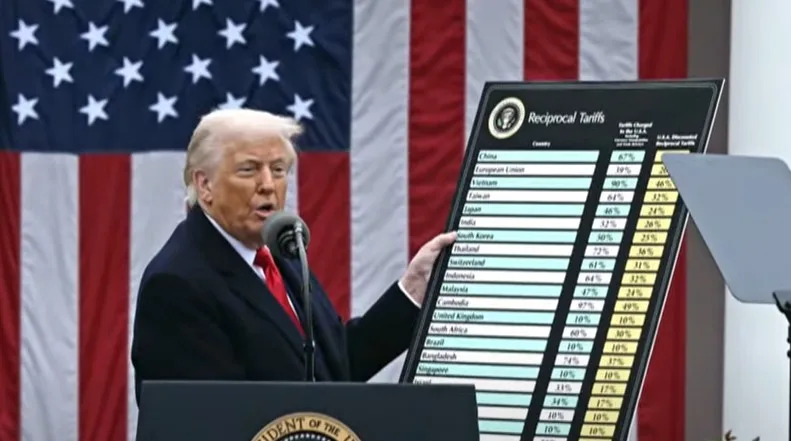
In a rare political flashpoint that exposed growing tensions inside Washington, the Republican-controlled House voted to challenge President Donald Trump’s tariffs on Canada, delivering an unusual symbolic rebuke of a core White House policy.
The vote, 219-211, marked one of the first times the GOP-led chamber openly confronted the president on trade. While the resolution is unlikely to ultimately overturn the tariffs without presidential approval, the move signals rising political and economic pressure surrounding U.S. trade policy, inflation concerns, and cross-border commerce with one of America’s largest trading partners.
For investors, the episode is not just political theater. It highlights real uncertainty around tariffs, supply chains, inflation, and North American trade stability, all of which can directly impact markets, corporate earnings, and commodity flows.
What the House Actually Voted On
The resolution passed by the House seeks to terminate the national emergency declared by President Trump, which allowed his administration to impose tariffs on Canadian imports outside the standard U.S.-Mexico-Canada Agreement framework.
Lawmakers from both parties supported the measure, including six Republicans who broke ranks with leadership. One Democrat voted against it.
Rep. Gregory Meeks, who authored the resolution, framed the issue around consumer costs and inflation pressure:
“Today’s vote is simple, very simple: Will you vote to lower the cost of living for the American family or will you keep prices high out of loyalty to one person — Donald J. Trump?”
However, the resolution faces long odds. Even if both chambers pass it, the measure would require President Trump’s signature or a veto override, making an actual rollback unlikely in the near term.
Trump Responds Immediately
President Trump reacted quickly and forcefully, warning Republicans against opposing his trade agenda.
“Any Republican, in the House or the Senate, that votes against TARIFFS will seriously suffer the consequences come Election time, and that includes Primaries!”
The response underscores how central tariffs remain to Trump’s economic strategy. The president continues to view tariffs as leverage to force trading partners into negotiations and secure more favorable trade terms for the United States.
Rising Political Pressure Over Trade and Inflation
The House vote reflects broader concerns lawmakers are hearing from businesses and voters. Companies affected by tariffs are facing higher costs, while consumers continue to feel pressure from elevated prices across key sectors including autos, housing materials, agriculture, and energy.
With midterm elections approaching, economic sentiment is becoming a major political factor. Tariffs, once seen primarily as a geopolitical tool, are now deeply tied to domestic cost-of-living debates.
Senate Already Signaled Opposition
The Senate has previously voted to reject the Canada tariffs in a similar show of disapproval. Still, both chambers must approve the same resolution before sending it to the president, making the path forward uncertain.
From Canada, Ontario Premier Doug Ford welcomed the House vote:
“an important victory with more work ahead.”
He added thanks to lawmakers from both parties “who stood up in support of free trade and economic growth between our two great countries. Let’s end the tariffs and together build a more prosperous and secure future.”
Escalating U.S.-Canada Trade Tensions
The vote comes amid growing friction between the U.S. and Canada, historically one of America’s closest allies and largest trading partners.
President Trump recently threatened a potential 100% tariff on certain Canadian goods following Canada’s proposed trade arrangement involving China. The move intensified tensions and raised concerns about supply chain disruption across North America.
Canada is one of the United States’ largest export markets and a major supplier of:
- Energy
- Timber and construction materials
- Autos and auto parts
- Agricultural goods
- Critical minerals
Any prolonged trade conflict could ripple across multiple sectors tied to cross-border commerce.
The Fentanyl Emergency Argument
The Trump administration justified the tariffs by citing illicit drug flows, arguing fentanyl smuggling constitutes an extraordinary national emergency.
Rep. Brian Mast defended keeping the policy intact:
“Let’s be clear again about what this resolution is and what it’s not. It’s not a debate about tariffs. You can talk about those, but that’s not really what it is. This is Democrats trying to ignore that there is a fentanyl crisis.”
However, experts note most fentanyl entering the United States comes through the southern border. While some fentanyl is produced in Canada, it represents a much smaller share of the total flow.
Republican Divide Over Tariffs and Executive Power
The vote also exposed a deeper institutional debate within Congress about trade authority and executive power.
Some Republicans argued Congress must reassert its role rather than defer entirely to the White House.
Rep. Don Bacon said:
“Why doesn’t the Congress stand on its own two feet and say that we’re an independent branch? We should defend our authorities. I hope the Supreme Court does, but if we don’t do it, shame on us.”
Others remained firmly aligned with the president.
“At the end of the day, we’re going to have to support our president,” said Rep. Keith Self.
Rep. Darrell Issa added he did not want to limit presidential trade flexibility and would support tariffs “at this time.”
Supreme Court Could Still Shape the Outcome
House Speaker Mike Johnson attempted to delay the vote pending a Supreme Court ruling on the legality of the tariffs. His procedural maneuver failed when several Republicans broke ranks.
The court’s eventual decision could reshape presidential tariff authority, making this legal battle a key variable for markets and trade policy.
Why This Matters for Investors
The House vote may appear symbolic, but the implications for investors are real and significant.
1. Trade Policy Uncertainty
Markets dislike unpredictability. Ongoing disputes between Congress, the White House, and the courts increase uncertainty around tariffs, trade flows, and global supply chains.
2. Inflation Risk
Tariffs often raise import costs, which can pass through to consumers. If tariffs remain or expand, inflation pressure could persist, influencing Federal Reserve policy and interest rates.
3. Corporate Earnings Impact
Companies reliant on cross-border trade face higher costs, supply chain disruption, and pricing pressure. Key sectors affected include:
- Industrials
- Manufacturing
- Agriculture
- Autos
- Energy
- Retail
4. U.S.-Canada Trade Stability
Canada is one of the United States’ largest economic partners. Prolonged trade friction could affect energy flows, commodities, and North American manufacturing integration.
5. Political Risk Premium
Investors must now factor in growing political division over trade policy. Markets often react when policy direction appears unstable or contested.
Market Implications Going Forward
Several scenarios could unfold:
If tariffs remain intact
- Inflation may stay elevated
- Trade tensions could rise
- Supply chain volatility continues
- Defensive and domestic sectors may benefit
If tariffs are reduced or repealed
- Trade stability improves
- Inflation pressure may ease
- Cross-border industries rally
- Risk sentiment improves
If legal battles reshape tariff authority
- Markets may see sharp policy shifts
- Trade strategy uncertainty increases
- Volatility rises
About Author