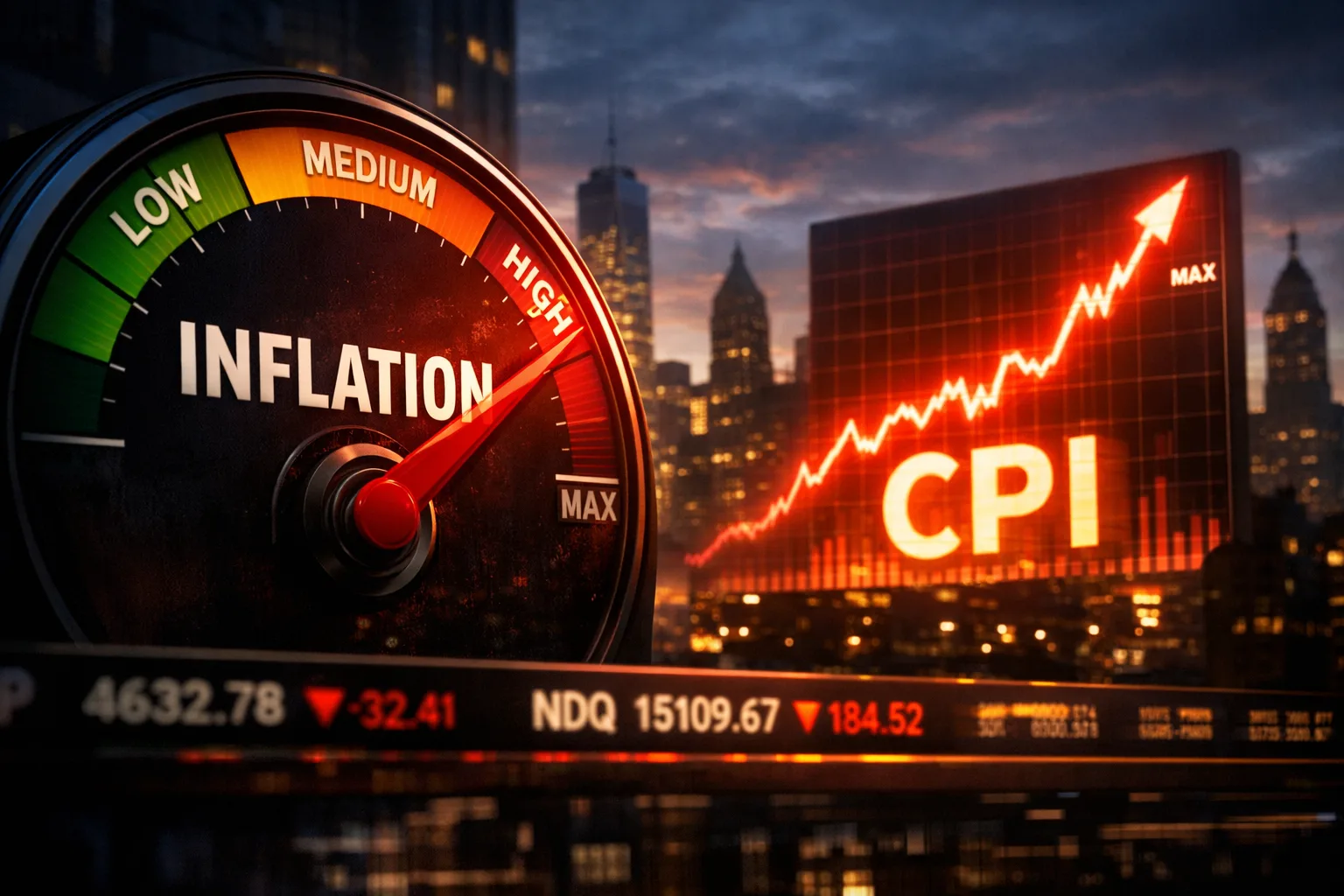
Inflation may be poised to surprise markets again, and investors are paying close attention. After a year of cooling price pressures and growing expectations for interest rate cuts, the upcoming inflation report could challenge the narrative that inflation is fully under control. January has a long history of producing hotter than expected readings, and this time the stakes are even higher because tariffs, seasonal quirks, and shifting consumer behavior are all colliding at once.
For investors, the key question is simple. Is inflation actually reaccelerating, or is this another statistical illusion that could fade in the months ahead?
Understanding the difference could shape markets, interest rates, and asset prices throughout the year.
Markets Brace for a January Inflation Surprise
Wall Street economists expect a modest increase in prices. Consensus forecasts call for consumer prices to rise about 0.3 percent in January, which would push the annual inflation rate down toward roughly 2.5 percent. On paper, that looks like continued progress toward the Federal Reserve’s target.
But many analysts are not convinced the number will come in that smoothly.
January has repeatedly produced stronger inflation readings than other months. Last year, consumer prices rose more in January than at any other point in the year. The same pattern appeared the year before. Even in periods when inflation was cooling overall, January still showed unusually strong price gains.
If inflation comes in hot again, markets could react quickly. Interest rate cut expectations would likely be pushed back, bond yields could rise, and equities sensitive to rates may face renewed pressure.
Tariffs Are Back in the Inflation Conversation
One of the biggest wildcards this year is tariffs.
Some economists believe companies may finally be passing along the cost of tariffs imposed during the past year. If businesses begin transferring those higher costs to consumers, goods prices could rise noticeably, especially in categories that depend heavily on imports.
Recent data from digital commerce trackers shows price increases across a wide range of products, including computers, electronics, and home appliances. These categories rely significantly on imported components, which makes them particularly sensitive to tariff pressure.
Economist Aichi Amemiya noted, “Tariff pass-through had been slow and gradual until December. It’s very possible that retailers passed higher costs onto their customers through postholiday price adjustments.”
If those increases appear in official inflation data, markets may interpret it as direct evidence that tariffs are contributing to renewed price pressure.
However, tariffs may not be the full story.
The Hidden Factor: Residual Seasonality
A less obvious but potentially powerful force is something economists call residual seasonality.
Prices tend to rise at the start of each year. Gyms increase membership fees. Subscription services reset pricing. Retailers remove holiday discounts. Businesses often adjust prices annually in January.
The Bureau of Labor Statistics attempts to smooth out predictable seasonal patterns when calculating inflation. But some economists argue the adjustments are not perfect, meaning seasonal price increases can still show up in the data.
A recent study from the Boston Federal Reserve found that, historically, seasonally adjusted January inflation has been slightly higher than other months. Even a small difference can matter. Financial markets often react strongly to shifts as small as one tenth of a percentage point in monthly inflation.
Residual seasonality has become more noticeable in recent years, partly because inflation has been driven more by services rather than goods. Services businesses such as healthcare providers, subscription companies, and local service providers are more likely to reset prices annually in January.
This creates a statistical challenge. A hot inflation reading may reflect real price pressure, seasonal quirks, or a combination of both.
Goods Prices Are the Key Signal to Watch
If January inflation comes in strong, investors will closely examine where the pressure is coming from.
Goods inflation is particularly important right now. Goods prices surged during the early inflation wave but later cooled significantly. If goods prices begin rising again, especially in tariff sensitive categories, it could signal renewed inflation risk.
Recent data suggests goods price increases were broad based in January, including electronics, appliances, and technology products. If confirmed, this would support the argument that tariffs are beginning to flow through the economy.
Still, even if goods prices jump, it does not necessarily mean inflation will remain high throughout the year. Some economists believe businesses may have used the new year to restore profit margins rather than initiate a long term pricing trend.
In other words, a spike could prove temporary rather than structural.
Consumer Behavior Is Shifting
Another major factor influencing inflation is consumer behavior.
After years of elevated prices, affordability has become one of the most important economic and political issues in the United States. Consumers are increasingly sensitive to price increases, and businesses are taking notice.
Many corporate leaders have reported that customers are trading down to cheaper options, choosing store brands, and reducing discretionary spending. That shift is putting pressure on companies to compete more aggressively on price.
Major consumer brands have already begun adjusting. PepsiCo recently lowered prices on some snack products in an effort to drive demand among cost conscious consumers. General Mills has made similar moves across its product portfolio.
Economist Lawrence Werther explained, “Executives are realizing that their target demographics may be hesitating a bit with spending, so they’re less willing to push through higher prices.”
If companies continue prioritizing volume over margins, inflation could remain contained even if January produces a temporary spike.
What This Means for the Federal Reserve
The Federal Reserve is watching inflation closely because it directly influences interest rate policy.
If inflation comes in hotter than expected, the Fed may delay or slow future rate cuts. Policymakers have repeatedly stated they want clear evidence inflation is moving sustainably toward their target before easing policy further.
Even a single strong inflation reading could shift expectations, especially if it suggests tariffs or goods prices are reigniting inflation pressure.
On the other hand, if the January spike proves temporary and inflation resumes cooling in subsequent months, the Fed could stay on its path toward gradual easing.
For markets, the difference between those two scenarios is enormous.
Investor Implications: Why This Report Matters
A hotter than expected inflation reading could trigger several market reactions:
- Bond yields could rise as investors adjust rate cut expectations
- Growth stocks may face pressure due to higher discount rates
- The dollar could strengthen if rate cuts are delayed
- Commodities such as gold may react to inflation expectations
- Consumer focused companies may face margin pressure
However, if the spike proves seasonal rather than structural, markets could quickly reverse those moves.
This makes the upcoming inflation report one of the most important economic releases of the quarter.
The Bottom Line
January inflation often runs hotter than expected, but the reasons are not always straightforward. Tariffs, seasonal distortions, and shifting consumer behavior are all interacting at once, making interpretation unusually complex.
A strong reading does not automatically mean inflation is returning. It could reflect temporary pricing adjustments or statistical quirks. But if goods prices show sustained strength and tariff effects become clearer, markets may need to reconsider the outlook for interest rates and economic growth.
For investors, the key is not just whether inflation comes in hot, but why.
The answer could shape markets for months to come.
About Author