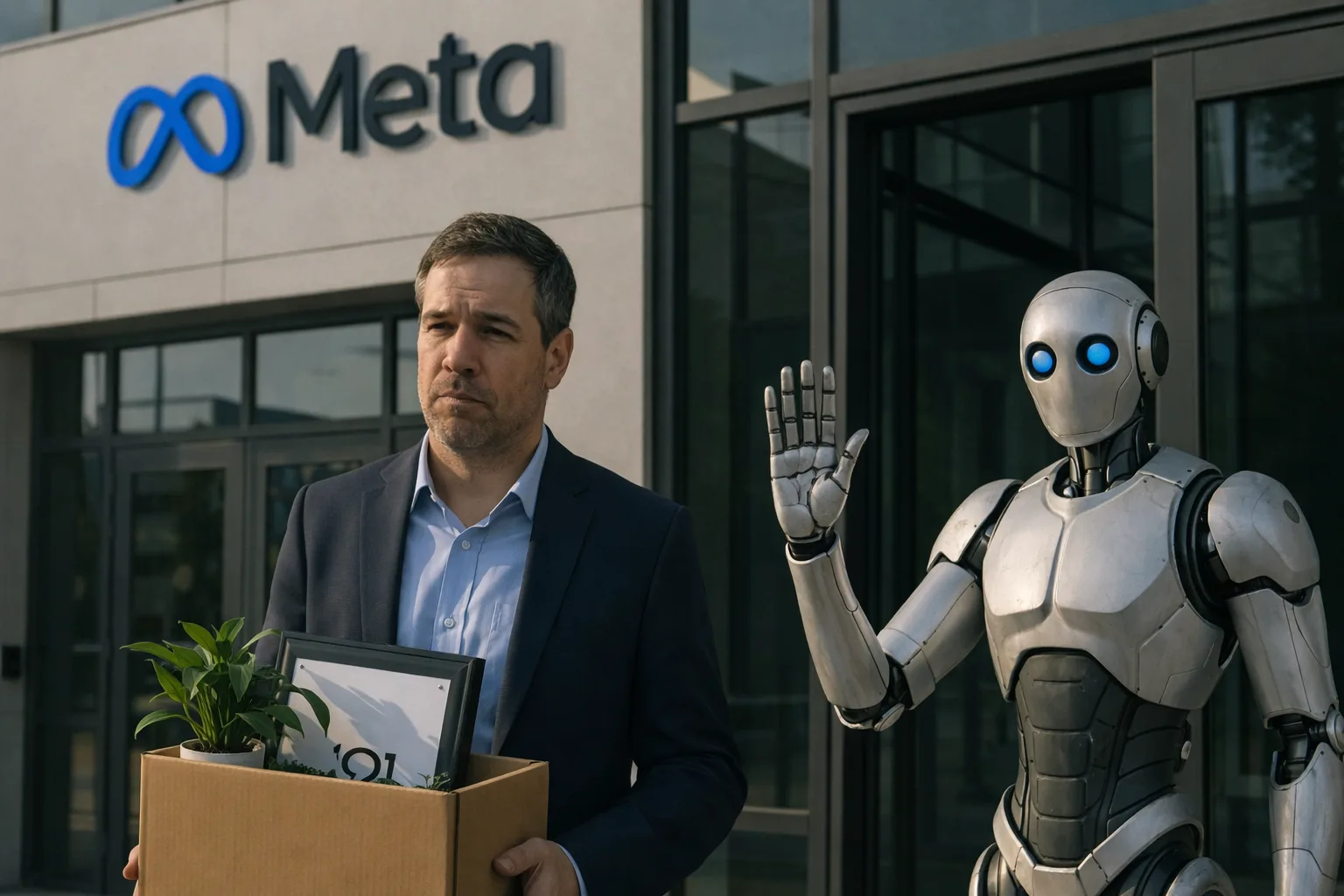
META is preparing to eliminate roughly 8,000 jobs this week while freezing another 6,000 open roles, according to a new CNBC report. The layoffs are expected to begin Wednesday and represent one of the clearest signals yet that Big Tech’s AI spending boom is still forcing companies into painful tradeoffs behind the scenes.
Investors have largely rewarded Meta for its aggressive AI pivot. Shares have surged over the past two years as Wall Street embraced the company’s spending discipline, advertising rebound, and expanding AI ambitions. But this latest move shows the cost structure pressure inside Silicon Valley is intensifying again, even after the industry’s massive post-pandemic reset.
The message from Meta appears straightforward: protect margins, free up capital, and redirect resources toward artificial intelligence infrastructure before competitors widen the gap.
The Company Zuckerberg Is Building Now Looks Very Different
Meta previously cut around 21,000 employees during its 2022 and 2023 restructuring campaign. At the time, CEO Mark Zuckerberg publicly admitted he “got this wrong” after overexpanding during the pandemic-era tech boom.
This time, the tone is different.
According to CNBC, employees were told the new cuts are “all part of our continued effort to run the company more efficiently and to allow us to offset the other investments we’re making.”
That line matters because it reframes layoffs from emergency cost cutting into strategic capital reallocation. Meta is no longer shrinking because advertising is collapsing or because the metaverse bet failed to gain traction fast enough. The company is actively shifting labor dollars into AI infrastructure, chips, data centers, and model development.
That distinction is important for investors.
Wall Street tends to punish layoffs tied to weakening demand. It often rewards layoffs tied to productivity gains and operating leverage expansion.
Silicon Valley’s New Math Is Starting to Show
The broader story here extends far beyond Meta.
Tech giants are spending at historic levels to secure dominance in artificial intelligence. Billions are flowing into GPUs, networking hardware, cloud infrastructure, energy capacity, and AI talent. At the same time, companies are increasingly viewing parts of their existing workforce as replaceable or redundant in an AI-driven operating model.
That creates a strange dynamic across markets.
AI winners continue attracting capital at enormous valuations while thousands of white-collar workers face mounting pressure. Investors are beginning to realize that AI may improve margins faster than it creates new jobs, at least in the near term.
Meta’s latest cuts reinforce that reality.
The company is effectively telling markets that future growth will come less from headcount expansion and more from machine-driven productivity.
That narrative could continue supporting high-margin AI leaders across the Nasdaq, especially companies tied directly to the AI infrastructure buildout.
The Spending Race Wall Street Can’t Ignore
One overlooked aspect of Meta’s move is what it says about the durability of AI spending itself.
Many investors assumed Big Tech would eventually slow AI capital expenditures once initial hype cooled. Instead, the opposite is happening. Companies appear increasingly convinced that falling behind in AI carries existential risk.
That changes how investors should think about sectors connected to the buildout.
Semiconductor firms, power suppliers, data center operators, cooling technology companies, and cloud infrastructure providers may continue seeing sustained demand even if parts of the economy weaken.
Meta cutting jobs while simultaneously accelerating AI investment sends a strong signal that these spending priorities are becoming non-negotiable.
The labor cuts may also help preserve Meta’s profitability profile at a time when AI infrastructure costs are exploding across the industry. That could support earnings expectations even if spending continues climbing aggressively.
The Next Dominoes Investors Need to Watch
Here are the biggest catalysts investors should monitor over the coming weeks:
- Meta’s next earnings guidance, especially capital expenditure forecasts tied to AI infrastructure
- Commentary around operating margins and whether layoffs materially improve profitability expectations
- Additional hiring freezes or workforce reductions across Big Tech peers
- Semiconductor demand trends involving AI chips and server infrastructure
- Regulatory scrutiny surrounding AI-related labor displacement
- Whether advertisers continue increasing spending on Meta’s AI-enhanced advertising tools
- Broader Nasdaq reaction if investors begin rewarding “AI efficiency” restructurings across the sector
Investors should also pay close attention to whether Meta’s cuts remain isolated or become part of a wider second wave of tech layoffs tied specifically to AI adoption.
If that trend accelerates, markets may start pricing in a much more disruptive labor transition across white-collar industries.
A Bigger Divide May Be Forming Across Tech
The companies facing the greatest pressure may be firms caught between rising AI infrastructure costs and weaker revenue growth.
Mega-cap technology companies with massive cash reserves can afford the AI arms race. Smaller firms may struggle to keep pace while maintaining margins.
That divide could strengthen the dominance of existing tech giants even further.
Meta’s move also increases pressure on competitors like Alphabet, Microsoft, and Amazon to keep proving their own AI investments are translating into productivity gains and revenue expansion.
The market no longer wants AI promises alone. It wants measurable efficiency.
One Clear Message Is Emerging From Big Tech
Meta’s latest layoffs are less about weakness and more about prioritization.
The company is making it clear that artificial intelligence spending now outranks workforce expansion inside Silicon Valley’s largest firms. That shift has major implications for tech stocks, labor markets, and the next phase of the AI trade.
For investors, the key question is no longer whether companies will spend heavily on AI.
It is how aggressively they are willing to restructure their businesses to fund it.
About Author