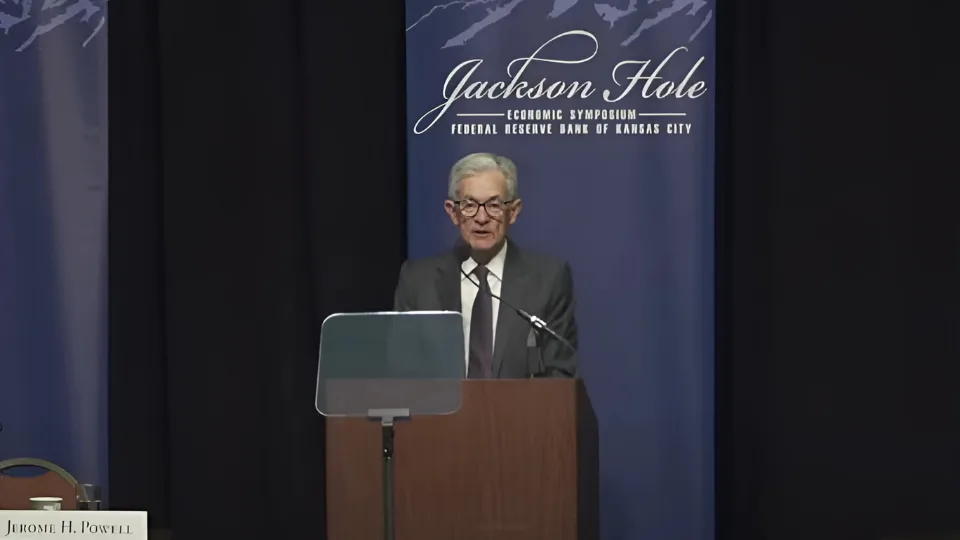
Federal Reserve Chair Jerome Powell’s highly anticipated Jackson Hole speech has thrown fuel on market speculation: interest rate cuts may be on the horizon. But the message wasn’t a clear green light—it was a cautious acknowledgment that risks are shifting, uncertainty is high, and the Fed’s room for maneuver is narrowing.
For investors, this moment is critical. Monetary policy is the single biggest driver of asset prices, and Powell’s words moved markets immediately: stocks surged, bond yields tumbled, and traders rushed to reprice expectations for the September Federal Open Market Committee (FOMC) meeting.
Powell’s Key Message: Caution, but Open to Cuts
In his remarks at Jackson Hole, Powell acknowledged that “the baseline outlook and the shifting balance of risks may warrant adjusting our policy stance.” That’s Fed-speak for: rate cuts are possible.
Importantly, Powell emphasized:
- Uncertainty is high. Tariffs, shifting trade policies, and unpredictable supply chains make forecasting difficult.
- The economy remains resilient. Unemployment is low, consumer demand is holding up, but cracks are showing.
- Inflation risks remain. Powell warned that tariffs could fuel a stagflation scenario—a toxic mix of rising prices and slowing growth.
- Independence matters. He stressed that Fed decisions will be based on data, not political pressure, even as President Trump publicly demands aggressive cuts.
In short: Powell didn’t promise cuts, but he acknowledged conditions could justify them.
Why Markets Reacted So Sharply
Markets don’t wait for official policy moves—they price in expectations. Powell’s careful wording was enough to trigger big swings:
- Dow Jones Industrial Average jumped more than 600 points after the speech.
- Treasury yields fell sharply, with the 2-year note dropping 0.08 percentage points to 3.71%.
The reaction reflects traders’ belief that the Fed will cut rates at its September 16–17 meeting. Fed funds futures now show a high probability of a quarter-point cut, with some bets even on a more aggressive move.
For investors, this underscores a critical truth: monetary policy doesn’t just follow markets—it shapes them.
The Trump Factor: Politics Meets Policy
Powell went out of his way to reaffirm the Fed’s independence. Still, the White House looms large over the debate.
- President Trump has demanded deep rate cuts, arguing tariffs will not cause lasting inflation.
- The Fed, however, sees risks that tariff-driven costs could linger in supply chains and distribution networks.
This sets up a delicate balancing act. Powell must avoid the perception of caving to political pressure while also preventing a policy mistake that could push the economy into recession.
For investors, this tension creates volatility—policy uncertainty can rattle bond markets, equities, and currencies alike.
Lessons From the Fed’s 5-Year Review
Powell’s remarks also touched on the Fed’s five-year policy framework review. The lessons were sobering:
- The 2020 shift to “flexible average inflation targeting” failed. Inflation didn’t stay moderate—it surged to 40-year highs.
- The Fed admitted it underestimated inflation. Powell acknowledged the missteps, saying the “intentional, moderate overshoot” strategy quickly became irrelevant.
- Commitment to 2% target reaffirmed. Despite critics arguing it’s too rigid, Powell said the 2% anchor is critical for long-term credibility.
For investors, this means the Fed is unlikely to abandon its inflation fight anytime soon. Even if cuts come, they’ll be tactical—not a return to the ultra-loose policies of the past decade.
The Risk of Stagflation
One of the most important warnings in Powell’s speech: tariffs could create a stagflation trap.
- Stagflation = rising prices + slowing growth. It was the nightmare of the 1970s and could resurface if tariffs keep pushing up costs while slowing trade.
- Powell said, “It will continue to take time for tariff increases to work their way through supply chains and distribution networks,” highlighting the unpredictable lag effects.
For investors, stagflation is brutal: stocks suffer, bonds underperform, and cash loses value. The winners tend to be hard assets like gold, commodities, and inflation-protected securities (TIPS).
Investor Takeaways
- Prepare for volatility. Markets are whipsawing on Fed signals. Expect more swings into September’s FOMC meeting.
- Don’t assume aggressive cuts. Powell is signaling caution. A small cut is likely, but a rapid easing cycle isn’t guaranteed.
- Diversify against stagflation. Consider exposure to real assets, commodities, and defensive equities.
- Watch the bond market. The 2-year Treasury yield remains the best “tells” on Fed policy direction.
- Mind the politics. Trump’s pressure adds noise. The Fed’s independence is being tested, and markets will react to perceived shifts.
About Author