After decades of success built on live television sales, QVC is now attempting a rapid financial reset while fighting off massive competition from Amazon, TikTok, and the broader e-commerce ecosystem. For investors, this situation is not just about one company. It is a case study in how fast consumer behavior can destroy even the most entrenched business models.
QVC Chapter 11 Filing: What We Know
QVC Group, the parent company of QVC and Home Shopping Network, is preparing to file for Chapter 11 bankruptcy in an effort to restructure more than $5 billion in debt.
The company plans to file in the Southern District of Texas and aims to move through the process quickly, targeting an exit in roughly 90 days while continuing normal operations.
Chapter 11 does not mean liquidation. Instead, it allows companies to reorganize their finances, renegotiate obligations with creditors, and attempt to emerge as a viable business.
However, QVC itself has acknowledged the stakes are high, warning in filings that there is “substantial doubt” about its ability to continue operating if restructuring efforts fail.
How QVC Got Here
Founded in 1986, QVC revolutionized retail by bringing live product demonstrations directly into millions of homes. At its peak, the company generated billions in annual revenue and reached hundreds of millions of households worldwide.
But the business model that made QVC a success is now working against it.
1. Cord-Cutting Destroyed Its Core Audience
Cable television viewership has collapsed over the past decade. As consumers shift toward streaming platforms, QVC’s traditional distribution channel has shrunk dramatically.
Even worse, the remaining viewers are less likely to buy. Today’s consumers can instantly compare prices online, eliminating the urgency that once drove impulse purchases on live TV.
2. E-Commerce and Social Media Took Over
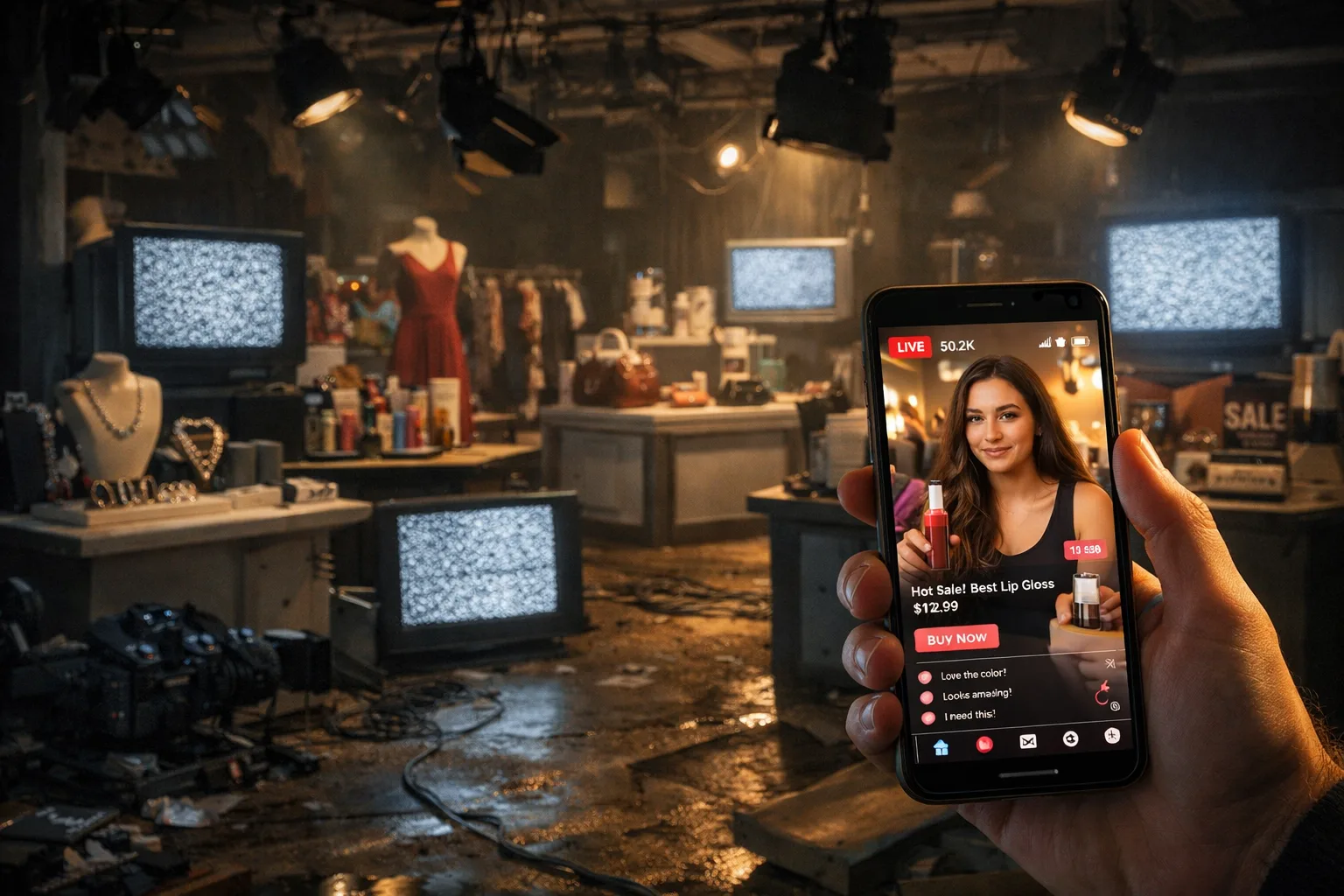
QVC now competes directly with platforms like Amazon and newer entrants like TikTok Shop, where influencers replicate the same live-selling model but with faster checkout and broader reach.
This is arguably the most important shift. QVC did not lose relevance because the concept failed. It lost relevance because others executed it better in a digital-first environment.
3. Debt Became Unmanageable
QVC entered this period of disruption carrying a heavy debt load, estimated at over $5 billion.
At the same time, the company reported billions in losses, including a staggering $2.4 billion loss in a recent year.
That combination of declining revenue and high leverage made bankruptcy increasingly likely.
4. Costs Are Rising at the Worst Time
Inflation, higher digital advertising costs, and tariff-related uncertainty have all squeezed margins.
QVC also attempted cost-cutting measures, including consolidating operations with HSN in Pennsylvania and reducing its workforce footprint, but those moves were not enough to stabilize the business.
What Happens Next
QVC’s Chapter 11 plan is expected to be a “prepackaged” restructuring, meaning key creditors have already agreed on a path forward.
The goal is speed.
Management is aiming to exit bankruptcy in about three months, a timeline that suggests lenders are motivated to keep the company alive rather than force liquidation.
Still, there are risks:
- Bankruptcy proceedings are expensive and could strain liquidity further
- Consumer perception may weaken during restructuring
- Operational disruptions could impact sales
- If restructuring fails, liquidation becomes a real possibility
Why QVC Chapter 11 Matters for Investors
This is bigger than one company.
1. The Death of Legacy Retail Models Is Accelerating
QVC’s Chapter 11 filing reinforces a harsh reality. Even profitable legacy models can collapse quickly when technology shifts.
Retailers that depend on outdated distribution channels are now in a race against time.
2. Digital-First Platforms Are Winning
The rise of TikTok Shop and influencer-driven commerce shows that live selling is not dead. It has simply moved.
Companies that adapt to mobile-first, creator-led ecosystems are gaining market share rapidly.
3. Debt Is Becoming a Market Killer
QVC’s situation highlights a broader issue in today’s economy. Companies carrying heavy debt loads are extremely vulnerable in a high-rate environment.
Investors should pay close attention to leverage ratios, refinancing risks, and cash flow stability across their portfolios.
4. Potential Opportunity in Distressed Assets
Chapter 11 situations can create opportunities.
If QVC successfully restructures:
- Debt could be reduced significantly
- Operations could become leaner
- The company could pivot more aggressively to digital
However, these plays are high-risk and require careful analysis.
Could QVC Stage a Comeback?
Some insiders believe a turnaround is possible.
The core concept that made QVC successful still works. Live selling, personality-driven content, and product storytelling are now dominating platforms like TikTok and YouTube.
The difference is execution.
A successful turnaround would likely require:
- Aggressive expansion into streaming and social commerce
- Partnerships with influencers and creators
- A shift away from traditional TV reliance
- Improved product curation and exclusivity
If QVC can successfully merge its legacy strengths with modern distribution, there is a path forward.
But that path is narrow.
The Bottom Line
QVC’s Chapter 11 filing is not just a corporate restructuring. It is a warning shot for the entire retail sector.
Consumer behavior has permanently changed.
Companies that fail to adapt quickly enough will not survive, no matter how dominant they once were.
For investors, the takeaway is simple. Focus on businesses that are aligned with where consumers are going, not where they have been.
About Author