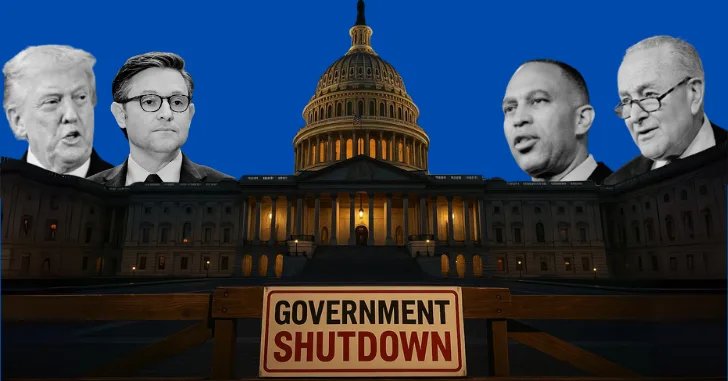
The federal government has technically been “shut down” for days, but now the fallout is visible in daily life and economic activity. What started as a political standoff in Washington is now hitting workers, businesses, and markets in ways that investors can no longer ignore. President Trump’s decision to ensure troop pay provides temporary relief for the military, but it may also slow the pressure on Congress to strike a deal. That raises the risk of a longer shutdown and more economic damage.
For investors, this is no longer theoretical. The effects are spreading into consumer spending, capital markets, lending, transportation, and corporate planning.
What Is Actually Happening
The shutdown has moved from policy debate to real-world disruption.
- Hundreds of thousands of federal workers are missing paychecks and living on savings.
- Federal contractors who are not guaranteed back pay are facing furloughs and income loss.
- Small-business loans, mortgage flood insurance approvals, and federal permitting are frozen.
- Airports are relying on unpaid staffing to maintain operations.
- The Securities and Exchange Commission is short-staffed and delaying corporate filings and stock registrations.
President Trump acted over the weekend to protect military families. He used $8 billion in unspent Defense Department research and development funds to cover payroll for 1.3 million active-duty troops and hundreds of thousands of reservists and National Guard members due to be paid on October 15. The administration has also provided short-term funding to programs serving women and infants and subsidizing rural air travel. These temporary fixes ease immediate pain but reduce the urgency on Congress to act.
Chris Krueger of TD Securities put it plainly: the White House is removing catalysts that typically force lawmakers to compromise.
The Stalemate in Congress
Republicans argue that Democrats are blocking a House-passed bill that would fund the government through November 21. Democrats insist that no bill will pass without guarantees on healthcare funding into 2025. Informal talks are underway, but leadership on both sides remains entrenched.
Sen. Mark Kelly of Arizona said on Meet the Press, “We need a real negotiation and we need a fix.” Senate Majority Leader John Thune warned that the pain is spreading across the country and “it is about to get a whole lot worse.”
House Speaker Mike Johnson said Democrats are being unreasonable and ignoring real hardship. House Minority Leader Hakeem Jeffries countered that Republicans are taking a “my way or the highway” approach.
Every day of inaction increases the economic risk.
Why Investors Should Pay Attention Now
Even a short shutdown slows growth. The longer this goes, the more consequences will show up in earnings, guidance, spending, and GDP.
Here are the market-sensitive pressure points expanding quickly:
1. Economic Data Freeze
Corporations rely on federal reports on inflation, jobs, housing, and trade. Without data, executives pause spending decisions. Greg Daco of EY-Parthenon says companies are adopting a more cautious stance.
2. Consumer Spending Risk
Consumer spending powers about 70 percent of the U.S. economy. Nancy Vanden Houten of Oxford Economics warns that furloughed workers often pull back immediately, especially when there is uncertainty about back pay.
3. Housing Slowdowns
Buyers in flood-designated zones cannot close on homes because the federal government has stopped issuing required flood insurance. Mortgage timelines are being disrupted.
4. Delayed Capital Markets Activity
With the SEC understaffed, some companies are unable to move forward with IPO preparation, stock offerings, or securities compliance.
5. Air Travel and Supply Chain Strain
Air-traffic controllers and TSA workers are still on the job without pay, but missed shifts and burnout can trigger delays and safety concerns. Rep. Dave Min has spoken with controllers who say they can manage for a few weeks, but not much longer without income.
6. Small Business Credit Freeze
The Small Business Administration has halted most new federal loans. That affects start-ups, Main Street employers, and entrepreneurs relying on SBA financing for payroll or expansion.
Contractor Fallout and Workforce Stress
Federal contractors are being hit hardest because they are not promised back pay.
- At Melwood, a federal contractor that maintains the grounds of sites like the Kennedy Center and the J. Edgar Hoover Building, hundreds of employees with disabilities are facing furloughs.
- In Nevada, about 150 workers at the Nevada Test Site have already been sent home. Up to 900 contractors from one union could face furlough if the shutdown continues.
Union leader Tommy Blitsch said workers are already applying for unemployment and worrying about their healthcare. He called on legislators to follow the same advice members of Congress once gave labor groups: “Get in a room, get it done, and put people back to work.”
Where the Impact Spreads Next
Washington, D.C. is the most visible point of impact, but other regions are exposed. Federal workers are heavily concentrated in Ogden, Utah, Kansas City, and Memphis. Income loss spreads quickly through local economies.
Each missed paycheck reduces consumer spending. Each furlough slows supply chains and contract timelines. Every delay in data or regulatory approvals affects planning.
When the White House uses discretionary funds to patch the biggest cracks, lawmakers feel less pressure to compromise. That can unintentionally extend the fiscal drag.
Key Areas for Investors to Watch
✅ 1. Consumer activity and retail numbers
Households reduce spending immediately when paychecks stop. The risk grows if back pay is not guaranteed.
✅ 2. Treasury yield volatility
Treasury markets were closed for Columbus Day. Once they reopen, limited economic data and uncertainty over the shutdown timeline could disrupt rate expectations.
✅ 3. Corporate guidance and earnings
Companies that rely on government approvals, data, or contracts may issue warnings or revise outlooks.
✅ 4. Defense exposure
Active-duty pay is covered, but civilian contractors are not. Defense firms with heavy contractor reliance could face disruption.
✅ 5. Transportation, shipping, and travel
Even small staffing issues at airports or ports can create cascading delays and financial strain.
✅ 6. Small and mid-cap vulnerability
Companies waiting on SBA loans, capital raises, or clear regulatory input are more exposed than large-cap peers.
Longer the Shutdown, Bigger the Impact
President Trump’s temporary funding maneuvers help the people most critical to national security, but they also push back the urgency for Congress to resolve the impasse. A longer shutdown means greater economic disruption.
The 2019 shutdown cost the economy an estimated 11 billion dollars in GDP. That happened under far less inflation pressure and with a more cooperative policy environment. Today’s conditions are riskier. Financial markets are more sensitive to uncertainty, guidance changes, and liquidity issues.
This shutdown has moved from background noise to a real market event. If Congress does not act soon, the economic cost will escalate and investor sentiment will suffer.
A prolonged shutdown is not just politics. It is a direct macro risk that could affect markets, earnings, jobs, and growth. Investors should start pricing in the possibility that this does not end quickly.
About Author