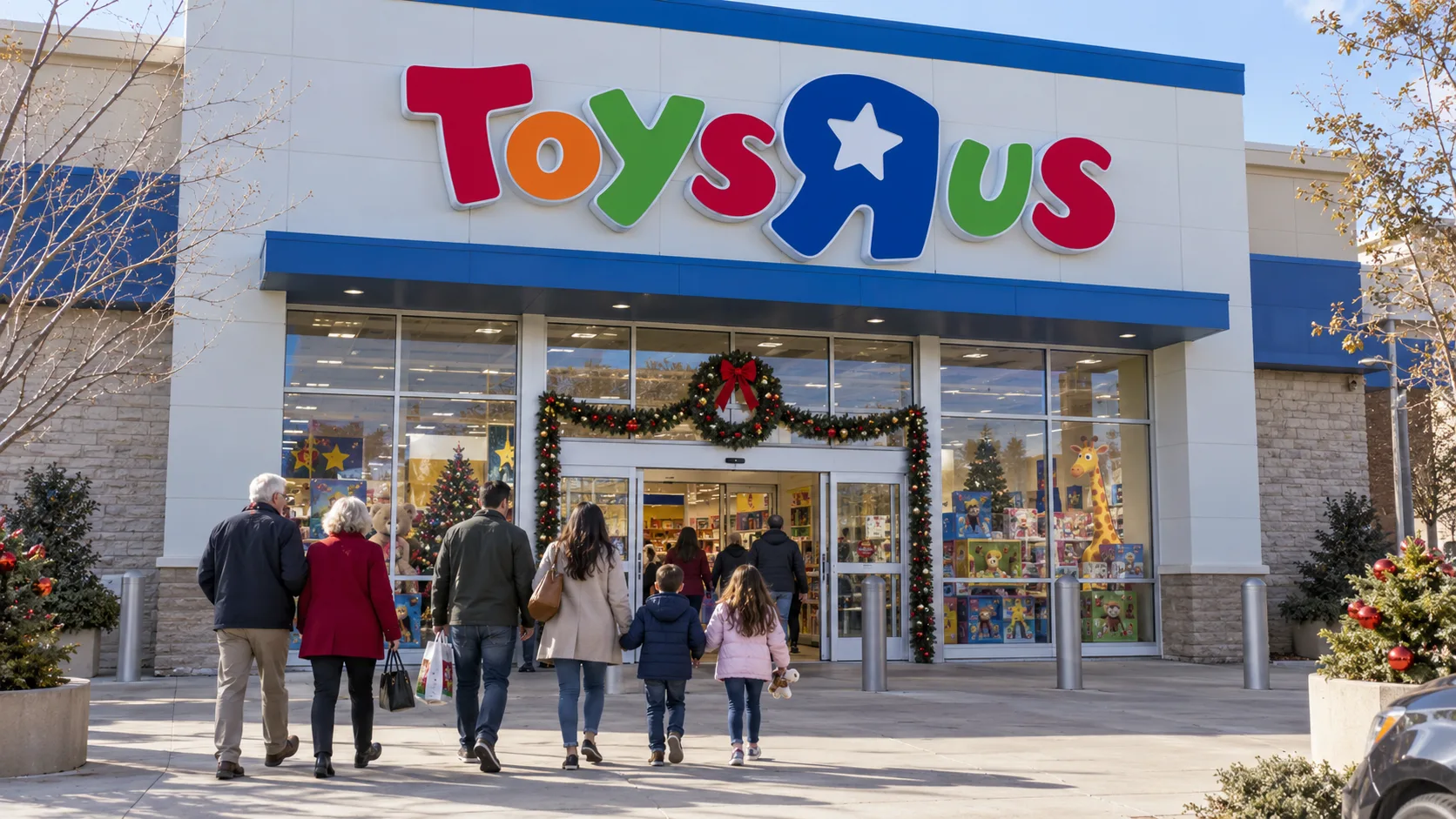
Toys R Us, a brand many Americans thought had disappeared for good, is preparing to open 120 standalone stores across the United States for the holiday shopping season.
The expansion will quadruple the retailer’s standalone U.S. footprint, increasing it from 40 locations to 160. It is the company’s largest domestic expansion since the former Toys R Us chain filed for bankruptcy in 2017 and liquidated its U.S. stores the following year.
The comeback is arriving at an unusually favorable moment. U.S. toy sales are rising, adult collectors are spending heavily, and licensed products tied to popular entertainment franchises are attracting customers who may not have visited a traditional toy store in years.
Still, this is a different Toys R Us from the big-box chain shoppers remember. The new strategy relies on operating partners, smaller formats and experiences designed to give people a reason to visit a physical store.
Toys R Us Will Expand From 40 Stores to 160
Toys R Us announced Thursday that it will open the 120 stores in partnership with Go! Retail Group, a family-owned company that operates both seasonal pop-up stores and year-round retail locations.
The new stores will sell familiar brands including LEGO, Barbie, Hot Wheels and Pokémon. Merchandise connected to the hit animated film KPop Demon Hunters will also be featured.
Select locations will include candy shops, cafés and Creator Studios, where customers can make and share content. Those additions show that the company wants the stores to function as entertainment destinations rather than simple shelves of merchandise.
The company did not release a complete list of locations or say how many of the 120 stores will remain open after the holiday season. That distinction matters because Go! Retail Group has extensive experience operating seasonal locations.
Toys R Us said the stores are intended to become destinations that shoppers will want to revisit throughout the year, suggesting that at least part of the expansion is aimed at establishing a lasting presence. Investors and shoppers should still wait for more specific details before assuming every new location will be permanent.
These Will Not Be the Old Toys R Us Stores
The original Toys R Us became famous for enormous stores filled with seemingly endless rows of toys. That model also came with high operating costs, large inventories and an extensive real estate footprint.
The revived company is taking a more flexible approach.
Toys R Us already operates branded shops inside Macy’s stores across the country. It has also expanded into airports, including a shop-in-shop that opened at Orlando International Airport in August. A second Orlando airport location is scheduled to open in summer 2027.
These partnerships allow the brand to reach shoppers without rebuilding the old chain store by store. They also give Toys R Us the ability to test locations, formats and merchandise before making larger commitments.
WHP Global, the brand-management company that owns Toys R Us, says the brand now generates more than $2 billion in annual retail sales through more than 1,680 stores and e-commerce sites in 37 countries.
That global reach makes the U.S. expansion more than a nostalgic experiment. Toys R Us remains a significant international retail brand, even though its American presence is much smaller than it was before the bankruptcy.
Adults Are Helping Drive the Toy Boom
The timing of the expansion may be one of the most important parts of the story.
U.S. toy sales increased 17% during the first half of 2026, according to market-research company Circana. Unit sales rose 12%, while the average selling price increased 4%.
The strongest growth did not come only from parents buying toys for children. Households made up exclusively of adults accounted for 55% of toy sales, and toy purchases for adults age 18 and older increased 25%.
Teen spending was also strong. Sales to consumers ages 12 through 17 increased 33%, and teens and adults together produced nearly 60% of the industry’s additional dollar sales.
Collectibles, trading cards and licensed merchandise have become central to the market. Licensed products increased 24% and represented 39% of total toy sales during the first half of the year.
That trend gives Toys R Us a broader customer base than it had during its previous era. A store can now target children, parents, grandparents, collectors and nostalgic adults at the same time.
What the Comeback Means for Investors
Toys R Us itself does not offer a direct stock-market opportunity. WHP Global and Go! Retail Group are privately held.
The expansion can still provide useful signals about consumer spending and the health of physical retail.
Mattel could benefit if the new stores give prominent placement to Barbie and Hot Wheels products. Macy’s also remains connected to the comeback through Toys R Us shops inside its department stores. Retail landlords could gain if the brand fills vacant space and draws families back to shopping centers during the crucial holiday season.
The larger opportunity may be in licensed entertainment products. The rapid growth of that category suggests that toy companies with recognizable characters and strong intellectual property have an advantage over manufacturers selling generic products.
The expansion also challenges the idea that online shopping has eliminated the need for physical toy stores. Toys are visual, interactive products, and shoppers often want to discover them in person. A store that combines merchandise with demonstrations, content creation, food and events can offer something that a product page cannot reproduce.
The Comeback Still Faces Real Risks
Strong industry growth does not guarantee that 120 new stores will succeed.
Toys R Us will compete with Amazon, Walmart, Target and discount retailers that can use toys to attract holiday shoppers. Consumers are also contending with inflation, tariffs and higher prices across many household categories.
Seasonal demand creates another risk. Toy sales rise sharply before the holidays, so stores that look successful in November and December may face a much tougher environment in January and February.
The company’s flexible model can limit some of that exposure. It also means the number of stores operating after the holidays may be a more revealing measure of the comeback than the number that open before them.
What to Watch Next
The first test will be the list of store locations and how many are full-year operations. Store size will also reveal whether Toys R Us is trying to recreate its old destination format or favoring smaller, more efficient locations.
Holiday sales will show whether nostalgia translates into repeat purchases. Investors should also watch results from major toy manufacturers and retailers for evidence that adult collectors and licensed merchandise are continuing to drive industry growth.
If the new locations perform well beyond December, Toys R Us could accelerate its return to shopping centers across the country. If traffic fades after the holidays, the expansion may settle into a more seasonal model.
The Bottom Line
The opening of 120 stores is a meaningful comeback for one of America’s best-known retail brands. Toys R Us is returning with a more flexible operating model and a customer base that now extends well beyond children.
The real story is not simply that the giraffe is back. It is whether nostalgia, adult collectors and experiential shopping can turn a famous name into a durable modern retailer.
About Author