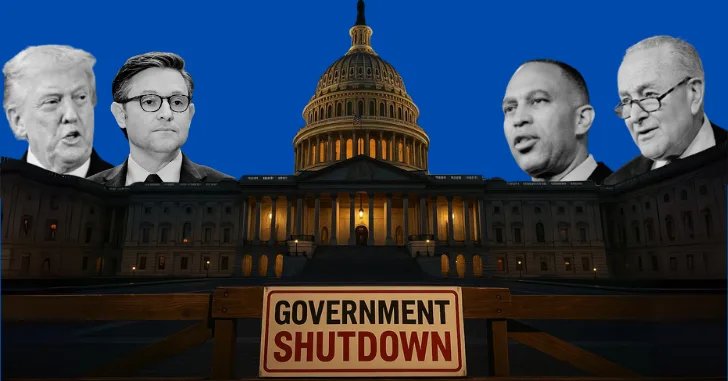
President Donald Trump has abruptly canceled a long-anticipated meeting with Senate Minority Leader Chuck Schumer and House Minority Leader Hakeem Jeffries. Many in Washington had hoped this meeting would be the vehicle to avoid a government shutdown. The deadline of September 30, 2025 is approaching quickly. In his announcement, Trump said the Democratic demands are “unserious and ridiculous” and that any meeting before those demands are dropped would be pointless.
What Is at the Heart of the Conflict
The shutdown threat stems from a fundamental disagreement over how to fund the government or extend funding and what policy riders or changes get attached:
- Democratic demands include preserving or expanding Affordable Care Act subsidies, reversing cuts to Medicaid, and protecting healthcare programs for low-income Americans.
- Republican preference including Trump’s position is for a “clean” continuing resolution. This means simply extending funding at existing levels without major policy changes or additional spending. Trump insists Democrats must drop their demands before negotiations.
Past stopgap proposals have already failed. The Senate voted down the GOP backed resolution and Democrats rejected one because it excluded the healthcare provisions they want included. (The Guardian)
Why Trump Cancelling the Meeting Matters
- Here is what President Trump said on Truth Social
- Negotiation posture: Refusing to meet unless demands are dropped signals an ultimatum rather than a willingness to compromise.
- Political messaging: Trump is shaping the narrative. Calling the demands radical and refusing to meet helps him paint Democrats as obstructionist which could energize his base.
- Time pressure: With the funding deadline just days away cancelling talks leaves little time for compromise. Each day lost makes drafting and voting on any agreement harder.
What a Shutdown Looks Like
It is not just political theater. A shutdown has real effects. Here is what past shutdowns and analyses show: (CRFB)
| Impact Area | What Happens |
|---|---|
| Federal Workers | Many non-essential employees are furloughed without pay until funding is restored. Essential workers often continue but without pay initially. |
| Public Services | Passport processing, small business loans, environmental inspections and national parks face delays or closures. Air travel can be disrupted. |
| Mandatory Programs | Social Security, Medicare and debt interest payments typically continue because they are not funded through the annual appropriations that lapse. |
| Economic Ripple Effects | Reduced consumer confidence, delayed government contracting payments, regulatory slowdowns and possible impacts on economic data reporting. The longer the shutdown the greater the risk to GDP and the more pronounced market turbulence. |
How Markets & GDP Have Historically Reacted to Shutdowns
| Incident | Duration* | S&P 500 Return During Shutdown | GDP Hit / Economic Drag | S&P 500 Return 6-12 Months Later |
|---|---|---|---|---|
| Oct 2013 (16 days) | ~16 days | +3.1% during shutdown (Kiplinger) | Modest, temporary slowdown; agencies and services disrupted (Morgan Stanley) | +7-17% depending on period considered (American Century Investments) |
| Dec 2018-Jan 2019 (longest) | ~35 days | +10.3% during shutdown (Kiplinger) | GDP down ~0.1% in Q4 2018; ~0.2% in Q1 2019; total permanent loss ~US$3B (very small relative to overall economy) (American Century Investments) | +9-14% in 6-12 month period (American Century Investments) |
| Other shutdowns (short, 1-5 days) | 1-5 days | Mostly flat to slightly positive or negative, typically in the +/- few percent range (American Century Investments) | Very small impact; disruptions more visible than macro-economic damage (Morgan Stanley) | Over 12 months after the weakness passed, returns have generally been solid, often in the +10-20% range (American Century Investments) |
What Is at Risk and What Is Likely
Given the current standoff here are some scenarios and what your audience should watch:
- Fast compromise: Democrats trim back their demands or negotiate a narrower set of healthcare protections. A continuing resolution passes, the government remains open and both sides claim partial wins. Damage is minimal.
- Short shutdown: No deal by Sept. 30 leads to furloughs. Essential operations continue but public pressure builds and a deal is reached within days. Damage is visible but brief.
- Prolonged shutdown: Neither side gives ground. A multi-week shutdown develops. That causes greater economic drag, pushes markets lower and drains public patience.
Why This Could Backfire for Trump
Cancelling the meeting carries risks:
- Public blame: Polls in past shutdowns show voters tend to blame whoever appears unwilling to compromise. Refusing dialogue might look strong to his base but weak to swing voters.
- Economic cost: Even short shutdowns cost billions in lost output and unproductive downtime. Supply chain disruptions, delayed approvals and contract delays all hit businesses and consumers.
- Political leverage erosion: If public sentiment turns strongly against a shutdown, moderates could pressure Republican leadership to shift course.
A Strategic Reset
Trump’s cancellation of the meeting is more than a refusal to talk. It is a strategic reset. He is pushing the narrative that Democrats must drop their demands first. This raises the odds of a shutdown significantly. The cost is real and it will be your audience, especially those with stakes in sectors like travel, government contracting and financial services, who feel it first.
About Author