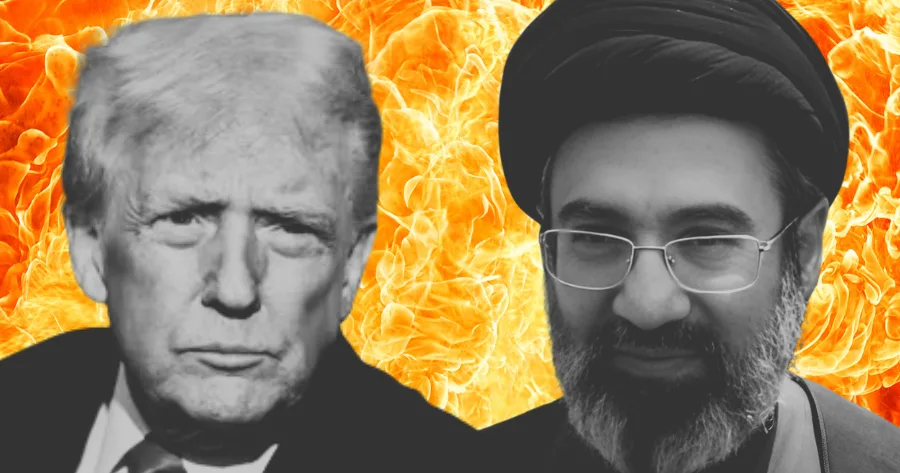
President Donald Trump sharply escalated tensions with Iran on Monday, warning that the United States could target and destroy key pillars of Iran’s energy infrastructure if a deal is not reached soon and the Strait of Hormuz remains closed.
The warning comes as the conflict enters its fifth week, with global markets already reacting to rising geopolitical risk and the potential for a major disruption in oil supply.
Trump Issues Stark Warning on Iran’s Energy Sector
In a post on Truth Social, Trump signaled both optimism about negotiations and a willingness to take aggressive military action if talks collapse.
“The United States of America is in serious discussions with A NEW, AND MORE REASONABLE, REGIME to end our Military Operations in Iran,” Trump said.
He added:
“Great progress has been made but, if for any reason a deal is not shortly reached, which it probably will be, and if the Hormuz Strait is not immediately ‘Open for Business,’ we will conclude our lovely ‘stay’ in Iran by blowing up and completely obliterating all of their Electric Generating Plants, Oil Wells and Kharg Island (and possibly all desalinization plants!), which we have purposefully not yet ‘touched.’”
The statement underscores how central energy infrastructure has become in the conflict, with both sides recognizing its strategic and economic importance.
Why Kharg Island Matters So Much
At the center of Trump’s warning is Kharg Island, a critical hub for Iran’s oil exports.
Kharg Island is not just another energy facility. It is the backbone of Iran’s oil export system.
- Roughly 90% of Iran’s crude exports move through this single location
- The island has an estimated loading capacity of about 7 million barrels per day
- Tankers departing from Kharg must pass through the Strait of Hormuz to reach global markets
Any disruption or destruction of this facility would effectively cripple Iran’s ability to export oil, delivering a major economic blow.
Iran Pushes Back on U.S. Demands
Iran has so far rejected U.S. proposals aimed at ending the conflict.
Officials from Iranian Foreign Ministry described a reported 15-point U.S. plan as excessive and unacceptable. Iranian leadership has also denied that direct negotiations are currently underway, contradicting Trump’s suggestion of progress.
This disconnect between public messaging from both sides suggests that any near-term resolution remains uncertain.
Ground Invasion Risks Are Rising
Beyond airstrikes, the Trump administration is reportedly considering more direct military options, including the possibility of deploying ground forces to seize Kharg Island.
Such a move would mark a major escalation:
- It would shift the conflict from targeted strikes to territorial control
- It would significantly increase the risk of broader regional war
- It could draw in other Middle Eastern powers
For investors, this scenario represents a worst-case outcome in terms of geopolitical risk.
Oil Markets React as Supply Fears Surge
Energy markets are already pricing in the growing uncertainty.
Brent crude, the global benchmark, moved higher Monday and is on track for one of its strongest monthly gains on record.
Several key factors are driving the surge:
- Potential loss of Iranian oil exports
- Disruption to shipping routes through Hormuz
- Increased risk premiums tied to geopolitical instability
If the Strait remains closed or if infrastructure like Kharg Island is damaged, oil prices could spike even further.
What This Means for Investors
This situation is not just geopolitical. It has direct implications for portfolios.
1. Energy Stocks Could Benefit
Companies tied to oil production and services often see gains during supply shocks. Higher crude prices typically translate into stronger revenues and margins.
2. Inflation Risks Could Reaccelerate
Rising energy costs feed into transportation, manufacturing, and consumer prices. This could complicate the Federal Reserve’s path on interest rates.
3. Market Volatility Is Likely to Increase
Geopolitical shocks tend to drive volatility across equities, bonds, and commodities. Investors should expect sharp swings as headlines evolve.
4. Safe Haven Assets May Gain
Gold and other defensive assets often rally during periods of global instability, especially when military conflict threatens economic growth.
The April 6 Deadline and What Comes Next
Trump previously announced a temporary pause on strikes targeting Iran’s energy infrastructure, setting a deadline of April 6.
That date is now a critical inflection point.
If a deal is reached:
- Shipping through Hormuz could resume
- Oil prices may stabilize or pull back
- Risk assets could rally
If negotiations fail:
- U.S. strikes on energy infrastructure become more likely
- Iran could escalate further attacks on shipping
- Oil markets could experience extreme volatility
Bottom Line
The conflict between the U.S. and Iran has entered a dangerous new phase, with energy infrastructure and global oil supply at the center of the battle.
Trump’s latest warning makes it clear that the stakes are escalating fast.
For investors, this is no longer just another geopolitical headline. It is a real-time event with the potential to reshape energy markets, drive inflation, and trigger broader financial market reactions.
Staying ahead of these developments is critical.
About Author