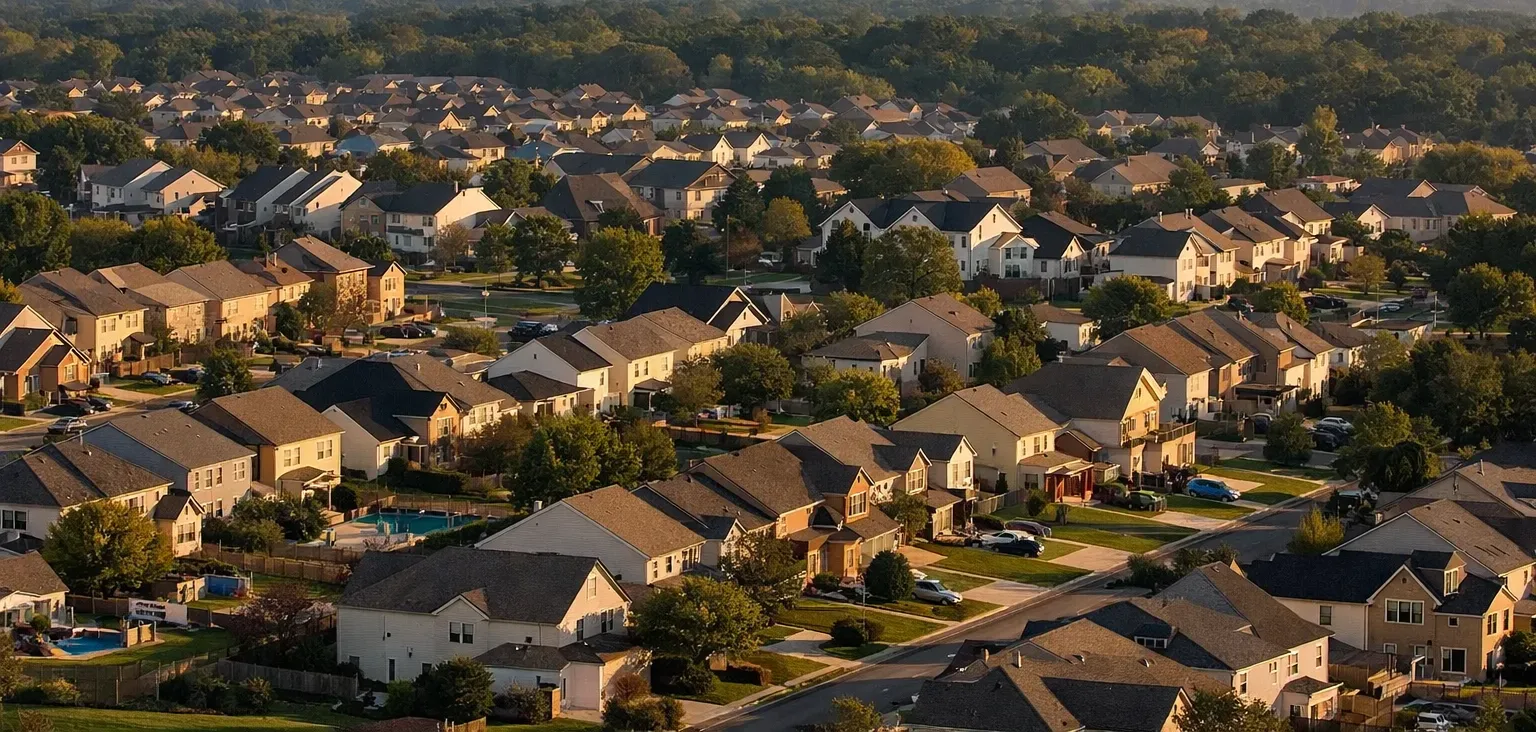
America’s housing crisis is entering a new political phase. President Donald Trump is pushing an aggressive proposal to block large institutional investors from buying single-family homes, arguing Wall Street has distorted affordability for everyday Americans. But Congress is moving in a different direction, advancing a sweeping housing bill without the investor ban. The clash highlights a deeper divide over how to fix housing supply, affordability, and ownership in the United States. At the same time, high-end real estate continues booming, with luxury giant Hermès quietly completing a record-breaking $400 million retail acquisition in Beverly Hills, signaling a very different reality at the top of the market.
For investors, homeowners, and market watchers, these developments reveal a housing market split between political intervention and capital-driven expansion.
Trump Pushes Investor Ban as Congress Resists
President Trump has made restricting institutional ownership of single-family homes a central part of his housing strategy. The administration argues that large investment firms buying thousands of homes have reduced inventory, pushed prices higher, and priced out middle-class families.
However, lawmakers in both chambers have shown little appetite for the proposal. Congressional Republicans and Democrats alike remain skeptical that banning institutional buyers would solve the housing shortage or improve affordability. Instead, Congress is focusing on broader housing legislation aimed at expanding supply, increasing development incentives, and addressing zoning constraints.
The House recently passed its housing bill without including the investor ban, despite pressure from the White House to add the amendment. The decision reflects a growing policy divide in Washington over whether market forces or regulatory restrictions should drive housing reform.
The disagreement could intensify as the Senate continues shaping its own version of housing legislation.
Why Institutional Investors Became a Target
Institutional ownership of single-family homes surged after the 2008 housing crash, when private equity firms began buying distressed properties in bulk. In recent years, rising rents and strong housing demand have turned single-family rental portfolios into a major asset class.
Supporters of Trump’s proposal argue that:
- Institutional buyers crowd out first-time homebuyers
- Large investors can outbid individuals with cash offers
- Bulk ownership can drive rent inflation
- Housing becomes a financial asset rather than a social necessity
Critics, however, warn that banning investors could produce unintended consequences:
- Reduced liquidity in housing markets
- Lower construction activity if investors retreat
- Less rental housing availability
- Minimal impact on prices because supply shortages remain the core issue
Housing economists widely agree that supply remains the dominant factor behind rising home prices, not investor ownership alone.
The Housing Supply Problem Still Dominates
Even as political debates intensify, the structural shortage of housing continues to shape the market. The United States remains millions of homes short of meeting demand, a gap that has widened over the past decade due to underbuilding, zoning restrictions, and rising construction costs.
Federal Reserve and housing data indicate that:
- Household debt has risen sharply since 2019, reflecting growing mortgage balances and higher borrowing costs
- Construction loan demand has begun to recover, suggesting developers may be preparing to increase building activity
- Housing affordability remains near historic lows due to high mortgage rates and limited inventory
These structural challenges mean that even aggressive policy measures may struggle to deliver rapid price relief.
Investors Still Dominate Certain Housing Segments
Despite political pressure, institutional investors continue to play a significant role in rental housing markets, especially in fast-growing Sun Belt regions. In some metro areas, large investors own a meaningful share of single-family rental inventory, particularly in suburban communities.
Real estate analysts note that investor activity tends to rise when:
- Mortgage rates are high and homeownership declines
- Rental demand increases due to affordability constraints
- Housing supply remains tight
- Institutional capital seeks inflation-resistant assets
This dynamic helps explain why policymakers are increasingly focused on investor influence in housing.
Luxury Real Estate Tells a Very Different Story
While policymakers debate affordability, the high-end real estate market continues to surge, driven by global wealth, luxury retail expansion, and institutional capital.
A mystery buyer behind Beverly Hills’ largest retail real estate purchase has now been revealed as Hermès, the French luxury powerhouse. The company paid approximately $400 million for prime Rodeo Drive storefronts currently occupied by Tom Ford, Moncler, and Balenciaga.
The acquisition gives Hermès control of a roughly 25,000-square-foot retail footprint at 338 North Rodeo Drive, potentially allowing the brand to expand its presence in one of the world’s most prestigious shopping districts.
Luxury retailers increasingly prefer owning flagship real estate rather than leasing, giving them long-term control over brand positioning and store experience. Analysts say this strategy has accelerated as global luxury brands accumulate large cash reserves and seek stable, trophy assets.
What the Hermès Deal Signals for Investors
The record-setting Beverly Hills purchase highlights several important market trends:
1. Trophy Real Estate Remains a Store of Value
Prime global retail locations continue attracting deep-pocketed buyers even as broader commercial real estate faces pressure.
2. Luxury Retail Is Still Expanding
High-end brands are consolidating physical presence despite e-commerce growth, focusing on flagship experiences in global wealth centers.
3. Institutional Capital Still Targets Real Estate
While policymakers debate housing investors, capital continues flowing into premium commercial properties.
4. Global Wealth Concentration Drives Demand
Ultra-high-net-worth consumers and luxury brands are reshaping prime real estate markets worldwide.
A Split Real Estate Market
The contrast between political housing battles and luxury real estate expansion reveals a market increasingly divided by income and asset class.
On one side:
- Affordability crisis
- Policy intervention
- Supply shortages
- Rising household debt
On the other:
- Luxury capital expansion
- Trophy asset acquisitions
- Global brand consolidation
- Strong demand for premium locations
This divergence is becoming one of the defining features of the modern housing and real estate cycle.
What Happens Next in Washington
The conflict between the White House and Congress over the housing investor ban is far from over. The Senate still has to finalize its housing legislation, and the administration may continue pushing for investor restrictions in future policy negotiations.
Possible outcomes include:
- A watered-down version of the investor restriction
- Targeted limits on large portfolio acquisitions
- Incentives for first-time homebuyers instead of investor bans
- Expanded housing construction programs
The final direction of federal housing policy will play a significant role in shaping real estate markets over the next decade.
What This Means for Investors
For investors, the key takeaway is that housing policy risk is rising, but structural supply dynamics remain dominant.
Potential Winners
- Homebuilders if supply expansion policies pass
- Construction and materials companies
- Rental housing operators if supply remains tight
- Luxury real estate and retail owners
Potential Risks
- Institutional single-family rental portfolios if restrictions emerge
- Mortgage lenders if affordability worsens
- Housing-dependent consumer sectors
Long term, housing remains one of the most politically sensitive and economically critical sectors in the U.S. economy.
The Bigger Picture
The housing market is increasingly shaped by three forces:
- Political intervention
- Supply shortages
- Global capital flows
Trump’s push to curb investor ownership reflects growing public pressure over affordability, but Congress appears focused on expanding supply rather than restricting capital. Meanwhile, luxury real estate continues attracting massive investment, showing that real estate remains one of the world’s most sought-after asset classes.
For investors, the message is clear: housing policy battles may create volatility, but long-term fundamentals will still drive the market.
About Author