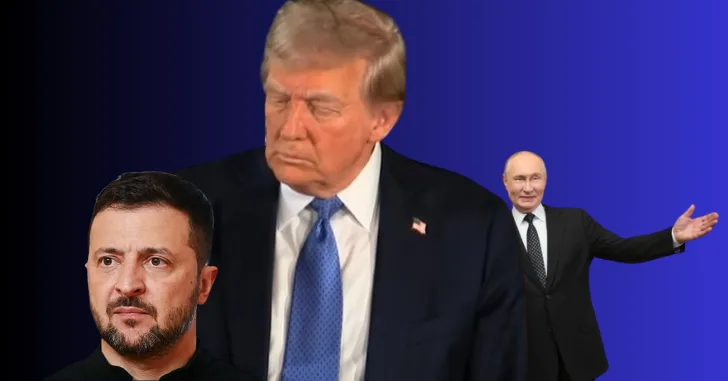
President Donald Trump’s recent about-face on supplying weapons to Ukraine has sent ripples through Washington, European capitals, and global markets alike. His renewed pledge to deliver fresh military aid to Kyiv — despite the Pentagon’s own pause on some arms shipments — is more than a fleeting headline. It’s a clear signal that Trump’s once warmer posture toward Moscow is under stress as the grinding Ukraine conflict drags on with no off-ramp in sight.
On Monday, Trump declared that the United States would send more weapons to Ukraine, arguing, “They have to be able to defend themselves,” in response to stepped-up Russian drone and missile strikes battering Ukrainian cities. This statement came just days after both the White House and Pentagon confirmed a pause in certain arms deliveries — particularly advanced air-defense and precision munitions — citing a need to assess U.S. stockpiles.
So what changed? And what does this mean for America’s position in the war, for investors in the defense sector, and for the broader risk climate that global markets must navigate?
A Fractured Policy: Signals from the Pentagon vs. the Oval Office
Trump’s move appears to override the Pentagon’s cautious slowdown in arms transfers. A Department of Defense spokesperson told Newsweek that “the Department of Defense is sending additional defensive weapons to Ukraine to ensure the Ukrainians can defend themselves while we work to secure a lasting peace.”
Yet behind the scenes, the pause in some shipments reflected worries in Washington that America’s stockpiles — especially of Patriot interceptors, drones, and precision-guided munitions — are dwindling under the strain of constant support for Ukraine, plus defense needs elsewhere.
Pentagon officials were reportedly acting under a capability review when they hit the brakes. But Trump’s public frustration with Putin’s unwillingness to stop his invasion appears to have forced a policy U-turn — or at minimum, a messy contradiction between the president’s words and the Pentagon’s actions.
Peter Rough, director of the Hudson Institute’s Center on Europe and Eurasia, told Newsweek that the situation reveals a deeper procedural disconnect: “The DOD, and one office in particular, took this decision seemingly without presidential approval, congressional notification, or interagency coordination.” He added that key U.S. partners and allies weren’t briefed in advance, which created confusion across NATO and Europe.
Trump’s Frustration with Putin: A Shift or Political Theater?
Many experts see Trump’s public rebuke of Vladimir Putin as the clearest sign yet that the U.S. president is losing patience with Moscow. The pivot comes after months of overtures toward Putin — direct phone calls, proposed ceasefires, and diplomatic signals that the White House might pull back Western military support if it helped bring the war to a close.
But so far, none of that has worked. “It took President Trump six months of constant communication with Putin to realize that he is being played,” said Yuriy Boyechko, founder of Hope for Ukraine, which aids frontline communities. Boyechko argues that Putin interprets any sign of softness from Washington as weakness and doubles down on battlefield pressure in response.
When Trump saw Moscow ramp up drone strikes on Ukrainian infrastructure — ignoring American calls for a temporary ceasefire — he shifted gears. After a phone call with Ukrainian President Volodymyr Zelensky last week, which both sides praised, Trump pledged to find ways to bolster Ukraine’s air defenses, including a promise of “10 Patriot interceptors and other means of supply,” according to sources cited by Axios.
In the same breath, Trump aired his disappointment in Putin’s unwillingness to de-escalate: “We are going to have to send more weapons to Ukraine. Defensive weapons, they have to defend themselves.”
The Stakes: Defense Supply Chains and the NATO Angle
Behind Trump’s rhetoric is a genuine practical problem. The U.S. defense industrial base is already strained. Patriot interceptors are high-demand systems that allies across NATO — from Poland to Romania to Germany — also rely on to deter Russia.
Trump’s team is reportedly reluctant to part with too many interceptors, and is pressing European allies to step up instead. “The framework for POTUS to evaluate military shipments across the globe remains in effect and is integral to our America First defense priorities,” said Chief Pentagon spokesman Sean Parnell.
The signal is clear: If Europe wants Ukraine to keep fighting, the burden can’t fall solely on the U.S. treasury and munitions stockpile.
For defense investors, this push-pull dynamic matters. Companies like Raytheon (RTX), Lockheed Martin (LMT), and Northrop Grumman (NOC) that manufacture advanced interceptors, drones, and radar systems stand to benefit from sustained demand. Recent quarterly reports from these contractors have already flagged the war in Ukraine — along with rising Asia-Pacific tensions — as tailwinds for their multi-year order books.
If Trump’s pivot locks in, expect additional funding requests to replenish U.S. stocks and new European procurement deals to flow through. This isn’t charity: it’s a supply chain opportunity for defense sector investors.
Will It Change the War? Experts Remain Skeptical
Geopolitical watchers aren’t convinced Trump’s pivot will dramatically change Ukraine’s battlefield fortunes overnight.
Vuk Vuksanovic of the London School of Economics says, “Trump’s statement most likely stems from anger over the inability to resolve the Ukraine war swiftly as initially thought.” He added that Russia has invested too many troops and too much national prestige to walk away cheaply: “It has resulted in a divide that cannot be bridged.”
António Alvarenga, a professor of strategy at Nova School of Business & Economics, sees this as a belated acknowledgment by Trump that negotiations alone won’t stop Putin’s tanks and drones: “His focus on appearing a strong man who can steer any world leader in his direction is likely to have played a role in this decision.”
Investors tracking energy markets should watch this closely too. A prolonged war raises the floor on oil and gas prices, given Europe’s dependence on non-Russian supplies. If the conflict drags into another brutal winter, energy stocks — especially LNG exporters and pipeline infrastructure plays — could see fresh volatility and opportunity.
What Happens Next: Expect More Mixed Signals and Defense Deals
Even after Trump’s pledge, there’s no guarantee that fresh Patriot systems will arrive in Ukraine immediately. Procurement takes time, and the U.S. must balance its own defense needs in Asia and the Middle East.
Meanwhile, Ukraine’s President Zelensky and his team are pressing for clarity. This week, his aides are expected to meet in Rome with Trump’s envoy, Keith Kellogg, to hammer out exactly what new weapons — and how much — might be on the table.
While that unfolds, Wall Street will be reading every Pentagon statement and presidential tweet for hints. When politics and defense intersect, contractors and investors alike need to watch for three big questions:
- Will the U.S. push Europe to shoulder more of the burden? If so, look for European defense contractors to see upside too.
- How quickly can American manufacturers scale up production? If stockpiles are truly tight, any Congressional push for fresh procurement could translate to order backlogs and profit guidance boosts.
- Does Trump’s pivot stick — or is this a temporary show of force? If the White House flips back to a soft line on Moscow in a month, contractors may see delays on follow-through.
Key Takeaway for Investors: Defensive Posture = Opportunity
In the end, Trump’s attitude shift on Ukraine is more than just political theater. It highlights how modern conflicts reshape supply chains, budgets, and investor expectations.
Defense remains one of the few bipartisan spending priorities in Washington — even when policy signals get scrambled. If you’re an investor watching this drama unfold, keep your eyes on:
- Big U.S. primes like Lockheed, Raytheon, Northrop, General Dynamics, and Boeing Defense
- Smaller component suppliers, including radar, drone, and electronic warfare contractors
- European defense names, which may pick up more of the supply burden if the U.S. tries to ration its stockpile
And finally, keep a close eye on oil and natural gas. A messy, drawn-out conflict supports higher commodity prices, and pipelines, LNG shippers, and energy infrastructure plays stand to benefit.
Sources:
About Author