The United States is sending roughly 9,000 additional military personnel toward the Middle East as President Donald Trump considers further strikes on Iran. Tehran is demanding an American withdrawal, leaving energy markets exposed to a conflict both sides insist they can win.
For Americans trying to build and protect wealth, the immediate concern is whether the confrontation brings another disruption to oil supplies. That could affect gasoline prices, household budgets and the inflation pressures shaping interest rates.
What the Deployment Includes
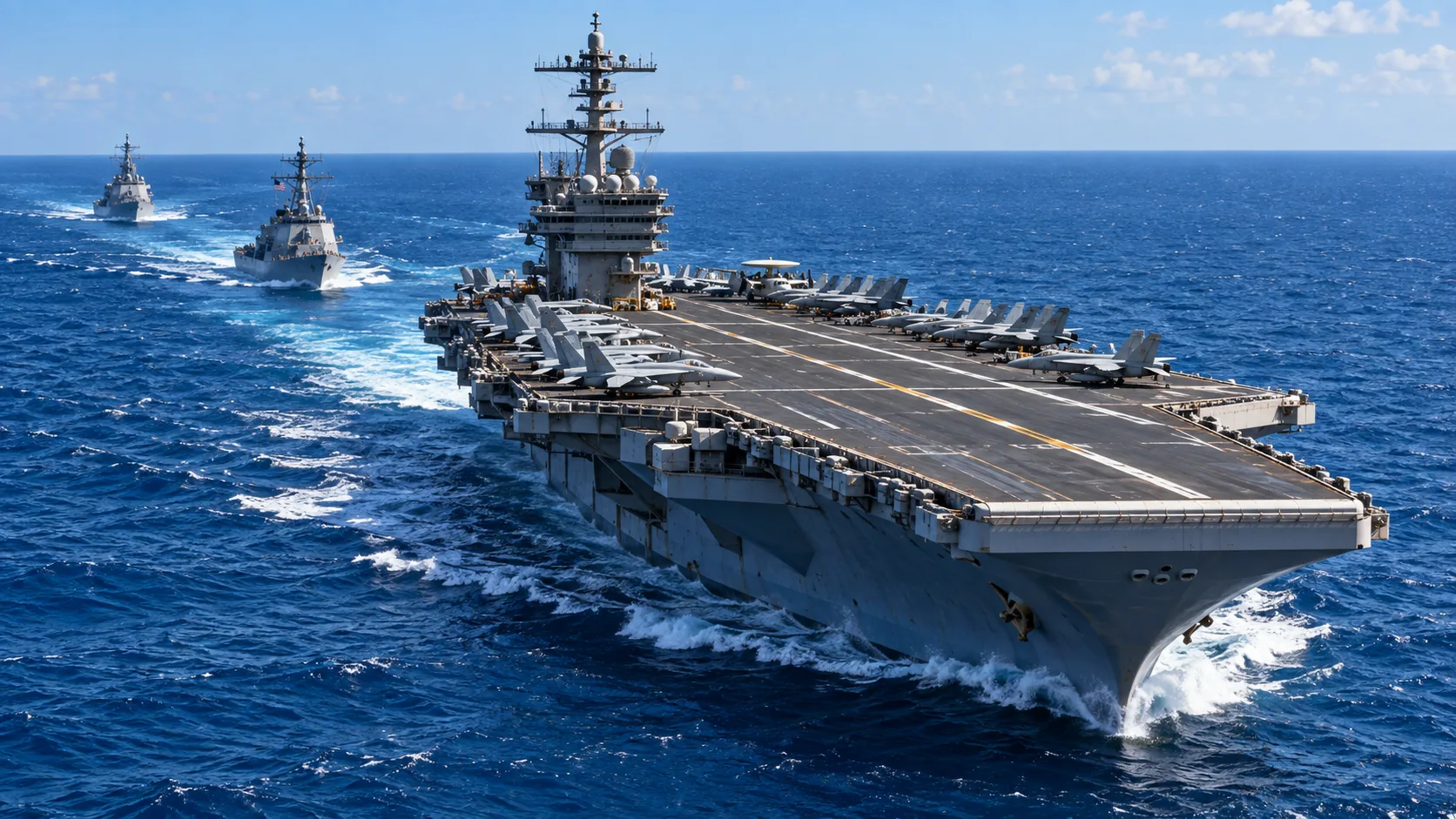
The deployment includes the USS Theodore Roosevelt carrier strike group and the USS Makin Island amphibious group. AP reported that the ships carry approximately 7,000 sailors and 2,000 Marines, citing a U.S. official. These are predominantly naval forces heading toward the region, rather than an announcement that thousands of ground troops are entering Iran.
The Financial Times reported October 1 that the Roosevelt could replace an existing carrier or join the carriers already deployed. That distinction matters: the eventual size of the buildup depends partly on whether other ships rotate out. An additional carrier provides more military options, while its arrival alone does not establish which option Trump will choose. ft.com
Trump has left the possibility of further bombing open. In a TIME interview conducted September 28 and published October 1, he answered “Possible” when asked whether he would increase bombing after the November midterm elections. He also said Iran’s proposed agreement, which included reopening the Strait of Hormuz, was insufficient. time.com
The deployment strengthens Washington’s ability to act. The interview establishes that Trump is considering escalation. Neither amounts to a publicly announced order for a new bombing campaign.
Iran Is Demanding an American Withdrawal
Iran’s Revolutionary Guard has presented a sharply different version of how the conflict should end. At a September 29 news conference in Tehran, spokesman Gen. Hossein Mohebbi said Washington would have to acknowledge defeat and leave the region.
Mohebbi delivered the message through what he described as a letter to the American people. He also urged Americans to challenge Trump’s leadership and protest the administration’s war policies. Those statements were reported earlier this week; they were not a new Iranian announcement Friday morning.
The timing gives the message an obvious political purpose. Iran is addressing American voters ahead of the midterms while Washington increases military pressure. Tehran’s demand should be understood as its stated position, rather than evidence that the United States has accepted those terms.
For markets, the concern is the distance between the two sides’ public demands. A negotiated settlement becomes harder when each government presents the other’s retreat as the required outcome.
The Energy Facilities Deserve Close Attention
Another development helps explain the financial stakes behind the naval buildup.
Axios reported that the United States recently sent two additional Patriot missile batteries to protect energy infrastructure: an oil facility in Saudi Arabia and a natural gas facility in Qatar. The report cited two U.S. officials and a regional source. Saudi and Qatari leaders had previously warned Washington that attacks on Iranian energy infrastructure could invite retaliation against their own facilities.
That defensive preparation points to a broader concern. A renewed confrontation could endanger production and export infrastructure across the Gulf, even if the initial American targets were inside Iran.
The Strait of Hormuz connects that regional risk to the global economy. According to the U.S. Energy Information Administration, oil passing through the strait averaged 20.9 million barrels a day in the first half of 2025, equivalent to about 20% of global petroleum liquids consumption. Existing pipelines can bypass only part of those volumes. Those figures describe the waterway’s importance before the current disruption, rather than today’s shipping traffic.
Protecting an oil terminal, gas installation or tanker route can therefore matter financially far beyond the country where it is located.
How This Could Reach Your Portfolio
Energy Stocks and Household Costs
A sustained supply disruption can support oil prices and improve revenues for producers operating outside the affected region. The same development can raise fuel costs for airlines, transportation companies and consumers.
However, energy shares also face the reverse scenario. Progress toward safer shipping and more reliable exports could reduce the premium investors pay for exposure to higher oil prices. Buying an energy company requires examining its finances and valuation alongside the geopolitical outlook.
Bonds and Interest Rates
Higher energy costs can complicate the inflation outlook. If businesses pass those costs through to customers, inflation may prove harder to contain, potentially keeping pressure on interest rates and existing bond prices.
There is also a competing possibility: an extended energy shock could weaken spending and economic growth. Bond investors need to assess both forces. A military headline alone cannot determine the direction of Treasury yields.
Defense Companies
An extended deployment can increase demand for maintenance, logistics, missile defense and replenishment. The financial opportunity depends on actual contracts, production capacity and the profits companies earn from that work.
A larger military presence can support a spending argument. It does not establish that every defense stock is attractively priced.
More Forces Could Also Strengthen Negotiations
The buildup can serve several purposes simultaneously: protecting American personnel, reassuring allies, preparing for combat and increasing bargaining leverage.
That leaves room for an outcome in which additional forces help produce an agreement. A credible ability to escalate may change the other side’s calculations, although it also creates more opportunities for confrontation or miscalculation.
For readers, the useful distinction is between military capacity and a decision to use it. The deployment expands the former. Investors still need evidence of the latter before treating renewed major combat as inevitable.
The Developments That Would Change the Financial Picture
Three developments deserve particular attention:
- New strike orders or actual attacks: These would turn preparation into a fresh military escalation.
- Reliable energy exports: Sustained tanker movements and functioning facilities would provide stronger evidence of improving supply than optimistic statements alone.
- Specific diplomatic terms: A workable agreement would need to address shipping, security and the conditions under which both sides would stop fighting.
The central financial question is whether energy supplies become more dependable or more vulnerable. That will matter to household purchasing power and corporate earnings long after the latest political statement leaves the headlines.
Washington is increasing its options while Tehran demands withdrawal. Until those positions produce either an agreement or a new military decision, Americans remain exposed to the economic costs of an unresolved conflict.
About Author