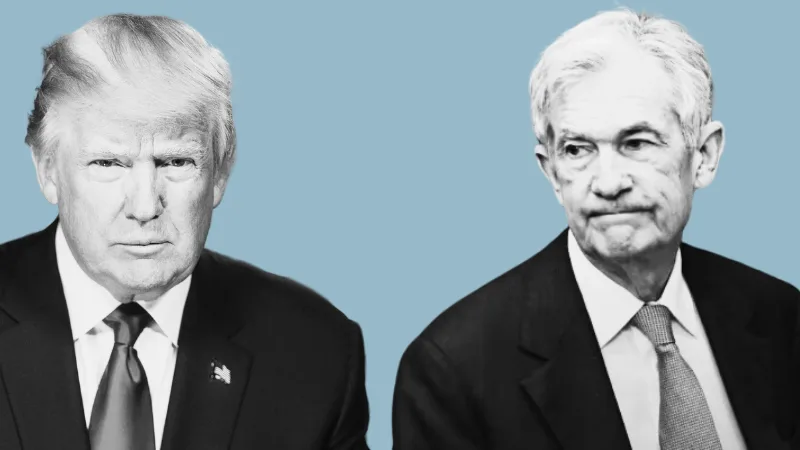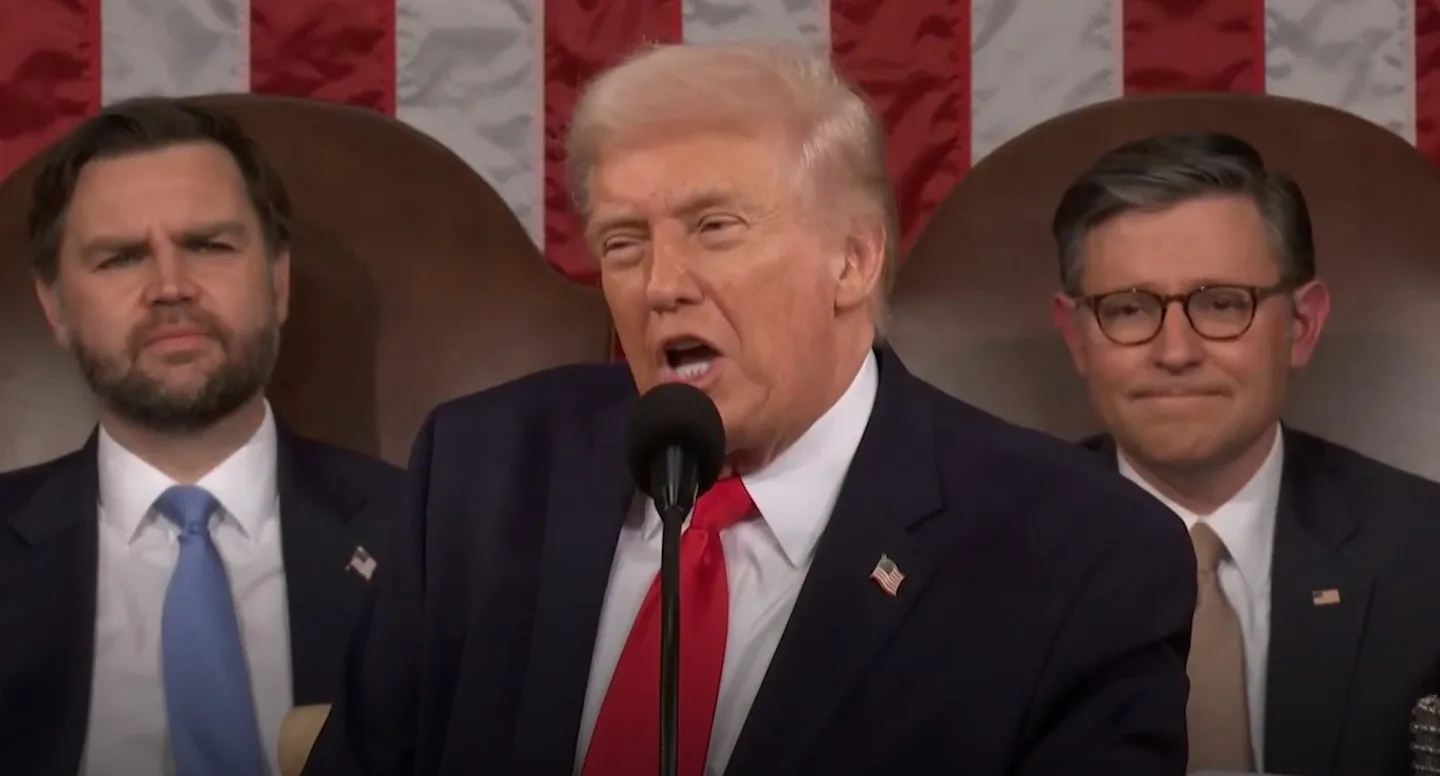
President Donald Trump delivered one of the longest State of the Union addresses in modern history, blending economic messaging, political positioning, and selective policy signals at a pivotal moment for both markets and Washington. While the speech focused heavily on affordability, tariffs, and domestic priorities, investors were listening for something deeper: direction, risk, and what comes next.
1. Affordability Has Become the Central Economic Narrative
Trump framed rising living costs as the defining issue facing Americans and placed responsibility squarely on Democratic policies. The president emphasized that inflation and household expenses remain top voter concerns, signaling affordability will dominate political messaging heading into the midterm elections.
From an investor standpoint, affordability messaging often precedes policy action aimed at consumer relief, including tax, housing, healthcare, and subsidy adjustments. These moves can shift capital flows across sectors such as retail, housing, healthcare, and energy.
2. The Economy Is Stable but Politically Fragile
Despite political pressure, the macroeconomic backdrop remains relatively steady. Unemployment remains low near historical norms, inflation has moderated from prior highs, and GDP growth continues at a modest but sustainable pace.
However, voter dissatisfaction and declining approval ratings introduce political fragility that markets cannot ignore. Historically, political instability rather than economic deterioration has often triggered volatility, particularly in election cycles.
Investors should recognize that markets are entering a phase where policy direction matters as much as economic fundamentals.
3. Tariffs Remain the Core Economic Strategy
Trump made clear tariffs will remain a central pillar of his economic agenda despite the recent Supreme Court ruling limiting his previous tariff authority. He emphasized tariff revenue as a major financial tool and suggested tariffs could continue under alternative legal frameworks.
Tariffs influence inflation, trade flows, corporate margins, and global supply chains. Continued reliance on trade barriers increases policy risk and may contribute to market volatility, particularly in manufacturing, industrials, and multinational companies.
4. Legal Battles May Shape the Future of Trade Policy
The administration’s decision to pursue tariffs using alternative legal authority introduces significant legal uncertainty. Courts will ultimately determine how much power the executive branch retains over trade policy.
For investors, legal risk translates into market risk. Policy outcomes shaped by court rulings often produce sudden market reactions, particularly in globally exposed sectors such as technology, shipping, commodities, and industrial production.
5. Retirement Reform Could Expand Equity Market Participation
One of the more concrete proposals in the speech involved expanding retirement savings access through a government-backed investment program for workers without employer-sponsored plans. The proposed program would include a government contribution match and diversified investment options similar to federal retirement systems.
If implemented, this policy could gradually increase participation in equity markets, potentially boosting long-term demand for index funds and retirement-driven investment vehicles.
Historically, expanded retirement access has contributed to sustained equity inflows and greater retail investor participation.
6. Housing Policy Signals Potential Pressure on Institutional Buyers
Trump renewed calls to restrict large institutional investors from purchasing single-family homes, arguing housing should prioritize families over corporations.
If enacted, such policies could reshape parts of the residential real estate market, potentially influencing:
- Home price dynamics
- Institutional real estate investment strategies
- Housing supply allocation
However, similar proposals have faced resistance and remain uncertain. Markets typically react only once legislation gains traction.
7. Healthcare Reform Remains a Policy Objective
Trump reiterated his push to redirect healthcare subsidies directly to consumers rather than insurers, emphasizing affordability and personal control over healthcare spending.
Healthcare policy changes can have significant implications for insurers, pharmaceutical companies, and healthcare providers. While the proposal has not yet gained momentum in Congress, it signals continued focus on cost reduction in the healthcare system.
8. Immigration Remains a Defining Political Issue
Immigration policy continues to be one of the sharpest political dividing lines. Trump defended his enforcement approach and framed border security as a fundamental responsibility of government.
From a market perspective, immigration policy can influence labor supply, wage pressures, housing demand, and economic growth trends. While not an immediate market driver, it contributes to the broader political environment that shapes economic policy.
9. Geopolitical Risk Around Iran Is Quietly Rising
Trump confirmed ongoing negotiations with Iran while warning that military options remain on the table if diplomacy fails. The United States has increased military positioning in the Middle East, raising geopolitical risk.
Energy markets, defense stocks, and global risk assets are particularly sensitive to developments involving Iran. Any escalation could impact oil prices, inflation expectations, and broader market sentiment.
10. Markets Are Shifting Into a Policy-Driven Phase
The most important takeaway for investors is structural rather than political. Markets are transitioning from being primarily driven by macroeconomic indicators to being heavily influenced by policy, legal decisions, and geopolitical developments.
Trade disputes, court rulings, election outcomes, and geopolitical tensions are increasingly shaping market direction. This shift typically results in higher volatility, faster sentiment swings, and greater sensitivity to political developments.
Investors should expect markets to react not just to economic data, but to Washington and global policy risk.
Market Reaction and Investor Outlook
Financial markets reacted cautiously following the speech, with equity futures showing limited movement and investors signaling a wait-and-see approach. The absence of major new policy surprises likely contributed to the muted response.
However, the longer-term implications are clear. Policy risk is rising, political uncertainty is building ahead of the midterms, and markets are entering a phase where government decisions may drive price action more than economic fundamentals.
What Investors Should Watch Next
Key developments to monitor include:
- Legal challenges surrounding tariff authority
- Inflation trends and Federal Reserve policy direction
- Progress on retirement savings expansion
- Housing legislation affecting institutional investors
- Geopolitical developments involving Iran
- Midterm election polling and congressional control
Markets often move ahead of policy outcomes, not after them.
Sources
https://www.whitehouse.gov/briefing-room/speeches-remarks/
https://www.bls.gov/cpi/
https://www.bls.gov/news.release/empsit.nr0.htm
https://www.bea.gov/data/gdp/gross-domestic-product
https://www.supremecourt.gov/opinions/slipopinion/25
https://crsreports.congress.gov/product/pdf/R/R47425
https://fred.stlouisfed.org/
https://www.eia.gov/
https://www.defense.gov/News/
https://www.iaea.org/topics/iran
About Author