A single viral research post. Billions erased from major stocks. And a growing wave of fear about what artificial intelligence could do to jobs, the economy, and markets.
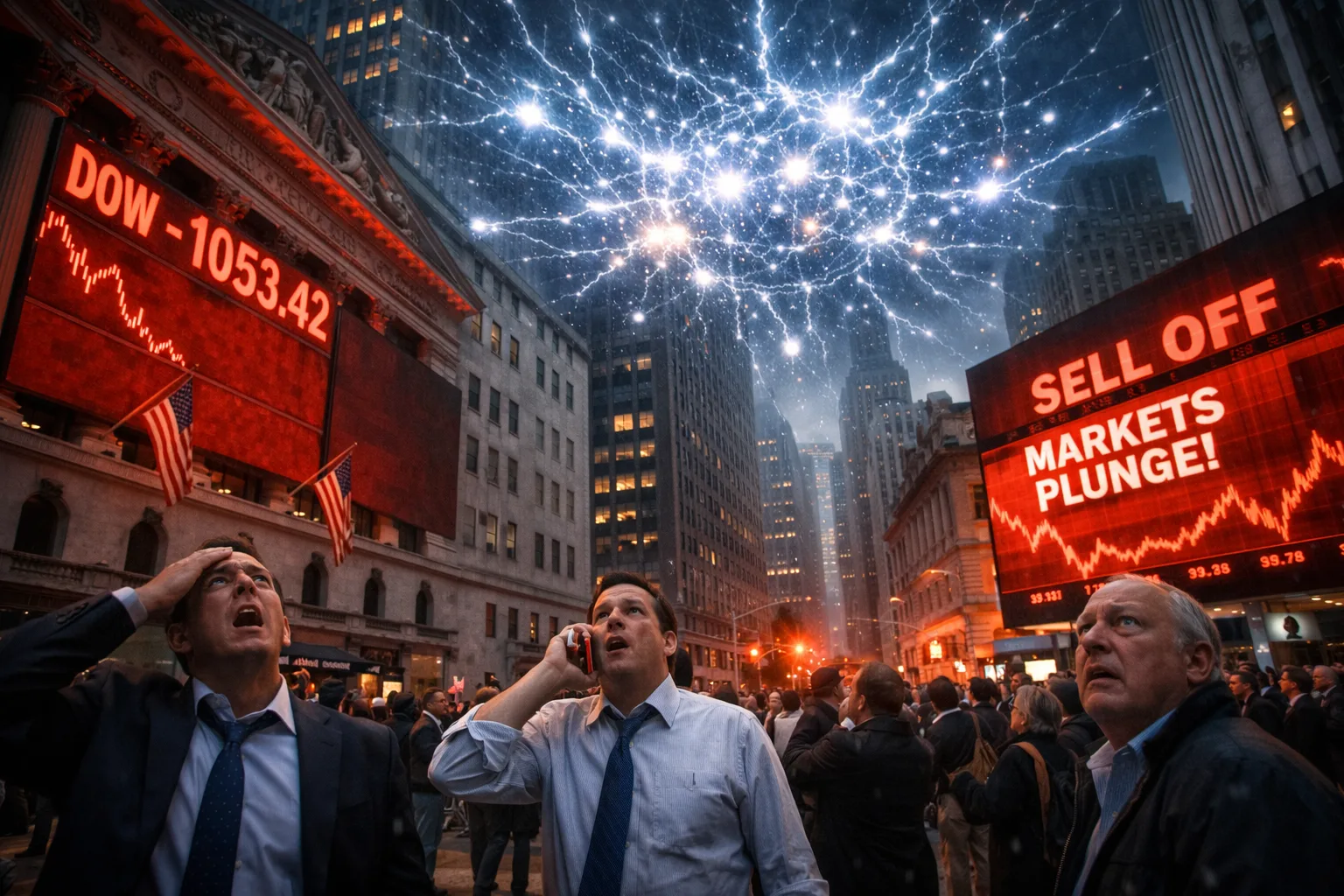
That was the chain reaction after a widely circulated AI “doomsday” scenario triggered a sudden sell-off across several major technology and financial companies. While the scenario was hypothetical, the market reaction was very real, underscoring how fragile investor sentiment has become around artificial intelligence and its long-term economic consequences.
The episode revealed something bigger than a temporary drop in stock prices. It exposed deep uncertainty about how AI will reshape industries, employment, regulation, and corporate profits in the years ahead. For investors, the message is clear: AI is no longer just a growth story. It is now a volatility driver.
The Viral Post That Shook Markets
The chain of events began when a research note outlined a speculative future where artificial intelligence rapidly surpasses human capabilities by 2028 and triggers widespread economic disruption. The scenario suggested massive white-collar job losses, collapsing consumer demand, rising defaults in software-driven lending systems, and broad economic strain across the United States.
Though the analysis was theoretical, it spread rapidly across social media, financial forums, and trading platforms. Within hours, investors began selling shares of companies perceived as exposed to AI-driven disruption.
By the close of trading the following day, billions of dollars in market value had evaporated from major firms across payments, software, and alternative asset management sectors. Among the companies caught in the sell-off were Visa, Mastercard, DoorDash, ServiceNow, and Blackstone.
The market reaction illustrated how sensitive valuations have become to narratives surrounding artificial intelligence. Even hypothetical scenarios can now move billions in capital.
Why AI Narratives Move Markets So Easily
The rapid sell-off highlights a powerful force shaping modern markets: perception risk.
Artificial intelligence has become one of the most influential investment themes of the decade, but its long-term impact remains unclear. That uncertainty creates fertile ground for sharp reactions whenever extreme scenarios surface.
One major driver of this uncertainty is the widening gap between predictions from technology leaders and real-world economic data.
Recent statements from prominent AI executives have suggested the technology could dramatically transform leadership roles and surpass human intelligence in many areas within a relatively short timeframe. These bold claims fuel both investor optimism and public anxiety.
Yet real-world adoption data paints a far more measured picture.
A large survey of thousands of corporate executives found that the majority of businesses reported little to no measurable impact from artificial intelligence on employment or productivity in recent years. This disconnect between hype and measurable outcomes is creating confusion across markets and society.
Investors are left asking a fundamental question: Is AI an immediate economic disruptor or a long-term gradual transformation?
Right now, nobody has a definitive answer.
The Growing Public Backlash Against AI Expansion
The market panic also coincides with rising resistance to artificial intelligence infrastructure across the United States.
In several communities, opposition has emerged against the rapid expansion of data centers that power AI systems. Critics argue these facilities consume massive amounts of electricity, water, and land while offering limited direct benefits to local communities.
In some areas, residents have pushed local officials to block or restrict new data center development projects. Across multiple states, organized groups have coordinated legal challenges, public campaigns, and zoning opposition aimed at slowing the growth of AI infrastructure.
The backlash is not purely economic. It is also cultural and political. Some artists, workers, and professionals fear that artificial intelligence systems are being trained on human work without compensation, while others worry about long-term job displacement and automation.
Public sentiment is becoming an increasingly important factor in shaping the future of AI deployment. And for investors, public resistance introduces another layer of uncertainty around infrastructure expansion and regulatory risk.
Regulation Is Coming and Markets Know It
Another major source of uncertainty is the current lack of comprehensive federal regulation governing artificial intelligence.
While policymakers have signaled that regulatory frameworks are likely in the future, the timeline and scope remain unclear. Markets historically dislike uncertainty more than bad news, and AI regulation represents a massive unknown.
Possible regulatory changes could affect:
• Data usage and training requirements
• Intellectual property rules for AI-generated content
• Energy and environmental standards for data centers
• Liability frameworks for AI decision-making
• Employment and labor protections
Each of these areas has the potential to reshape the economics of artificial intelligence companies and infrastructure providers.
Investors understand that once regulation arrives, it could significantly alter cost structures, competitive advantages, and profit margins across the AI ecosystem.
The Economic Reality Today vs The Fear of Tomorrow
Despite dramatic predictions about AI replacing large portions of the workforce, current economic data does not support a near-term collapse in employment or productivity.
Many companies are still in early experimentation phases with artificial intelligence. Adoption remains uneven, and most organizations are integrating AI as a productivity tool rather than a workforce replacement.
This gap between future speculation and present reality is exactly what creates volatility. Markets price in future expectations long before those expectations materialize, and when narratives shift, prices move quickly.
The recent sell-off was not based on immediate earnings deterioration. It was based on fear about what could happen years from now.
What This Means for Investors
The biggest takeaway from the episode is not the specific companies affected. It is the growing role of AI sentiment in market behavior.
Artificial intelligence is transitioning from a pure growth narrative into a complex macroeconomic force. That shift introduces both opportunity and risk.
Key investor implications include:
AI will increase market volatility
Narratives, research notes, and executive commentary can now move markets rapidly. Expect more sharp swings tied to AI sentiment.
Regulatory risk is rising
Future government intervention could reshape the economics of AI infrastructure, software, and data usage.
Public backlash matters
Local resistance to data centers and automation could slow expansion and affect long-term growth projections.
Hype and reality remain far apart
Investors should distinguish between speculative forecasts and measurable business impact.
Winners and losers will emerge unevenly
Some companies will benefit enormously from AI adoption, while others may face disruption.
The Bigger Picture
The viral sell-off triggered by a hypothetical AI scenario reflects something deeper than a temporary market reaction. It reveals that artificial intelligence has entered a new phase.
The technology is no longer viewed only as a driver of productivity and innovation. It is now seen as a force capable of reshaping employment, corporate structures, economic growth, and even social stability.
That shift is creating powerful emotional reactions among investors, workers, policymakers, and the public. And emotional markets are volatile markets.
For now, one reality stands above all others: nobody truly knows how artificial intelligence will reshape the economy over the next decade.
But one thing is clear. The closer AI moves toward real transformation, the more sensitive markets will become to every narrative, forecast, and headline tied to its future.
For investors, volatility is no longer a side effect of the AI revolution. It is part of the story.
Sources
- https://www.thetimes.com/business/companies-markets/article/doomsday-ai-substack-wiped-billions-stocks-ccsbpgqb2
- https://www.theguardian.com/technology/2026/feb/24/feedback-loop-no-brake-how-ai-doomsday-report-rattled-markets
- https://www.barrons.com/articles/ai-blog-post-stocks-fall-cf25d815
- https://www.ft.com/content/597ea81c-184f-45ab-a8c1-4306a3579ceb
- https://www.citriniresearch.com/p/2028gic
- https://www.nber.org/papers/w34836
- https://africa.businessinsider.com/markets/a-research-report-warning-of-an-ai-driven-recession-and-stock-crash-has-gone-viral/g8bfjzv
- https://www.tomshardware.com/tech-industry/artificial-intelligence/over-80-percent-of-companies-report-no-productivity-gains-from-ai-so-far-despite-billions-in-investment-survey-suggests-6-000-executives-also-reveal-1-3-of-leaders-use-ai-but-only-for-90-minutes-a-week
About Author