
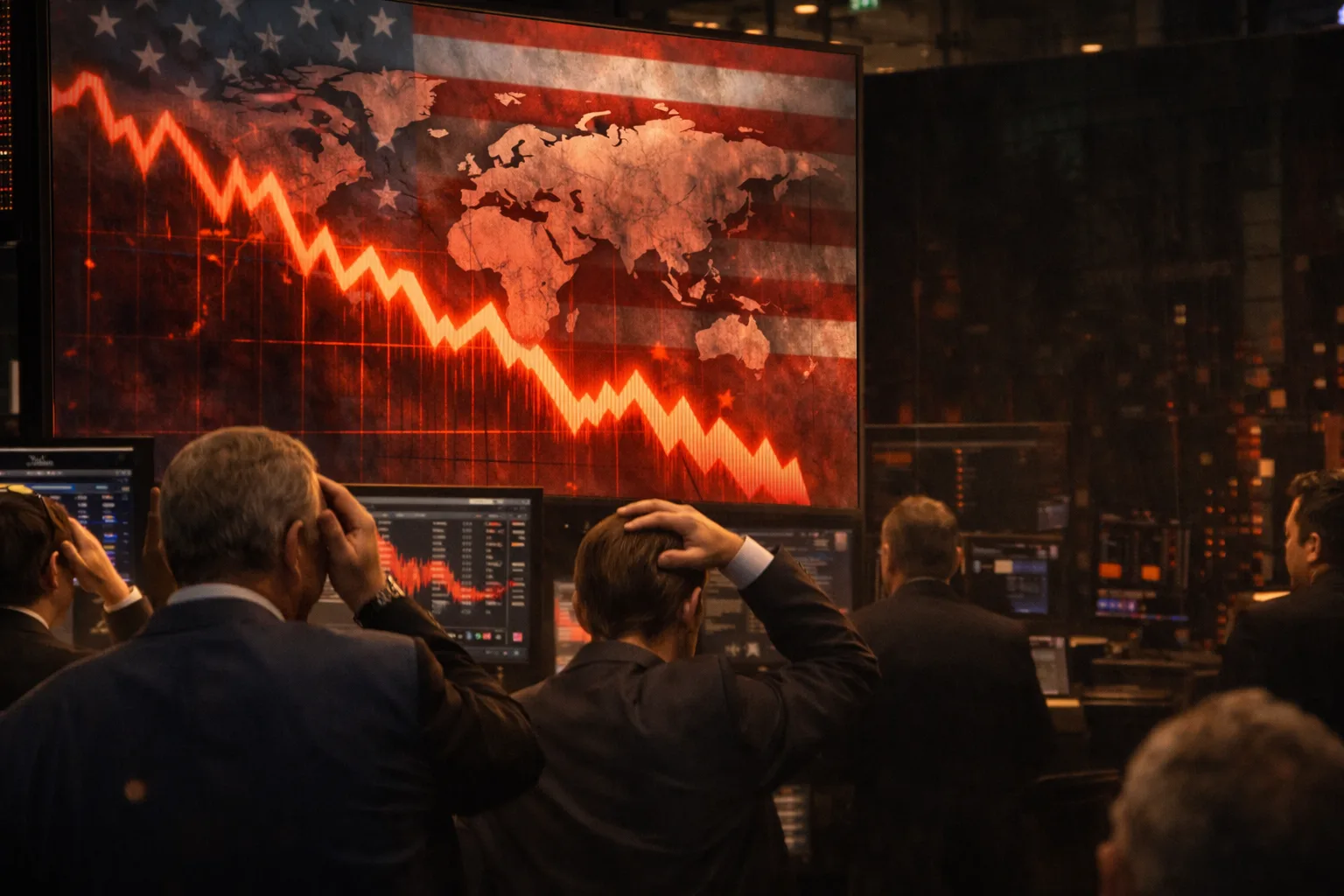
Wall Street’s selloff intensified Thursday as the Dow Jones Industrial Average plunged more than 1,200 points and the Nasdaq sank more than 4%, pushing the technology-heavy index deeper into correction territory. The sudden reversal has wiped out much of Wednesday’s historic post-election rally and raised fresh concerns about the outlook for artificial intelligence stocks and the broader market.
The Dow’s decline represents a stunning reversal from Wednesday, when the index surged more than 1,500 points following the midterm elections. In less than 24 hours, Wall Street has shifted from celebrating the political outcome to reassessing some of the biggest risks facing corporate America.
Technology stocks remain at the center of the selling, but the losses are spreading well beyond Silicon Valley.
Dow’s Losses Accelerate Past 1,200 Points
The selloff gathered momentum throughout Thursday morning, with losses accelerating across the major stock indexes.
In the latest verified intraday snapshot, recorded at approximately 11:34 a.m. ET:
The Nasdaq has now fallen more than 10% below its October record, crossing the threshold widely used to define a market correction.
The intensity of the selling is particularly significant because many of the companies suffering the largest losses were responsible for much of the market’s earlier gains.
Artificial Intelligence Stocks Are Leading the Collapse
The technology sector is experiencing some of Thursday’s most severe losses as investors reassess the enormous investments being made in artificial intelligence infrastructure.
Nvidia, Broadcom and other major semiconductor companies have come under intense selling pressure. Earlier Thursday, Nvidia declined approximately 7%, while Qualcomm lost roughly 9% following concerns about its smartphone chip sales outlook.
The Philadelphia Semiconductor Index fell more than 7% during the morning session, with some reports showing substantially deeper losses as trading progressed.
Companies involved in building and financing AI data centers have been particularly vulnerable.
CoreWeave, Nebius, IREN and other infrastructure providers have suffered steep declines as investors question whether the industry’s ambitious expansion plans can proceed at the expected pace.
The concern extends beyond semiconductor demand. AI infrastructure requires enormous quantities of electricity, financing, construction materials and regulatory approvals.
Any slowdown in that expansion could affect companies throughout the technology supply chain.
Washington’s Political Shift Adds a New Risk
Tuesday’s midterm elections delivered Democrats control of both chambers of Congress, changing the political outlook for several industries.
Investors initially welcomed the results, sending the Dow soaring more than 1,500 points Wednesday.
Thursday’s trading reflects a reassessment of the potential consequences, particularly for companies involved in artificial intelligence and large-scale data center development.
Opposition to new data centers has grown in several states, driven partly by concerns about electricity prices, water consumption and the strain on local infrastructure.
The election results have increased speculation that future developments could face greater scrutiny, additional permitting requirements and political resistance.
For technology companies whose valuations depend on continued rapid expansion, even modest delays could have substantial financial consequences.
However, the precise regulatory impact remains uncertain. Congressional control alone does not determine state and local permitting decisions, and investors will need to distinguish proposed restrictions from policies that actually become law.
The Selloff Is Spreading Beyond Technology
One of Thursday’s most concerning developments is the acceleration of losses in the Dow Jones Industrial Average.
Earlier in the session, defensive companies helped cushion the index against the technology selloff. As trading progressed, those gains became increasingly insufficient to offset losses elsewhere.
Goldman Sachs and Nvidia were among the major contributors to the Dow’s decline, according to intraday market reporting. Industrial companies and other economically sensitive businesses also came under pressure.
The widening losses suggest that investors are increasingly concerned about the broader financial consequences of a slowdown in AI investment.
If technology companies reduce capital spending, the effects could extend to construction, electrical equipment, industrial suppliers, commercial real estate and corporate financing.
A prolonged downturn in those investments could create additional challenges for an economy that has benefited significantly from AI-related spending.
What This Means for Your Retirement and Investment Portfolio
Technology Exposure Could Be Larger Than Investors Realize
Investors holding S&P 500 index funds may have greater exposure to the technology selloff than they expect.
A relatively small number of enormous technology companies account for a substantial portion of the index’s market capitalization.
When several of those businesses decline sharply together, even broadly diversified stock funds can experience significant losses.
Investors approaching retirement may want to review their overall exposure to technology and growth-oriented investments, particularly if they expect to begin withdrawing money from their portfolios soon.
AI Valuations Face a Critical Test
For years, investors have rewarded artificial intelligence companies with premium valuations based on expectations of extraordinary future growth.
Thursday’s selloff demonstrates how quickly those valuations can change when confidence weakens.
Even businesses reporting strong current earnings can experience substantial share-price declines if investors become less optimistic about future demand.
The critical question is whether the projected growth in AI infrastructure spending will continue at a pace sufficient to justify existing stock prices.
Defensive Investments Could Become More Attractive
Consumer staples, healthcare and utilities demonstrated relative strength earlier Thursday as investors searched for companies with more predictable revenue and earnings.
That rotation could continue if uncertainty persists, although defensive sectors are not immune to a broader market decline.
Investors should also watch Treasury yields. Changes in interest-rate expectations can influence both technology valuations and the attractiveness of bonds relative to stocks.
Three Warning Signs Investors Should Watch
Three developments could help determine whether Thursday’s plunge represents a temporary correction or the beginning of a more sustained downturn.
First, watch semiconductor stocks. Nvidia, Broadcom and the Philadelphia Semiconductor Index remain important indicators of confidence in artificial intelligence spending. Further sharp declines could signal continued selling pressure across technology.
Second, monitor the broader market. If losses continue spreading into financials, industrials and traditionally defensive businesses, concerns about a wider economic slowdown could intensify.
Third, watch Friday’s employment report. The October jobs report, scheduled for November 6, could influence expectations for Federal Reserve policy. Stronger-than-expected data might reinforce concerns about interest rates, while weaker employment figures could raise questions about economic growth.
Oil prices and developments surrounding the conflict with Iran remain additional sources of uncertainty.
Wall Street Faces a Crucial Test
Thursday’s market collapse has exposed a major vulnerability in the stock market’s recent performance.
A significant portion of investor optimism has depended on the expectation that artificial intelligence investment would continue expanding at an extraordinary pace.
Political uncertainty, rising infrastructure costs, potential regulatory restrictions and questions about future demand are now challenging that assumption.
The Nasdaq’s decline into correction territory represents an important warning, especially for investors heavily exposed to technology stocks.
With the Dow dropping more than 1,200 points and the S&P 500 approaching a 3% decline during Thursday’s session, the selloff is becoming increasingly difficult to dismiss as an isolated technology-sector correction.
The coming trading sessions will help determine whether investors regain confidence or whether the market faces a deeper reassessment of stock valuations.
For now, Wall Street’s rapid reversal shows just how quickly market sentiment can change when investors begin questioning the growth expectations supporting some of America’s most valuable companies.
About Author