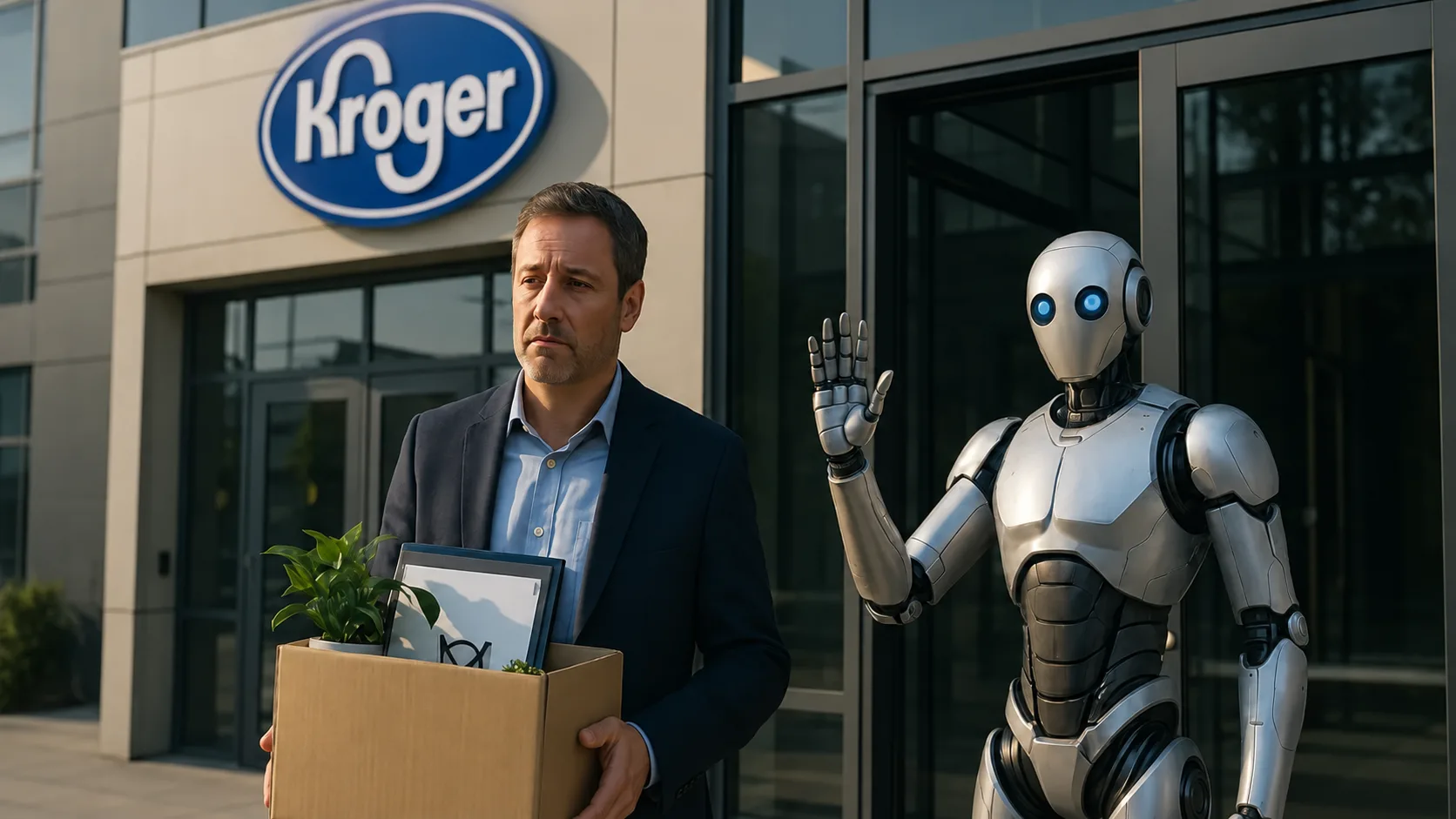
Microsoft, Meta, and other Big Tech giants have delivered impressive financial results in 2025, but that hasn’t stopped them from slashing jobs. At the heart of these moves? Artificial intelligence — a disruptive force reshaping the global labor market in real time.
In a candid internal memo last week, Microsoft CEO Satya Nadella addressed what he called one of the “most difficult decisions” companies must make: layoffs in the midst of record-breaking profits. Nadella pointed directly to AI as the reason. “Getting both the product and platform right for the AI wave is our North Star,” he wrote.
Behind the scenes, Microsoft’s research division has been analyzing exactly which job functions are most exposed to disruption from generative AI tools. Their findings, recently published in a sweeping internal paper, identify not only which roles are most vulnerable, but also why — and how fast the shift is accelerating.
Microsoft’s Warning: The Top 7 Jobs at Risk from AI
According to Microsoft Research’s AI impact analysis, the jobs most at risk — ranked from highest to lowest — are:
- Interpreters and Translators
- Historians
- Passenger Attendants (Travel Customer Service)
- Sales Representatives
- Writers
- Customer Service Representatives
- Machine Tool Programmers
These aren’t just obscure niche positions. They’re widely held, middle-skill jobs that involve the core function AI is rapidly excelling at: processing, generating, and communicating information.
The Microsoft study emphasized that knowledge work — especially roles rooted in communication, analysis, and routine content creation — is particularly exposed. In fact, the researchers found that “knowledge work occupation groups” scored the highest in what they call AI applicability.
And the wave is moving fast. Microsoft researchers noted that nearly 40% of Americans are already using generative AI, a pace of adoption that is outstripping the early years of both the internet and the personal computer.
A Tale of Two Workforces: Knowledge Workers vs. Physical Laborers
Interestingly, while knowledge workers face steep disruption, roles involving physical presence, dexterity, and human touch are — for now — far more insulated. Microsoft found that jobs least likely to be affected by AI in the near term include:
- Phlebotomists
- Nursing Assistants
- Hazardous Material Removal Workers
- Painters
- Embalmers
But don’t get too comfortable. Even labor-intensive roles could be threatened in the medium term as robotics catch up. With companies like Tesla and Boston Dynamics racing to make humanoid robots viable, sectors like manufacturing, construction, and logistics may eventually see their own AI reckoning.
Why Microsoft — and Nvidia — Say Resistance Is Futile
Rather than sugar-coat the disruption, tech leaders are speaking bluntly. Nvidia CEO Jensen Huang recently issued a stark warning to anyone who still sees AI as optional:
“Everybody is going to be augmented by AI… If you’re not using AI, you’re going to lose your job to someone who uses AI.”
It’s not just a comment — it’s a strategic shift. Investors and company leaders are now prioritizing AI leverage as a key competitive advantage. The goal isn’t just to replace workers — it’s to amplify the productivity of those who adapt.
The New Work Paradigm: Adapt or Be Automated
Microsoft’s Nadella emphasized that the company’s own workforce must continuously “learn and unlearn” as AI reshapes how the company delivers value. This process is already evident in hiring, product design, and internal operations.
For investors, this shift offers both risk and opportunity. Companies aggressively adopting AI could see margin expansion, workforce efficiency, and product innovation. But those failing to adapt may face long-term competitive decay.
What This Means for the Market
- Sectors with heavy customer service, translation, or routine documentation roles will see AI-driven cost cutting. That includes travel, telecom, publishing, legal processing, and enterprise software support.
- Human capital-intensive companies in healthcare, logistics, and manual labor may be safer — for now. But watch for AI-powered robotics firms as emerging threats.
- AI enablers like Nvidia, Microsoft, and enterprise SaaS providers will likely enjoy long-term growth tailwinds as more industries plug AI into their operations.
- Investors should monitor labor productivity metrics in earnings calls — a surge often indicates successful AI implementation.
Which Roles AI Will Disrupt First
(Based on Microsoft Research AI Applicability Scores)
| Rank | Job Role | AI Disruption Risk |
|---|---|---|
| 1 | Interpreters and Translators | Very High |
| 2 | Historians | Very High |
| 3 | Passenger Attendants | High |
| 4 | Sales Representatives | High |
| 5 | Writers | High |
| 6 | Customer Service Representatives | High |
| 7 | Machine Tool Programmers | Moderate-High |
The AI Shakeup Is Bigger Than Any One Job
Microsoft and Nvidia’s leaders are telling us plainly: AI will create winners and losers — and fast. Those who embrace it will redefine the market. Those who ignore it risk extinction.
For investors, the message is clear. Don’t just ask which jobs are at risk — ask which companies are acting on that reality.
Sources
- Microsoft Research: Generative AI’s Impact on U.S. Jobs
- Microsoft CEO Satya Nadella internal memo (July 2025)
- Nvidia CEO Jensen Huang, All-In Podcast appearance
About Author