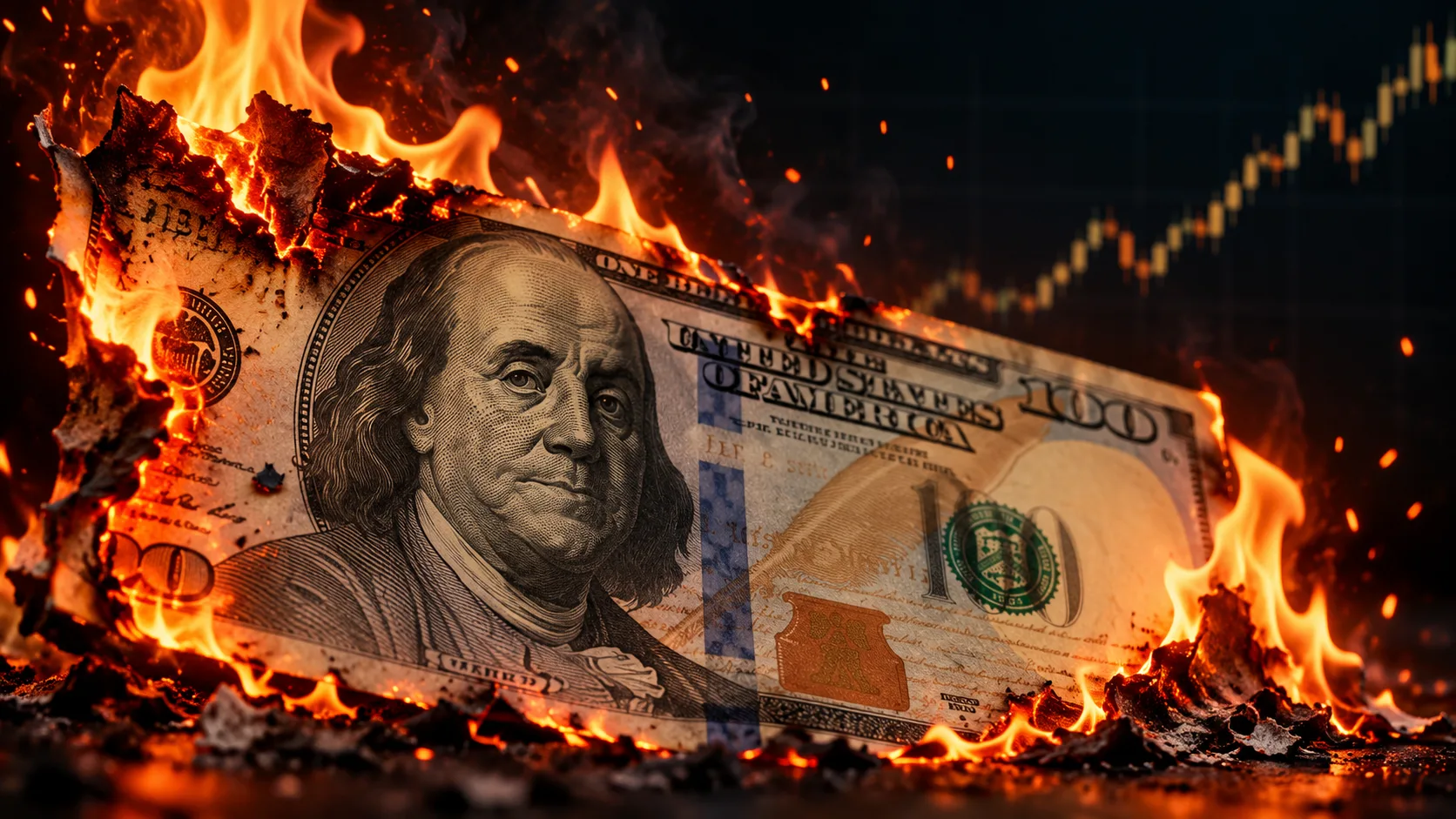
The S&P 500 just printed a fresh all-time high. Oil is up more than 50%. And somehow, those two facts are coexisting like nothing is wrong.
That disconnect is the story.
Because when equity markets rally into a supply shock of this magnitude, history does not reward complacency. It punishes it. And right now, the gap between what markets are pricing and what energy is signaling is starting to look dangerous.
Investors are treating this like a temporary geopolitical flare-up.
The energy market is screaming something very different.
A Record High Meets a Supply Shock No One Is Pricing
Since late February, the escalation tied to the Iran conflict has driven a sharp disruption in global oil flows, particularly around the Strait of Hormuz. Brent crude pushed above $110 per barrel, while U.S. crude followed closely behind.
At the same time, equities kept climbing.
That divergence is what has seasoned energy analysts raising alarms. Amrita Sen put it bluntly:
“I think we’re sleepwalking into potentially a pretty big recession.”
Her concern is not just about oil prices rising. It is about how they are rising.
Supply has not simply tightened. It has become structurally constrained. OPEC has signaled production increases, but those increases are widely viewed as insufficient to offset disrupted flows. The real issue is access, logistics, and the pace at which normal transport routes can resume.
And that is where the Strait of Hormuz becomes the critical variable.
If disruption persists, the world is effectively forced to consume less oil. Not because demand is weak, but because supply cannot meet it. That forces a brutal adjustment mechanism.
Higher prices.
Demand destruction.
Economic slowdown.
Markets are currently pricing none of that.
This Isn’t a Spike. It’s a Constraint the System Hasn’t Felt Yet
Most investors are treating this like a cyclical oil move.
It is not.
This is shaping up to be a supply regime shift.
There is a fundamental difference between oil rising due to strong demand and oil rising because supply is constrained by geopolitical chokepoints. One reflects economic strength. The other acts like a tax on the entire global system.
Right now, we are firmly in that second category.
The key detail being missed is duration risk.
If Hormuz disruptions linger, even partially, global energy flows do not normalize quickly. Infrastructure cannot instantly reroute millions of barrels per day. Shipping routes, insurance costs, and geopolitical risk premiums all start compounding.
That creates second-order effects most investors are ignoring.
LNG markets tighten as gas substitutes for oil. Fertilizer production gets squeezed due to natural gas constraints. Agricultural costs rise, pushing food inflation higher. Manufacturing margins compress as input costs surge.
This is how energy shocks spread. Quietly at first. Then all at once.
And that is exactly what Amrita Sen was pointing to when she warned:
“This is a massive, massive energy crisis.”
The equity market is still focused on backward-looking Q1 earnings.
The energy market is pricing forward-looking scarcity.
Those two narratives do not stay disconnected forever.
Where the Pressure Actually Hits First
Valuations Built on Calm Conditions
Equities are behaving as if earnings can remain stable despite a major input cost shock.
That assumption breaks down quickly.
Energy is embedded in everything. Transportation, manufacturing, agriculture, data centers. When oil rises this aggressively, it does not stay isolated. It compresses margins across sectors.
What looks like resilience in earnings today can turn into disappointment in a single quarter.
That is why Sen noted that Q2 results will not look like Q1.
Markets are pricing peak optimism into a deteriorating cost environment.
That gap creates downside risk.
Central Banks Are About to Lose Flexibility
The bond market is about to face a problem it has not fully priced.
If oil remains elevated, inflation stops falling.
That forces central banks into a corner.
Jens Eisenschmidt highlighted the timing risk clearly. There is a narrow window for the situation to resolve before policymakers are forced to react. If it does not, rate hikes come back into the conversation.
That is the opposite of what equities are expecting.
Right now, markets are leaning toward easing or stability.
An energy-driven inflation spike pulls that expectation in the opposite direction.
That creates volatility in both bonds and equities.
The Quiet Squeeze Across Industries
Energy producers stand out immediately. Higher prices flow directly into revenue, particularly for firms with stable production costs.
But the real story is on the other side.
Airlines are already feeling pressure from jet fuel costs. Manufacturing margins are tightening. Chemical producers face rising feedstock expenses. Agriculture becomes more expensive due to fertilizer constraints.
These are not isolated issues.
They cascade.
And they tend to show up in earnings revisions before they show up in headline narratives.
When High Prices Start Breaking Demand
When oil prices rise beyond a certain threshold, they stop reflecting demand strength and start destroying demand.
That is the loop investors need to watch.
Higher prices force consumers and businesses to cut back. That reduces economic activity. That slows growth. That eventually feeds back into markets.
But that process takes time.
Which is why markets often miss it in the early stages.
Right now, we are in that early stage.
The Chain Reaction Investors Are Underestimating
To make sense of what comes next, investors need a clear model.
Here is one that cuts through the noise.
First comes supply disruption. Geopolitical conflict restricts physical oil flow.
Then comes the price spike. Oil surges as markets adjust to reduced supply.
Next is cost inflation. Energy costs ripple through transportation, manufacturing, and food production.
Then margins get squeezed. Companies either absorb higher costs or pass them to consumers.
After that comes demand destruction. Consumers reduce spending as prices rise.
Growth slows. Economic activity weakens.
Finally comes policy response. Central banks react, often later than they would like.
We are currently between the price spike and cost inflation stages.
Markets are still behaving as if we are at the beginning.
That mismatch is where opportunity and risk both live.
The Mistake Everyone Is Making About Oil Right Now
Most commentary is focused on how high oil prices could go.
That misses the point.
The real risk is how long they stay elevated.
Short spikes can be absorbed.
Sustained pressure changes behavior.
It forces companies to cut costs, delay investments, and adjust pricing strategies. It pushes consumers to reduce discretionary spending. It alters inflation expectations.
And it traps central banks.
Investors are conditioned to react to price levels.
What they should be watching is persistence.
Because duration is what turns a shock into a recession.
That is the blind spot in the current market narrative.
The Signals That Will Tell You This Is Breaking
The next phase of this story will be driven by a few critical triggers.
First, the status of the Strait of Hormuz. Any indication of prolonged disruption or limited reopening capacity changes the entire supply outlook.
Second, oil price behavior around the $110 to $120 range. Sustained movement above this level signals that the market is accepting a higher baseline.
Third, earnings guidance in energy-sensitive sectors. Airlines, industrials, and chemicals will provide early warnings through margin commentary.
Fourth, central bank language. Any shift toward concern about energy-driven inflation is a signal that policy expectations are about to change.
Finally, food prices.
That is the sleeper variable.
If fertilizer constraints start feeding into agricultural costs, inflation becomes broader and more persistent.
That is when the narrative shifts from an oil issue to an economic problem.
What This Means Before the Market Admits It
Markets are celebrating strength that may not exist.
The energy market is pricing a constraint that equities are ignoring.
That gap rarely resolves quietly.
If this supply disruption persists, the path forward becomes clear. Higher costs, tighter margins, sticky inflation, and slower growth.
Investors do not need to predict the exact outcome.
They need to recognize the setup.
Energy shocks do not stay contained. They spread. And when they do, they reshape markets quickly.
Positioning ahead of that shift is where the edge is.
Waiting for confirmation is where the damage usually happens.
About Author