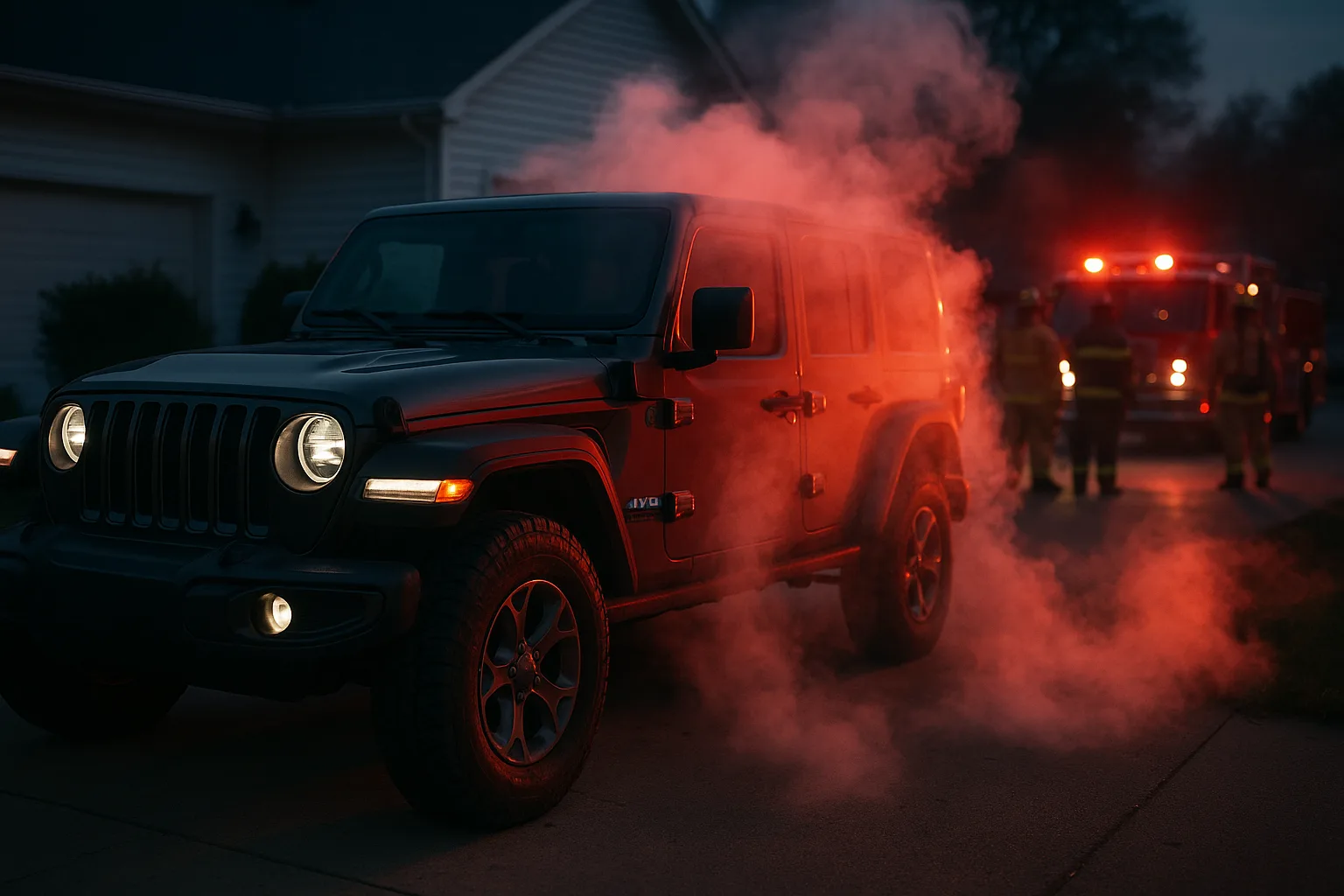
For millions of Jeep owners, a routine trip home could now come with an unexpected concern.
Stellantis has announced a recall affecting nearly 1.08 million Jeep Wrangler and Jeep Gladiator vehicles in the United States after discovering a defect that could create a fire risk even when the vehicle is parked and the ignition is switched off.
The recall covers 2021 through 2025 model years and affects some of Jeep’s most popular vehicles. Federal regulators say the issue is serious enough that owners are being advised to park away from homes, garages, and other vehicles until repairs become available.
For investors, the recall represents another costly challenge for an automotive industry already facing slowing demand, rising warranty expenses, and increasing regulatory scrutiny.
A Hidden Electrical Problem Is Triggering Alarm Bells
According to Stellantis, the issue involves an electrical connection within the electric hydraulic power steering pump wiring.
Under certain circumstances, the connection may overheat nearby combustible materials. If that occurs, a vehicle fire could result.
While Stellantis describes the situation as rare, the potential consequences are significant enough to warrant a nationwide recall.
The company has notified the National Highway Traffic Safety Administration and is working to develop a permanent repair.
The Part That Has Regulators Concerned
Many vehicle recalls involve problems that occur while a car is being driven.
This situation is different.
Federal regulators say the affected Jeeps may catch fire even after they have been parked and shut down.
That means owners could face risks while their vehicles are sitting in driveways, garages, parking lots, or storage areas.
The unusual nature of the defect is one reason Stellantis is urging customers to take immediate precautions.
The Temporary Advice Every Owner Should Follow
Until a repair is available, Stellantis is recommending that affected vehicle owners park away from:
- Homes
- Garages
- Commercial structures
- Other parked vehicles
The guidance may seem extreme, but it reflects the possibility that a fire could occur when the vehicle is unattended.
Owners should also watch for recall notices arriving by first-class mail and verify whether their vehicle is affected through official Jeep and NHTSA recall resources.
A Fix Is Coming, But Not Yet
At present, there is no repair available.
Stellantis says engineers are actively working on a solution and expect one to be ready no later than July.
Once the repair program launches, affected customers will be notified and instructed on how to schedule service.
Until then, the company is asking owners to remain cautious and follow all safety recommendations.
The Recall Reaches Far Beyond U.S. Borders
The impact extends beyond American drivers.
Stellantis says another 253,000 vehicles located in Canada, Mexico, and international markets are also included in the recall campaign.
That pushes the total number of affected vehicles to more than 1.3 million worldwide.
The scale highlights both the popularity of the Wrangler and Gladiator lineup and the importance of resolving the issue quickly.
What This Means for Stellantis Going Forward
Large recalls rarely end with repair costs alone.
Automakers can face increased warranty expenses, legal exposure, regulatory reviews, and reputational damage when safety concerns emerge.
While Stellantis has not disclosed the financial impact of this recall, investors will likely pay close attention to upcoming earnings reports for clues about associated costs.
The company’s response speed, customer communication, and effectiveness of the final repair could all influence how much lasting damage the recall ultimately causes.
The Bigger Picture
Fire-related recalls tend to draw more attention than most automotive defects because they create risks that can extend beyond the vehicle itself.
For Jeep owners, the immediate focus is safety and ensuring repairs are completed as soon as they become available.
For investors, the recall is another reminder that quality-control issues can quickly become expensive, especially when they affect more than a million vehicles and attract the attention of federal regulators.
About Author