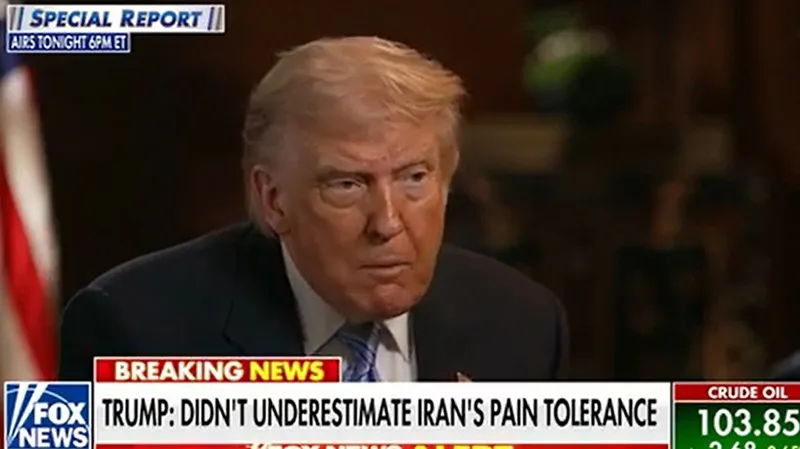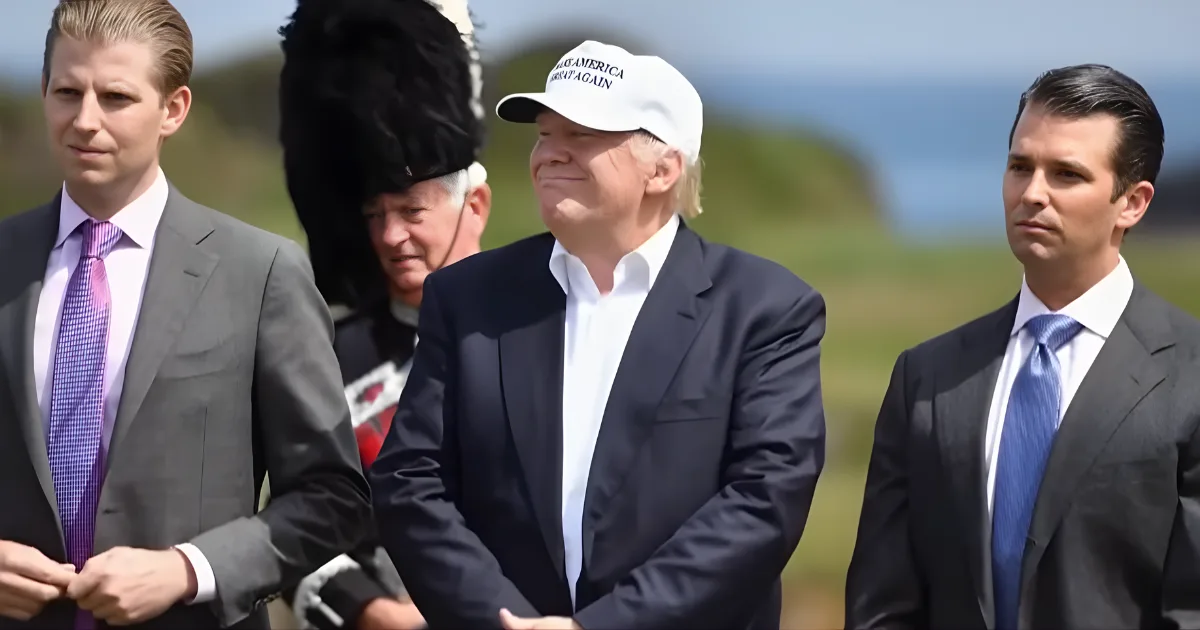
The Trump administration just opened a new front in the battle over executive power, political prosecution, and taxpayer money. In a move already triggering accusations of corruption and political retaliation, the Department of Justice agreed to create a $1.776 billion “Anti-Weaponization Fund” after President Donald Trump, his sons, and the Trump Organization dropped a massive lawsuit against the IRS.
For investors, this is bigger than another Washington scandal cycle. It signals a deepening politicization of federal institutions, rising legal risk tied to elections, and a growing expectation that future administrations may aggressively unwind the actions of prior governments using taxpayer-backed compensation mechanisms. Markets are now being forced to price in a new era where political transitions increasingly carry financial consequences.
The Deal That Shocked Washington
On Monday, Trump and his co-plaintiffs voluntarily dismissed their $10 billion lawsuit against the Internal Revenue Service “with prejudice,” permanently ending the case. The lawsuit centered on the leak of Trump’s tax returns by former IRS contractor Charles “Chaz” Littlejohn.
In exchange, the Department of Justice announced the creation of a $1.776 billion “Anti-Weaponization Fund” designed to compensate alleged victims of politically motivated investigations and prosecutions.
According to the DOJ, the fund will have authority to issue both “formal apologies and monetary relief owed to claimants.” The money will come from the DOJ judgment fund, a permanent appropriation historically used to settle government legal claims.
Acting Attorney General Todd Blanche framed the settlement as a corrective action against government abuse.
“The machinery of government should never be weaponized against any American, and it is this Department’s intention to make right the wrongs that were previously done while ensuring this never happens again,” Blanche said.
The agreement also includes Trump withdrawing additional claims tied to the Mar-a-Lago raid and the Russia investigation.
Critics immediately erupted.
Sen. Elizabeth Warren called the arrangement “corruption on steroids,” while Sen. Ron Wyden described it as “the most brazen theft and abuse of taxpayer dollars by any president in American history.”
The timing raised additional eyebrows because the settlement effectively avoided judicial scrutiny over whether Trump’s lawsuit was legally viable in the first place. A federal judge had already questioned whether the case met constitutional standards because Trump was effectively suing executive branch entities under his own authority as president.
That legal question now disappears.
Why Wall Street Should Pay Attention
Most investors will initially view this as political theater. That would be a mistake.
This story matters because it reinforces a broader shift underway in America: political transitions are becoming financially consequential events with direct implications for regulation, enforcement, litigation exposure, and federal spending priorities.
The immediate market impact may appear limited, but the second-order effects are substantial.
First, the settlement reinforces expectations that a second Trump administration intends to aggressively dismantle what it views as politically weaponized federal enforcement infrastructure. That affects sectors heavily dependent on federal oversight, including banking, defense contracting, healthcare, energy, media, and technology.
Second, the use of DOJ settlement funds to compensate alleged victims of political targeting introduces a precedent markets will notice. Investors increasingly care about institutional predictability. The more Washington begins using executive authority to retroactively settle political grievances, the greater the uncertainty around future enforcement actions.
That uncertainty affects valuation multiples.
Companies operating in politically sensitive industries already trade with embedded regulatory risk premiums. This development likely increases investor concern that future administrations may continue using agencies like the DOJ, IRS, SEC, and FBI as instruments of broader ideological conflict.
Third, this could intensify pressure on Treasury spending narratives at a time when deficit concerns are already rising. While $1.776 billion is relatively small in federal budget terms, markets care about directional behavior. Investors are watching whether Washington continues expanding discretionary federal liabilities through settlements, executive actions, and politically motivated spending vehicles.
The Bigger Signal Beneath the Headlines
The real story here is not the size of the fund.
It is the normalization of political restitution as official government policy.
For years, investors assumed election outcomes primarily influenced taxes, regulation, tariffs, and interest rate expectations. Now markets are confronting a system where administrations may actively revisit and financially compensate alleged victims of prior political investigations.
That changes incentives across Washington.
Future administrations could face pressure from their political base to pursue similar restitution programs tied to prior controversies. That creates a feedback loop where every transfer of power potentially carries legal reversals, investigations, compensation programs, and retaliatory enforcement actions.
Institutional trust becomes harder to price.
This also lands during an election cycle where concerns over DOJ independence, federal agency neutrality, and executive authority already sit near the center of political debate. Investors hoping for a calmer post-election environment may instead be looking at years of escalating institutional conflict.
Markets historically perform best when rules feel stable.
This deal pushes the national conversation in the opposite direction.
Sectors and Themes Investors May Watch Closely
Several market themes could quietly gain relevance after this development.
Government Contractors and Defense Firms
Political instability and institutional conflict historically increase demand for federal security, cybersecurity, intelligence, and compliance infrastructure. Defense contractors and firms tied to government operational security may continue benefiting from rising institutional tension.
Financials and Compliance-Heavy Industries
Banks, asset managers, and publicly traded financial institutions depend heavily on predictable regulatory frameworks. Any perception that enforcement priorities shift dramatically between administrations creates operational uncertainty.
Expect investors to pay closer attention to regulatory exposure during earnings calls moving forward.
Media and Legal Services
Highly polarized political environments tend to drive elevated spending in legal services, investigations, political consulting, crisis communications, and media engagement. Litigation-related industries may quietly benefit from prolonged institutional conflict.
Treasury Market Sensitivity
This story alone will not move bond markets materially. However, investors already worried about long-term fiscal discipline may see this as another example of Washington increasingly using federal resources for politically driven objectives.
That narrative matters because Treasury yields are increasingly sensitive to confidence in long-term governance stability.
What Investors Should Watch Next
Several developments could become market-moving if this story escalates further:
- Congressional investigations into the legality of the “Anti-Weaponization Fund”
- Potential court challenges regarding DOJ authority to structure the settlement
- Additional compensation claims tied to prior federal investigations
- Political retaliation proposals from Democrats if power changes hands again
- Treasury market reaction if investors begin pricing rising institutional instability
- Election polling shifts tied to perceptions of DOJ politicization
- Public statements from major legal and constitutional scholars questioning the precedent
The biggest risk is escalation.
If both parties increasingly use federal mechanisms to financially reward allies or punish perceived institutional enemies, markets could begin assigning a larger political instability discount to U.S. assets over time.
One Takeaway Investors Cannot Ignore
This settlement is another reminder that politics and markets are becoming inseparable.
Investors once treated Washington drama as background noise unless it directly impacted taxes or Fed policy. That framework is outdated. Institutional conflict itself is becoming an economic variable.
The administration is framing this fund as accountability for political abuse. Critics see it as a taxpayer-funded political payout operation. Either way, the precedent matters.
Because once government agencies become active participants in settling political scorekeeping disputes, markets stop viewing politics as temporary noise and start treating it as structural risk.
About Author