The Trump administration is sharply lowering federal fuel-economy requirements for new vehicles, arguing the move could make cars cheaper and give automakers more freedom to sell the trucks and SUVs Americans want. The timing creates an unusual tradeoff for consumers: lower vehicle costs could come alongside higher fuel consumption just as gasoline prices are already near historically painful levels.
Washington Is Rewriting the Auto Industry’s Rules
The Department of Transportation on Monday finalized new Corporate Average Fuel Economy standards, commonly known as CAFE standards, covering passenger cars and light trucks.
Under the new rules, the government estimates the industrywide fleet will average roughly 34.9 miles per gallon by model year 2031, compared with 30.1 mpg for model year 2024.
That represents a major reduction from the standards finalized under the Biden administration in 2024, which had been projected to push average light-duty fuel economy to approximately 50.4 mpg by 2031.
The Trump administration says the change will reduce regulatory costs and allow manufacturers to build vehicles more closely aligned with customer demand. The Transportation Department estimates the revised rules could lower the average cost of a new vehicle by about $1,300 and generate $138 billion in savings over five years. Those figures are administration estimates rather than independently observed consumer savings.
Transportation Secretary Sean Duffy described the previous regulations as effectively forcing manufacturers toward electric vehicles. Critics dispute that characterization. Federal rules did not require consumers to buy EVs or manufacturers to sell a specific percentage of them, although stricter fuel-economy and emissions requirements gave automakers substantial incentives to increase sales of electric and other highly efficient vehicles.
The economic question now becomes whether the savings manufacturers may realize from easier compliance eventually outweigh the additional fuel consumers could purchase over the life of their vehicles.
The Timing Could Hardly Be More Complicated
The policy change arrives while gasoline prices are once again becoming a major household expense.
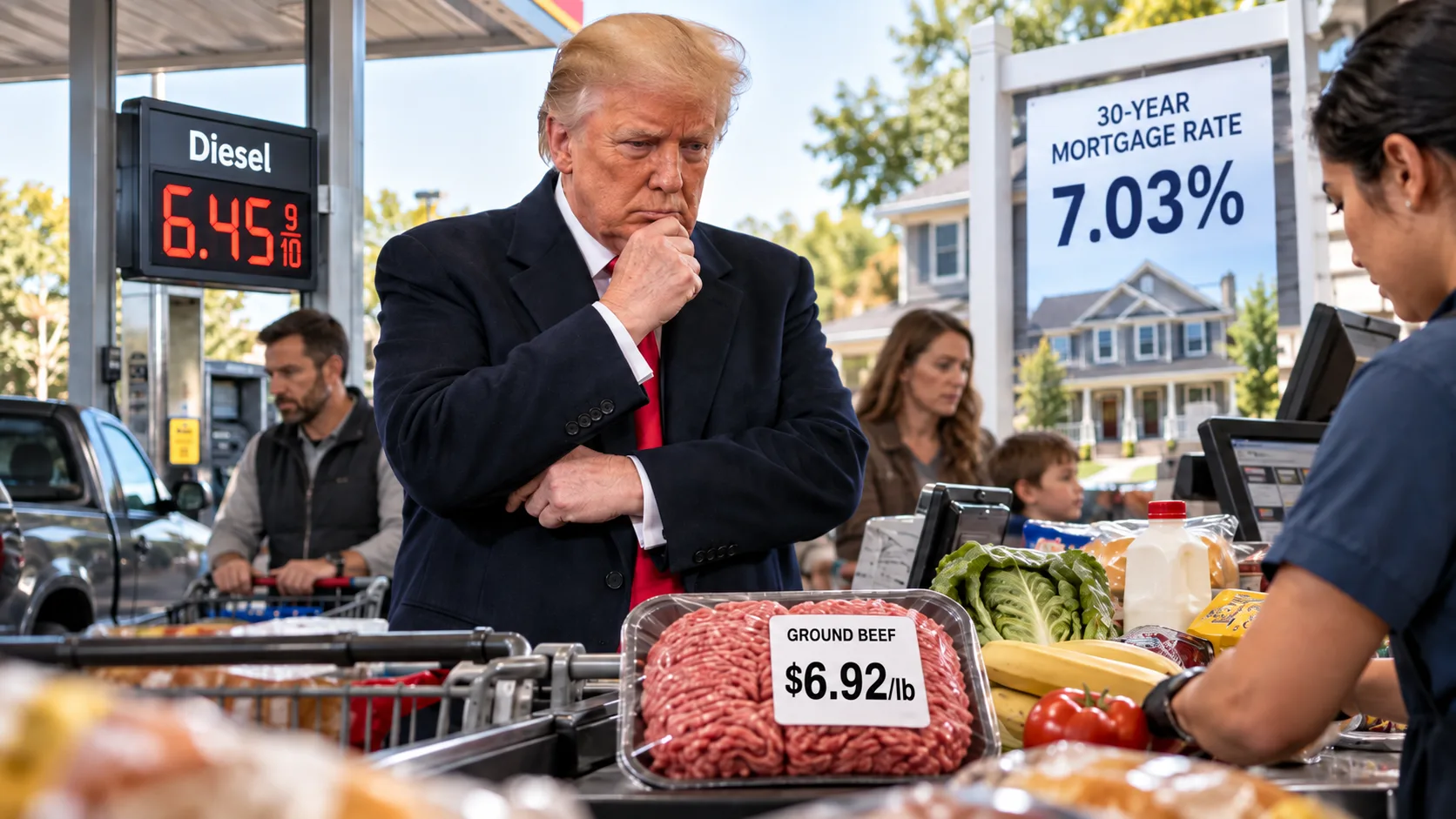
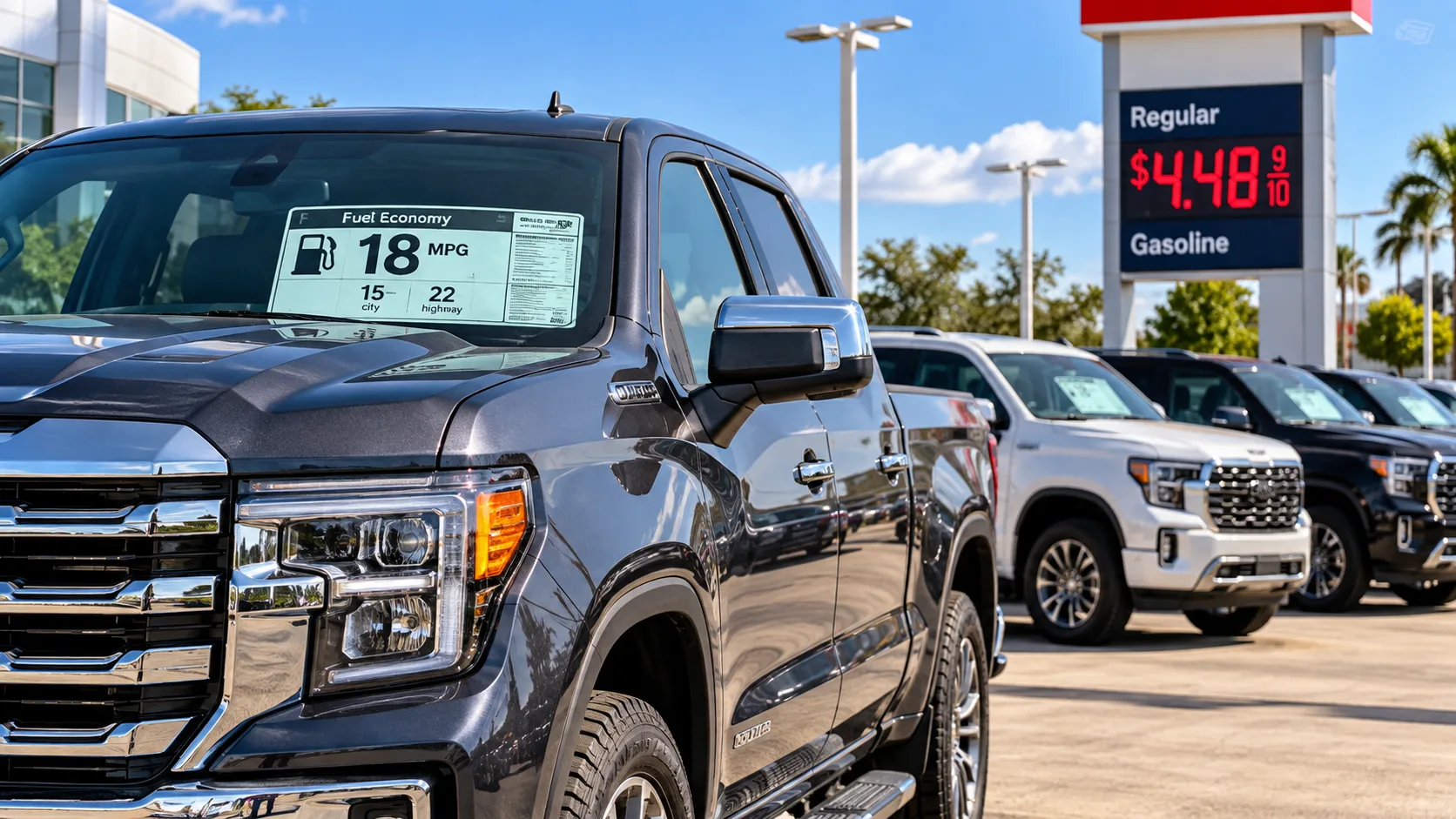
AAA reported Monday that regular gasoline averaged about $4.48 per gallon nationwide, compared with approximately $3.13 a year earlier. Diesel averaged roughly $6.45 per gallon.
AAA has attributed much of the recent increase to elevated crude prices and volatility surrounding the Strait of Hormuz. September is currently on pace to set a record for gasoline prices for this time of year.
That creates the central tension inside the new policy.
A vehicle that costs less to manufacture or purchase can benefit consumers immediately. A vehicle that burns more gasoline can cost more to operate for years afterward, particularly when oil prices are high.
For buyers, therefore, the sticker price tells only part of the affordability story.
Detroit Gets Something It Has Been Asking For
For traditional automakers, the immediate implications may be more favorable.
Ford, General Motors, Stellantis and the Alliance for Automotive Innovation have broadly supported regulatory standards that they say better reflect current consumer demand.
That matters because the American auto market continues to be heavily tilted toward pickups, SUVs and crossovers. Stricter fleetwide fuel-economy requirements can force manufacturers to offset the fuel consumption of those vehicles by selling more efficient models, adopting additional technology or increasing sales of electric vehicles.
Relaxing the standards gives manufacturers greater flexibility over that mix.
It could also reduce the pressure to subsidize EV sales aggressively or invest as quickly in electric models whose economics remain challenging.
Electric vehicles represented only 5.7% of U.S. new-vehicle sales in August, according to Cox Automotive. EV volume increased slightly from July but remained dramatically below the unusually strong sales recorded a year earlier.
For Detroit, slower regulatory pressure could mean more time to extract profits from combustion-engine trucks and SUVs while building electric businesses at a pace closer to actual consumer adoption.
That could be especially significant for companies with enormous capital tied up in EV factories, battery facilities and new vehicle platforms.
The Bigger Issue Is Vehicle Affordability
The administration is betting that reducing regulatory expenses can help address a problem that neither Detroit nor Washington has managed to solve: new cars have become extremely expensive.
The average transaction price for a new vehicle reached $50,089 in August, according to Kelley Blue Book. That was 1.9% higher than a year earlier and the first monthly reading above $50,000 in 2026.
Looser fuel-economy requirements could theoretically make it easier for manufacturers to offer cheaper models because they may need less expensive technology to meet federal standards.
There is no guarantee, however, that every dollar saved on regulatory compliance will flow through to buyers.
Vehicle prices are influenced by far more than fuel-economy regulation, including labor costs, tariffs, interest rates, vehicle size, technology packages, inventories and consumers increasingly choosing expensive SUVs and pickups.
Investors should therefore watch transaction prices rather than assuming regulatory savings automatically produce cheaper vehicles.
The Oil Market Just Became More Important to Auto Policy
There is another consequence worth watching.
Fuel economy acts as a long-term hedge against oil prices.
When vehicles travel farther on each gallon, changes in crude prices have a smaller impact on household transportation budgets. When efficiency improves more slowly, consumers remain more exposed to energy-price shocks.
That relationship matters considerably more when gasoline costs $4.48 than when it costs $2.50.
The administration says its new standards will still improve fuel economy over current levels. NHTSA projects a 34.9 mpg fleet average by 2031 versus 30.1 mpg for the 2024 model year.
The disagreement concerns how quickly that efficiency should improve and what consumers should pay upfront to achieve it.
For investors, this means oil prices and auto regulation should increasingly be viewed together. Persistent high crude prices strengthen the economic value of hybrids, efficient gasoline vehicles and EVs even when federal policy becomes less aggressive.
Hybrids Could Quietly Become the Biggest Winner
The debate is frequently presented as gasoline vehicles versus EVs, yet the market may land somewhere in the middle.
Hybrid vehicles allow manufacturers to improve fleet efficiency without requiring drivers to change fueling habits or rely on charging infrastructure. They can also provide meaningful gasoline savings while avoiding some of the consumer concerns surrounding fully electric vehicles.
Cox Automotive has noted continued demand for hybrids even as overall vehicle sales have remained resilient.
That suggests looser standards do not necessarily mean Americans will abandon fuel-efficient technology.
Automakers may simply gain more freedom to determine which technologies sell.
If gasoline remains elevated, buyers themselves could create stronger incentives for hybrid adoption than Washington does.
The Investor Takeaway
The new CAFE rules give traditional automakers more breathing room and could reduce some of the regulatory costs attached to producing gasoline-powered vehicles. That has obvious appeal for manufacturers whose most profitable products remain trucks and SUVs.
The consumer math is more complicated.
A cheaper vehicle can save money on the day it leaves the dealership. Better fuel economy saves money every time the driver visits a gas station.
With gasoline near $4.48 per gallon and oil markets unusually sensitive to geopolitical disruptions, that tradeoff suddenly matters much more.
For investors, the most important consequence may be a shift in who determines America’s vehicle mix. Federal regulation will exert less pressure. Consumer demand, gasoline prices and manufacturing economics will exert more.
About Author