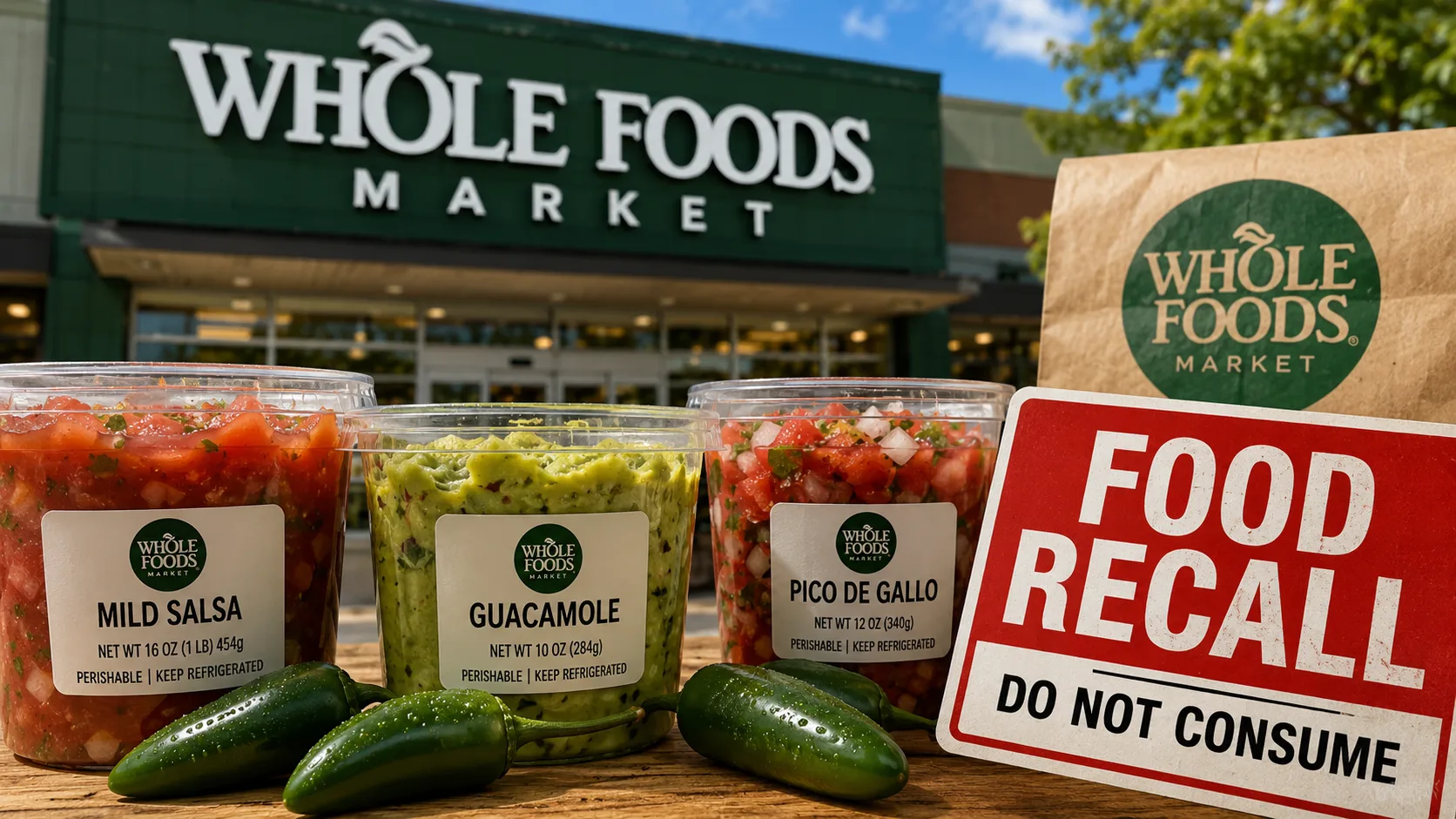
Whole Foods Market is recalling select salsas, guacamole, pico de gallo and prepared foods sold across 12 states after fresh jalapeño peppers used in the products were linked to potential salmonella contamination.
The recall is the latest expansion of a much larger food-safety investigation that has now touched major grocery chains, restaurant brands and prepared-food manufacturers across the country.
Federal health officials say the broader outbreak linked to the jalapeños has sickened 345 people across 27 states, including 36 people who have been hospitalized.
No illnesses have been reported specifically in connection with the recalled Whole Foods products.
What Whole Foods Is Recalling
Whole Foods announced the recall Wednesday after determining that certain produce and prepared foods contained fresh jalapeño peppers supplied by Coast Citrus Distributors.
According to the U.S. Food and Drug Administration, affected Whole Foods products have “Best Before” dates ranging from August 7 through August 16, 2026.
The recall includes select:
- Salsas
- Guacamole
- Pico de gallo
- Prepared foods containing fresh jalapeños
The affected products were sold at Whole Foods locations in Texas, Oklahoma, Louisiana, Wisconsin, Michigan, Illinois, Iowa, Missouri, Arkansas, Indiana, Kentucky and Ohio.
Consumers should check the FDA’s complete recall notice and product list to determine whether food they purchased is affected.
The Recall Is Part of a Much Bigger Outbreak
The Whole Foods recall did not originate with a contamination problem discovered inside Whole Foods stores.
Instead, the retailer said the affected products contained jalapeños sourced from Coast Citrus Distributors, which has been tied to a broader recall.
Some Whole Foods products were also included in a separate Taylor Farms recall announced Sunday.
Coast Citrus Distributors has agreed to recall the remaining implicated products and has stopped importing jalapeños from the grower linked to the outbreak.
According to federal regulators, illnesses associated with the outbreak began between June 19 and July 20, 2026.
The outbreak has since expanded into a complicated supply-chain problem because the implicated jalapeños were distributed to numerous food manufacturers, retailers and restaurant operators.
Walmart, Albertsons and Other Major Retailers Have Been Affected
Whole Foods is far from the only major name caught up in the outbreak.
Taylor Farms announced Monday that it was recalling prepared foods containing potentially contaminated jalapeños sold through retailers including Walmart and Whole Foods in multiple states.
Federal officials have identified several other brands and retailers affected by the outbreak, including Deli Kitchen, H-E-B’s Higher Harvest and Meal Simple brands, Marketside, Wawa, Albertsons, Randalls, Tom Thumb and Hannaford.
At least 18 ready-to-eat meat and poultry products were also previously identified in a U.S. Department of Agriculture public health alert connected to the jalapeños.
The expanding list demonstrates how quickly a contamination issue involving a single widely used ingredient can spread throughout the U.S. food supply.
Fresh jalapeños can appear in everything from packaged salsa and sandwiches to prepared meals, restaurant dishes and grab-and-go foods, making it necessary for regulators to trace the ingredient through multiple layers of the supply chain.
Chipotle and QDOBA Also Received Affected Jalapeños
The outbreak has reached the restaurant industry as well.
Federal officials said Chipotle Mexican Grill and QDOBA received affected jalapeños imported from Sinaloa, Mexico.
Chipotle switched jalapeño suppliers at affected locations beginning July 20 and is no longer serving the implicated product.
QDOBA stopped using jalapeños at all of its restaurants as of July 28.
Those moves came as regulators worked to identify where the affected peppers had been distributed and remove potentially contaminated food from the market.
What Consumers Should Do
The FDA is urging customers who purchased affected Whole Foods products not to eat them.
Consumers should discard recalled products or return them to a Whole Foods Market location with a valid receipt for a full refund.
Because the recall includes prepared foods rather than simply whole jalapeños, consumers should pay particular attention to items such as salsa, guacamole and pico de gallo that may not immediately appear to be connected to the outbreak.
Anyone who has already consumed an affected product should watch for symptoms associated with salmonella infection.
Salmonella Symptoms Can Appear After Eating Contaminated Food
Salmonella can cause an illness known as salmonellosis.
Common symptoms include diarrhea, stomach cramps and fever. Symptoms can develop after a person consumes contaminated food, and while many people recover without specific treatment, some cases can become serious enough to require hospitalization.
Young children, older adults and people with weakened immune systems can face a greater risk of severe illness.
With hundreds of illnesses already reported across more than half of the country, federal officials continue to investigate the outbreak and trace products containing the affected jalapeños.
The growing number of recalls means consumers may need to check more than just fresh produce in their refrigerators. Prepared meals, dips, salsas and other foods containing jalapeños could also be affected as companies continue tracing the ingredient through the food supply chain.
About Author