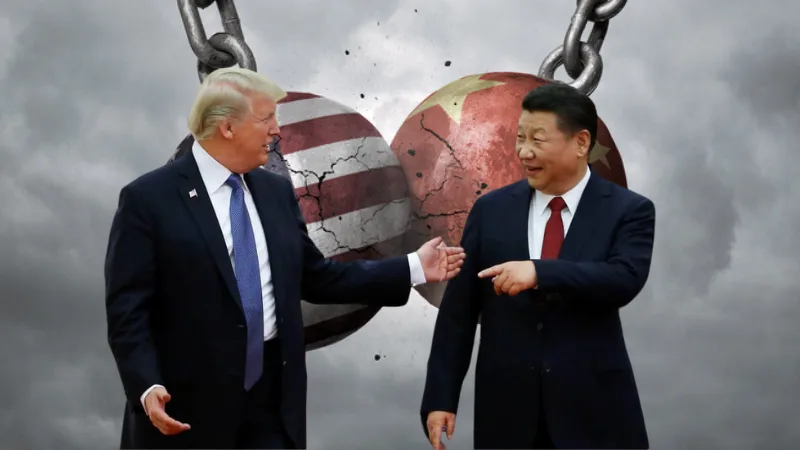
Late Tuesday, the administration proposed sweeping new tariffs on more than 60 U.S. trading partners, reigniting concerns about global trade tensions at a time when stocks are sitting near all-time highs, inflation remains stubbornly elevated, and consumers are increasingly feeling financial pressure.
The move represents one of the most significant expansions of Trump’s tariff agenda since returning to the White House and comes at a particularly delicate moment for investors.
Unlike previous tariff announcements, this one arrives during a historic market rally, an increasingly fragile inflation backdrop, and growing political pressure heading into the midterm election season.
For investors, the question is simple:
Will markets shrug off the latest tariff threats as they have many times before, or could this be the catalyst that finally disrupts one of the strongest stock market advances in decades?
The New Tariffs Explained
The Office of the U.S. Trade Representative (USTR) announced proposed tariffs ranging from 10% to 12.5% following a Section 301 investigation examining alleged forced labor practices among dozens of U.S. trading partners.
Under the proposal:
- Canada would face a 10% tariff
- European Union imports would face a 10% tariff
- Indonesia would face a 10% tariff
- China would face a 12.5% tariff
- India would face a 12.5% tariff
- Japan would face a 12.5% tariff
- South Korea would face a 12.5% tariff
- Roughly 45 additional countries would also face 12.5% duties
The tariffs are expected to move through public hearings beginning July 7 before implementation.
U.S. Trade Representative Ambassador Jamieson Greer defended the move, arguing that countries benefiting from forced labor practices create unfair competition for American workers.
“The failure of our most important trading partners to address the importation of goods made with forced labor is unacceptable,” Greer said.
The administration is also appealing a court order that would require the government to refund approximately $166 billion in previously collected tariffs that courts ruled were illegally imposed.
Meanwhile, another Section 301 investigation involving industrial overcapacity is nearing completion, raising the possibility that even more tariffs could be announced in the weeks ahead.
A Very Different Market Environment Than Last Time
When Trump unveiled his previous major tariff initiative in April 2025, markets reacted violently.
The S&P 500 fell roughly 10% as investors worried about supply chain disruptions, slower global growth, and rising inflation.
Yet the market eventually recovered.
In fact, it did far more than recover.
The S&P 500 has surged approximately 20% from its spring lows.
The Nasdaq has climbed nearly 30%.
Major indexes have repeatedly hit record highs.
Artificial intelligence enthusiasm, resilient corporate earnings, and stronger-than-expected economic growth have fueled one of the most impressive rallies seen in years.
That creates an entirely different setup today.
Markets are no longer depressed.
They are priced for optimism.
When stocks are already expensive and investor expectations are high, negative surprises often have a greater impact.
Investors may be willing to overlook risks during a correction. They become far less forgiving when markets are near record highs.
Inflation Is Already Moving in the Wrong Direction
Perhaps the biggest concern surrounding the new tariffs is inflation.
While inflation has cooled considerably from its peak, prices remain stubbornly elevated.
Recent data shows inflation approaching 4% annually, well above the Federal Reserve’s 2% target.
Adding tariffs into that environment creates additional risks.
Tariffs are effectively taxes on imported goods.
While governments collect the revenue, companies frequently pass at least part of those costs on to consumers through higher prices.
That could mean:
- More expensive consumer goods
- Higher manufacturing costs
- Increased supply chain expenses
- Further pressure on household budgets
The timing could hardly be worse.
Consumers are already facing elevated housing costs, higher food prices, and rising gasoline prices tied partly to instability in the Middle East.
The average American household has become increasingly sensitive to price increases after several years of inflationary pressure.
Any new wave of tariff-driven inflation could further weaken consumer sentiment.
Gas Prices Are Becoming a Political Problem
Another factor making this tariff push different is energy.
Recent tensions involving Iran have pushed oil markets into focus again.
Although a fragile truce remains in place, uncertainty across the region has kept investors watching crude prices closely.
Gasoline prices have moved higher in recent weeks, creating another challenge for consumers.
Historically, Americans tend to react strongly to higher fuel costs because they are highly visible and affect nearly every aspect of daily life.
Unlike stock prices or interest rates, consumers see gas prices every time they visit a filling station.
If tariffs contribute to broader inflation while energy prices continue rising, the combination could create a difficult environment for both consumers and policymakers.
The Labor Market Keeps Refusing to Break
One reason markets have remained resilient is that the labor market continues outperforming expectations.
For more than a year, economists have warned that artificial intelligence, higher interest rates, and slowing global growth could weaken employment.
That has not happened.
Job openings recently climbed to their highest level in nearly two years.
Hiring remains solid.
Layoffs remain relatively contained.
Economic growth is tracking around 3% in the second quarter.
These figures have provided a powerful foundation for the market’s advance.
However, tariffs could complicate that outlook.
Many businesses depend on global supply chains and imported inputs.
Higher costs could eventually pressure profit margins and hiring decisions, particularly among manufacturers, retailers, and technology companies.
The labor market remains healthy today, but investors should watch closely for any signs that trade tensions begin affecting business confidence.
Technology Stocks Have the Most to Lose
The current bull market has largely been driven by a relatively small group of technology and AI-related companies.
These companies have accounted for a disproportionate share of the market’s gains.
That concentration creates vulnerability.
Many technology companies rely heavily on global supply chains, international manufacturing partners, and overseas markets.
Additional tariffs could affect:
- Semiconductor manufacturers
- Consumer electronics companies
- AI infrastructure providers
- Cloud computing firms
- Hardware suppliers
Investors have largely ignored these risks while AI enthusiasm has dominated headlines.
But if earnings expectations begin to soften, the sector could become vulnerable to a meaningful pullback.
Why SpaceX’s IPO Adds Another Layer of Risk
Another factor that could amplify market sensitivity is the upcoming SpaceX public offering.
Reports indicate Elon Musk’s space company could pursue a valuation approaching $2 trillion.
That would rank among the most anticipated public offerings in financial history.
Large IPOs often require substantial investor capital.
If market sentiment deteriorates due to trade concerns, investors may become more selective about committing new money.
Conversely, if the IPO struggles to meet expectations, it could signal weakening risk appetite across the broader market.
The timing means Wall Street may have several major events colliding simultaneously:
- New tariffs
- Inflation concerns
- Middle East tensions
- Major IPO activity
- Federal Reserve policy uncertainty
Any one of these issues could affect markets.
Together, they create a much more complicated investing environment.
Why Investors Shouldn’t Panic Yet
Despite the risks, history suggests caution against assuming the worst.
Markets have repeatedly underestimated the resilience of both the U.S. economy and corporate America.
Trump has frequently used tariffs as a negotiating tool rather than a permanent policy endpoint.
Many previous tariff threats ultimately resulted in revised trade agreements or exemptions.
Businesses have also become more experienced at adapting supply chains and managing trade disruptions.
Investors should remember that headlines often create short-term volatility while long-term market performance is driven primarily by earnings growth, productivity gains, and economic expansion.
At the moment, all three remain relatively healthy.
The Bigger Question Facing Wall Street
The biggest issue isn’t necessarily the tariffs themselves.
It’s where they are arriving in the market cycle.
The stock market is expensive.
Investor optimism is high.
Technology stocks have led a powerful rally.
Inflation remains above target.
And geopolitical tensions remain elevated.
In that environment, even a modest policy shock can have an outsized impact.
For now, investors appear willing to give the administration the benefit of the doubt.
But if tariffs begin pushing inflation higher, slowing corporate earnings growth, or disrupting supply chains, Wall Street’s patience could be tested.
The coming weeks may reveal whether Trump’s latest trade offensive is simply another headline markets quickly absorb—or the event that finally forces investors to rethink the assumptions behind one of the strongest rallies in modern market history.
Why It Matters for Investors
Investors should monitor three key indicators over the next month:
- Inflation data to see whether tariffs begin affecting prices.
- Corporate earnings guidance for signs companies are warning about rising costs.
- Market leadership, particularly among AI and technology stocks that have powered the rally.
If those areas remain strong, markets may continue climbing despite the tariff headlines.
If they begin to weaken simultaneously, Trump’s latest trade push could become one of the most important market-moving stories of the second half of 2026.
About Author