Investors are increasingly betting that a peace agreement between the United States and Iran could be reached in the coming weeks. If that happens, one of Wall Street’s biggest banks believes a surprising group of assets could be poised for significant gains.
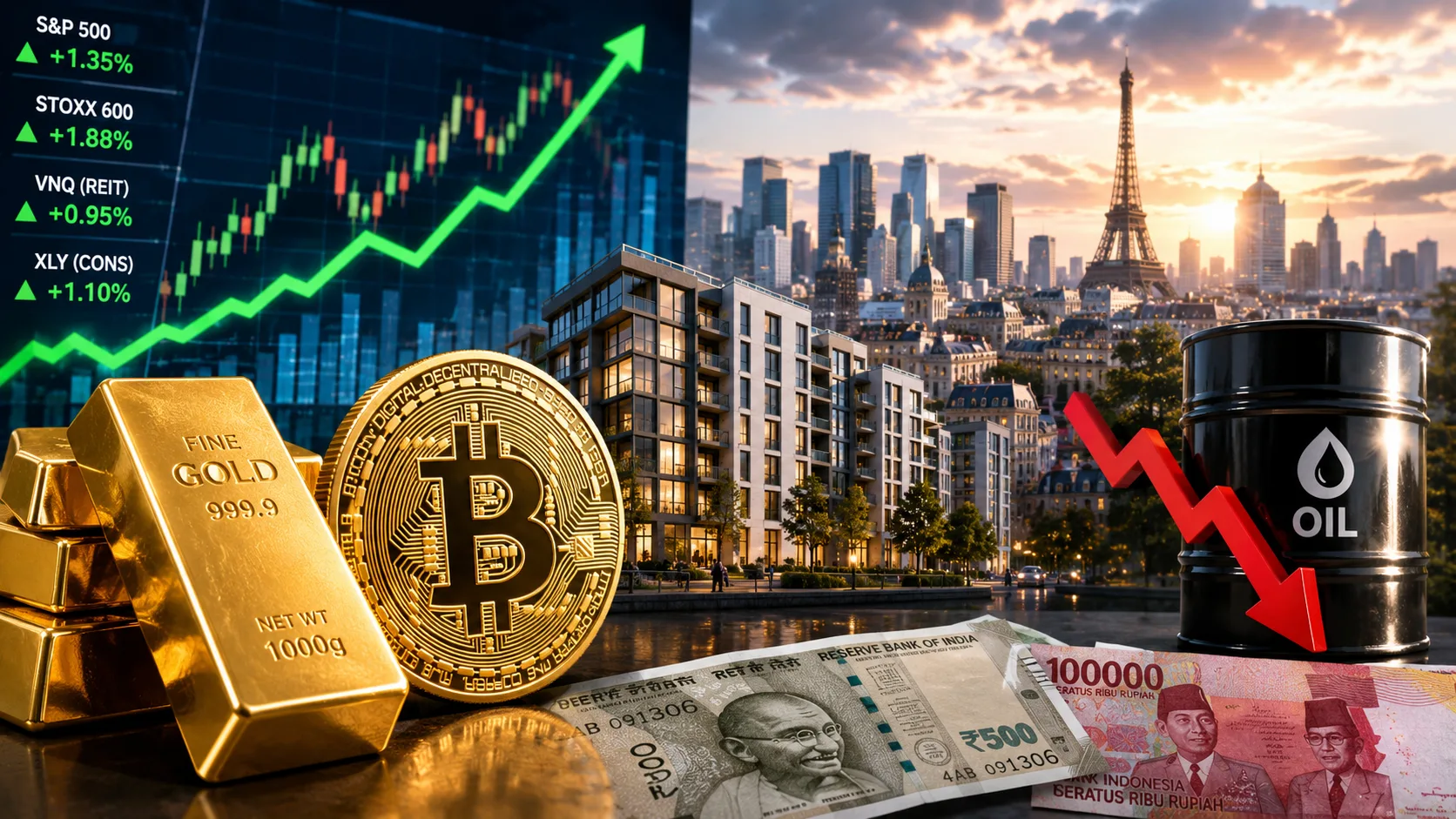
Analysts at Bank of America have released what they call a contrarian “winners-of-the-peace” shopping list, highlighting investments that could outperform if geopolitical tensions in the Middle East ease and energy markets stabilize.
The call comes as global markets have rallied on growing expectations that President Donald Trump and Iranian leaders could eventually reach an agreement that reduces the risk of a broader regional conflict.
For investors, the message from Bank of America is simple: the biggest opportunities may not be where most people are currently looking.
Why Wall Street Is Betting On Peace
According to Bank of America’s chief investment strategist, Michael Hartnett, there are powerful economic incentives pushing both sides toward a deal.
The bank notes that U.S. oil inventories are sitting near multi-decade lows while inflation has accelerated above 4%, creating additional pressure on policymakers.
Higher oil prices have become a growing concern because energy costs ripple throughout the economy, increasing transportation expenses, manufacturing costs, and consumer prices.
A successful peace agreement could reduce concerns about supply disruptions in the Middle East and potentially ease upward pressure on crude oil prices.
That outcome could provide a much-needed boost to consumers, businesses, and financial markets.
The Six Assets Bank of America Likes Most
Rather than chasing traditional energy investments, Bank of America believes investors should focus on assets that have struggled during the conflict.
Consumer Stocks
Consumer discretionary companies could be among the biggest winners if energy prices retreat.
Lower gasoline prices effectively act as a tax cut for households, leaving consumers with more disposable income to spend on travel, restaurants, entertainment, and retail purchases.
The sector has already begun recovering from its spring lows, but Bank of America believes further upside could exist if inflation pressures ease.
Real Estate Investment Trusts (REITs)
REITs have quietly become one of 2026’s strongest-performing sectors.
The asset class has benefited from expectations that interest rates could eventually move lower if inflation stabilizes.
Real estate companies also tend to perform well when economic uncertainty declines and investors become more comfortable taking risk.
The widely followed VNQ has already gained roughly 9% this year and recently touched new highs.
Bitcoin
Few assets have been hit harder by risk reduction than bitcoin.
After soaring in previous years, the cryptocurrency has experienced substantial deleveraging in 2026.
Bank of America argues that much of the selling pressure may already be behind the market.
If investors become more optimistic about global growth and financial conditions, bitcoin could be positioned for a rebound from depressed levels.
Gold
Gold may seem like an unusual peace-deal beneficiary because it is traditionally viewed as a safe-haven asset.
However, Bank of America points out that significant investor positioning has already been unwound.
The bank believes the precious metal could benefit from a recovery in investor demand after months of weakness, particularly if a weaker dollar emerges alongside improving global growth expectations.
European Stocks
European markets remain highly sensitive to energy prices because the region imports a large percentage of its energy needs.
During periods of rising oil prices, European companies often face greater cost pressures than their American counterparts.
A decline in geopolitical tensions could therefore provide an outsized benefit to European equities.
Bank of America notes that European stocks have largely recovered from their conflict-driven selloff but could still have room to advance.
Emerging-Market Currencies
Perhaps the most overlooked opportunity involves emerging-market currencies.
Countries such as India and Indonesia were heavily impacted by higher energy prices because both nations rely significantly on imported oil.
Their currencies have weakened against the U.S. dollar this year as energy costs surged.
If oil prices decline and global capital flows return to emerging markets, those currencies could experience a meaningful recovery.
The Bigger Theme: A Rotation Away From Fear
What connects all of Bank of America’s favorite peace-deal investments is that they represent assets that suffered when investors became more defensive.
In many cases, the bank argues, markets have already priced in a substantial amount of bad news.
A peace agreement would likely trigger a rotation away from defensive positioning and toward areas that benefit from stronger consumer confidence, lower energy costs, and improving global growth expectations.
That could create opportunities across multiple asset classes rather than in just one sector.
Not Everyone On Wall Street Is Bullish
Despite identifying several potential winners, Bank of America is not issuing an all-clear signal for investors.
The firm’s proprietary Bull & Bear Indicator currently sits at 8.8 out of 10, a level that historically has generated a sell signal.
Since 2002, similar readings have often preceded modest declines in global equities over the following two to three months.
Hartnett also believes tighter financial conditions could emerge later this summer, particularly if the Federal Reserve adopts a more hawkish stance under its new leadership.
That means investors may need to balance optimism surrounding a potential peace deal against broader concerns about valuations, interest rates, and economic growth.
What Investors Should Watch Next
The next major catalyst will likely be developments surrounding U.S.-Iran negotiations.
A formal agreement could immediately affect oil prices, inflation expectations, bond yields, and equity markets worldwide.
For now, Bank of America’s message is that investors should focus on assets that have been punished by fear rather than those that have already benefited from geopolitical uncertainty.
If peace arrives, the biggest winners may be the investments that few investors are currently talking about.
Key Takeaway: A U.S.-Iran peace agreement could spark gains in consumer stocks, REITs, bitcoin, gold, European equities, and emerging-market currencies. While Bank of America sees opportunity in these overlooked assets, the firm is also warning that broader market sentiment remains stretched, suggesting investors should remain selective even if geopolitical risks begin to fade.
About Author