President predicts inflation will “come down like a rock” after the Iran conflict ends, but rising prices are already squeezing American households
Inflation just hit its highest level in more than three years, and President Donald Trump says he’s not worried.
In fact, he says he “loves” what he’s seeing.
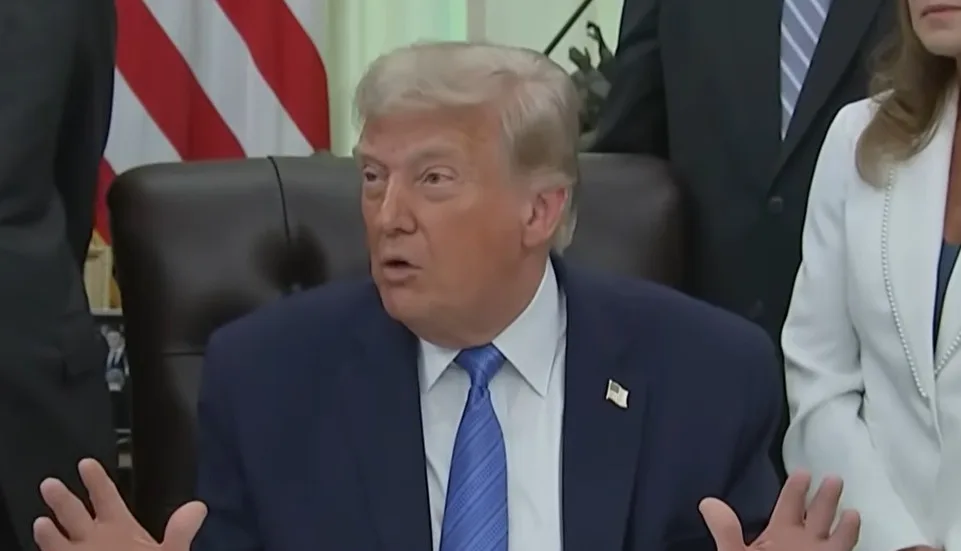
Speaking to reporters after fresh inflation data showed consumer prices accelerating sharply in May, Trump argued that the recent surge is temporary and tied largely to the ongoing conflict with Iran.
“The numbers were great. You know what I really love? I love the inflation,” Trump said. “Because as soon as this war is over… it’s going to come down like a rock.”
The comments immediately sparked political backlash and renewed debate over one of the most important issues facing voters heading into the 2026 midterm elections: the cost of living.
For investors, however, the bigger question may be whether inflation is becoming a larger problem again just as markets had begun expecting price pressures to ease.
A Troubling Inflation Milestone
New data released Wednesday showed consumer prices rose 4.2% year-over-year in May, the highest annual inflation rate since early 2023.
Monthly inflation increased 0.5%, while energy prices were among the largest contributors to the surge.
The report marked a significant jump from the 2.4% annual inflation rate recorded just one year ago.
Perhaps even more concerning for consumers, inflation is now outpacing wage growth again.
According to separate data from the Bureau of Labor Statistics, real average weekly earnings fell 0.2% during May and were down 0.7% compared to a year ago.
That represents the largest annual decline in real wages since February 2023.
In practical terms, many Americans are once again seeing their purchasing power shrink.
Why Trump Thinks Inflation Will Soon Collapse
Trump tied much of the recent inflation spike to energy markets and disruptions caused by the ongoing conflict with Iran.
The administration has been focused on maintaining oil flows through the Strait of Hormuz, one of the world’s most important energy shipping routes.
According to Trump, once the conflict ends and energy markets stabilize, inflation pressures could rapidly reverse.
He later clarified his remarks after criticism mounted, telling the New York Post that what he “loved” was that inflation wasn’t even higher given the circumstances.
Trump argued that current inflation readings are lower than many economists expected and predicted prices would fall sharply once geopolitical tensions ease.
He also suggested the current inflation rate could ultimately represent the peak impact from the conflict, which began on February 28.
Political Fallout Begins
Democrats quickly seized on Trump’s comments.
Senate Minority Leader Chuck Schumer and Sen. Elizabeth Warren accused the president of appearing indifferent to the financial struggles facing American households.
The criticism follows previous comments Trump made regarding the economic impact of negotiations with Iran.
Last month, Trump said he was not thinking about Americans’ finances “even a little bit” during discussions surrounding Iran’s nuclear program, arguing that preventing Tehran from obtaining nuclear weapons was the administration’s top priority.
Trump later defended those remarks, calling them a “perfect statement.”
House Speaker Mike Johnson pushed back against criticism of the president’s latest comments, arguing they were taken out of context.
Johnson pointed to several positive economic indicators while acknowledging that higher gasoline prices remain a challenge for consumers.
The Growing Investor Concern
Markets have largely remained resilient throughout 2026 despite rising geopolitical risks.
However, inflation’s reacceleration presents a potentially difficult challenge for investors.
For much of the year, Wall Street had been anticipating lower inflation readings that could eventually lead to interest rate cuts.
Instead, prices are moving higher again.
If inflation remains elevated, the Federal Reserve could face pressure to keep interest rates higher for longer, which would affect everything from mortgage rates to stock valuations.
Higher inflation also tends to create winners and losers across the market.
Energy companies, commodity producers, and certain defensive sectors often perform relatively well during inflationary periods, while interest-rate-sensitive sectors can face headwinds.
The latest data suggests investors may need to prepare for a market environment that looks very different from what many expected just a few months ago.
Voters Still Focused on the Economy
Polling continues to show inflation remains one of the most important issues for American voters.
An April survey found that only 32% of Americans approved of Trump’s handling of inflation, while 68% disapproved.
The economy remains the dominant issue heading into November’s midterm elections, with rising prices consistently ranking among voters’ top concerns.
That creates a potentially difficult balancing act for the White House.
Trump campaigned heavily on lowering inflation and reducing energy costs after returning to office, including promises to dramatically cut energy prices within his first year.
With inflation now back above 4%, voters will be closely watching whether the president’s prediction proves accurate.
What Investors Should Watch Next
The next several inflation reports could become some of the most important economic releases of the year.
If energy prices stabilize and inflation begins retreating as Trump predicts, markets may regain confidence that the recent surge was temporary.
But if inflation remains stubbornly elevated, expectations for interest-rate cuts could fade further, creating new volatility across stocks, bonds, and other asset classes.
For now, investors are left with two competing narratives.
The White House sees a temporary inflation spike tied to war and energy markets.
The latest economic data suggests rising prices are once again becoming a real challenge for American households.
The answer may determine not only the direction of markets in the second half of 2026, but also the political landscape heading into November.
About Author