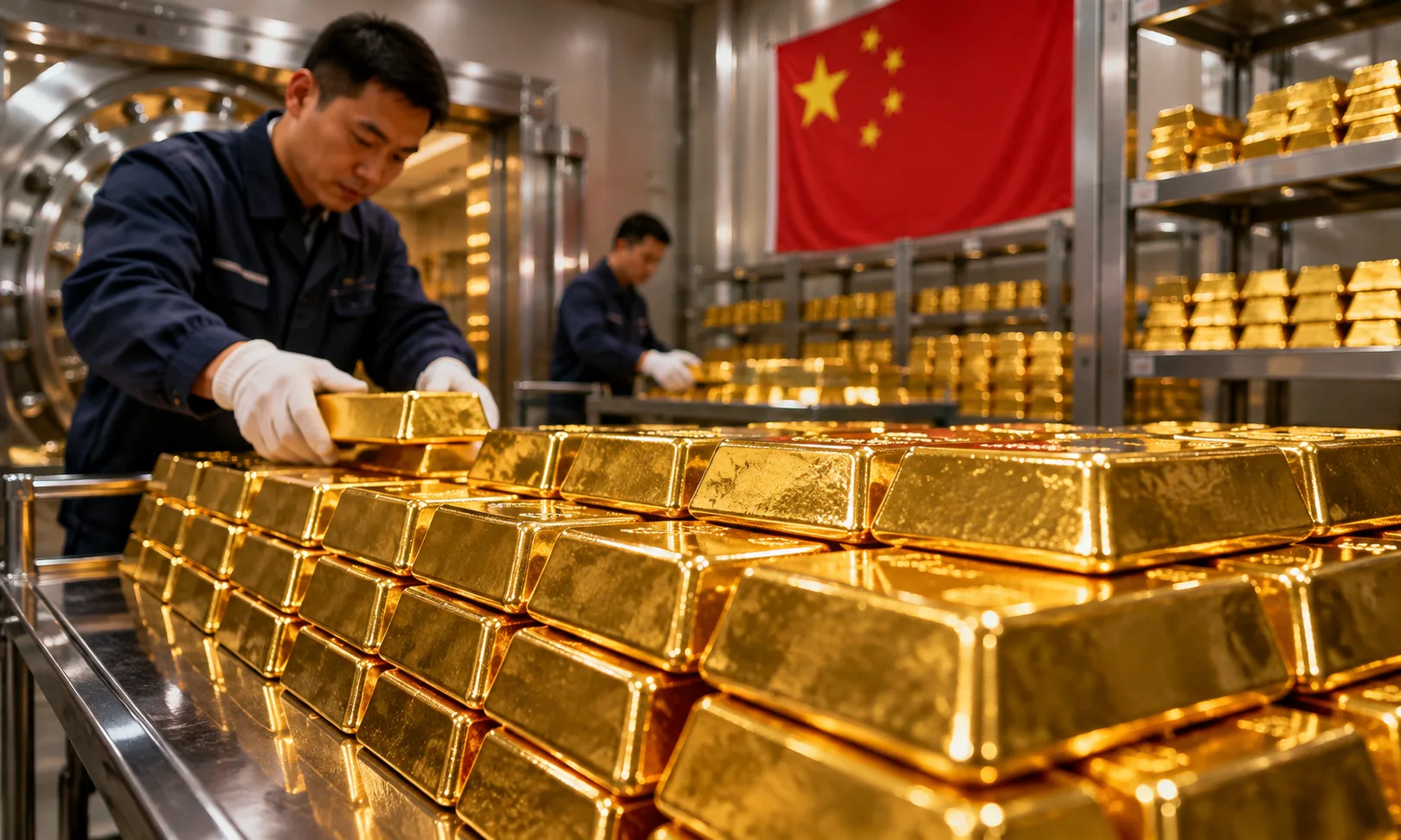
Gold and silver are sending a clear message to investors as expectations for U.S. interest rate cuts accelerate and leadership changes at the Federal Reserve come into focus. On Monday, gold climbed to its highest price in six weeks, while silver pushed to a fresh all-time high, fueled by shifting monetary policy expectations, a weakening U.S. dollar, and growing industrial demand.
The move reflects a sharp change in market psychology. Just weeks ago, traders were still debating whether rate cuts would arrive at all. Now, the market is rapidly pricing in easier financial conditions as early as December.
Gold Rallies as Traders Move Ahead of Fed
Spot gold rose 0.3 percent to $4,241.21 per ounce by mid-morning trading, after touching its strongest level since October 21. U.S. gold futures for December delivery gained 0.5 percent to $4,275.40, reinforcing the momentum building across precious metals markets.
The primary driver is renewed confidence that the Federal Reserve will begin cutting interest rates sooner than previously expected. Softer economic data and increasingly dovish commentary from Fed officials have shifted expectations dramatically over the past several weeks.
“Market participants are now starting to price in again a rate cut for the Fed in December, as well the expectation is the new FOMC chairman will be a dove… that is supporting investment demand for gold,” said UBS analyst Giovanni Staunovo.
Gold historically performs best when real interest rates are falling and the dollar weakens. With both conditions now forming, institutional investors are steadily reallocating capital into bullion and gold-linked assets.
Silver Explodes
Silver outperformed gold on the day, surging 1.3 percent to $57.12 per ounce after touching an all-time high of $57.86 earlier in the session. The rally reflects not only monetary policy expectations but also strengthening fundamentals on the industrial side of the market.
“Silver benefits from the same factor as gold, plus the expectation of further improving industrial demand next year.”
Unlike gold, silver is both a monetary and an industrial metal. It is extensively used in solar panels, electric vehicle components, medical devices, and advanced electronics. As manufacturing expectations stabilize and green energy investment continues globally, silver demand from industry remains a powerful tailwind.
This dual-demand nature gives silver a unique advantage in late-cycle economic environments where monetary easing collides with infrastructure and technology investment.
The Federal Reserve Pivots
Traders have aggressively increased bets on a December rate cut after a series of cooling inflation readings and softer labor market indicators. Comments from key policymakers helped accelerate this shift, including Federal Reserve Governor Christopher Waller and New York Fed President John Williams.
According to the CME FedWatch Tool, markets are now pricing in an 88 percent probability of a rate cut in December. That is a sharp rise from only weeks ago, when expectations were closer to a coin flip.
Lower interest rates directly support gold and silver because both metals are non-yielding assets. When bond yields decline, the opportunity cost of holding precious metals falls, making them more attractive to both institutional and retail investors.
Political Shifts Add Another Layer of Volatility
Adding to the uncertainty is the growing speculation around leadership at the Federal Reserve. White House economic adviser Kevin Hassett said on Sunday that he would be willing to serve as the next Fed chairman if selected. Like President Trump, Hassett has consistently supported lower interest rates to stimulate economic growth.
Treasury Secretary Scott Bessent also indicated that a Fed chair announcement could come before Christmas. Markets are increasingly viewing this leadership transition as another force that could tilt monetary policy in a more accommodative direction.
For gold investors, the perception of a dovish Fed leadership team is just as powerful as actual policy action. Anticipation alone is often enough to move capital into safe haven assets.
Dollar Weakness Amplifies Rally
The U.S. dollar slid to a two-week low alongside the surge in gold and silver. A weaker dollar makes commodities priced in greenbacks cheaper for foreign buyers, amplifying global demand.
This has been an important secondary catalyst behind the current rally. If the dollar continues to slide as rate cut expectations firm, gold and silver could see sustained upside rather than a short-term spike.
Historically, periods of declining U.S. dollar strength tend to coincide with extended runs in precious metals as global investors hedge both currency risk and geopolitical uncertainty.
Key Economic Data This Week
Investors are now watching several critical economic releases that could either reinforce or challenge the current rally. The November ADP employment report arrives Wednesday, followed by the core U.S. Personal Consumption Expenditures inflation data on Friday.
These releases will provide fresh insight into whether the economy is cooling fast enough to justify rapid rate cuts. Any downside surprise in employment or inflation would likely fuel another leg higher for both gold and silver.
Conversely, stronger-than-expected data could slow the rally but would need to materially change the Fed’s outlook to reverse the broader trend now forming.
Bullish Forecasts Extend Into Next Year
Analysts remain constructive on the outlook beyond the current surge. UBS continues to project significant upside for both metals over the next twelve months.
“We expect gold to rise to $4,500/oz next year (and) silver to rise to $60/oz next year,” said Staunovo.
Those targets imply additional gains even after the current breakout, suggesting that institutional investors view the present rally as part of a larger monetary cycle rather than a short-lived trade.
Short-term Price Action?
For investors, the move in gold and silver is not just about short-term price action. It reflects a broader shift in macroeconomic conditions that favors defensive assets and inflation hedges.
Three major forces are now aligning in favor of precious metals:
- Accelerating expectations for Federal Reserve rate cuts.
- A weakening U.S. dollar.
- Strong industrial demand for silver tied to energy, electrification, and technology.
Gold continues to serve as portfolio insurance against policy uncertainty, currency debasement, and geopolitical risk. Silver, meanwhile, offers both defensive exposure and growth-linked upside through its industrial applications.
Investors looking for exposure typically consider a mix of physical metals, gold and silver ETFs, and select mining stocks. Mining equities, in particular, often amplify price moves in the underlying metals during sustained bull markets.
Record Territory
Gold hitting a six-week high and silver breaking into record territory is not happening in a vacuum. The rally is being driven by real shifts in monetary policy expectations, weakening dollar strength, and forward-looking industrial demand.
With November inflation and employment data ahead, the next few trading sessions will be critical. But the broader trend is becoming increasingly clear. Markets are positioning for an easing cycle, and precious metals are once again asserting their role as both a hedge and an opportunity.
About Author