Meta’s aggressive push into artificial intelligence is running into an unexpected obstacle: its own workforce.
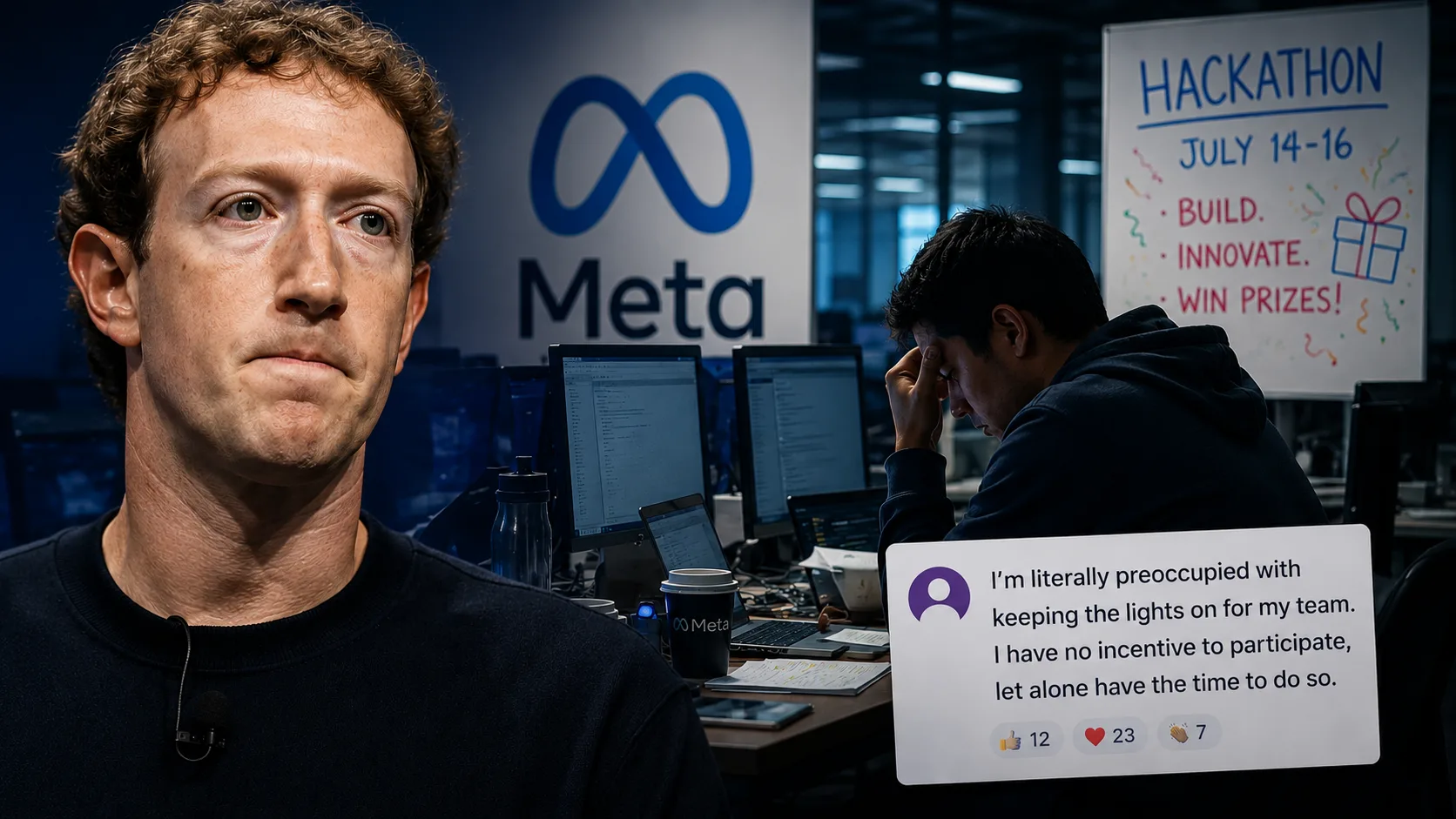
Just weeks after eliminating thousands of jobs and restructuring much of the company around AI, CEO Mark Zuckerberg is asking employees to spend three days building experimental AI projects in a companywide hackathon. Instead of generating excitement, the initiative has sparked frustration from workers who say they’re already overwhelmed.
For investors, the backlash highlights a growing challenge facing Big Tech’s AI race. While companies continue pouring billions into artificial intelligence infrastructure, success will ultimately depend on whether they can keep the talent building those systems motivated.
Meta’s AI Hackathon Is Landing at the Worst Possible Time
According to reports, Meta has scheduled a companywide AI hackathon for July 14 through July 16.
Hackathons have long been a staple of Silicon Valley culture. Engineers form teams, rapidly develop new ideas over several days, and compete for recognition or prizes. Historically, they have served as incubators for innovative products while helping boost employee morale.
This year’s event, however, comes under dramatically different circumstances.
On May 20, Meta eliminated roughly 8,000 positions while moving approximately 7,000 employees into new AI-focused roles as part of a sweeping corporate reorganization. The restructuring has fundamentally changed workloads across the company.
Instead of viewing the hackathon as an opportunity, many employees reportedly see it as one more obligation added to already unsustainable workloads.
One employee wrote in an internal discussion viewed by Wired:
“I’m literally preoccupied with keeping the lights on for my team. I have no incentive to participate, let alone have the time to do so.”
That sentiment appears to reflect a broader concern that the company’s AI transformation is stretching remaining employees too thin.
Layoffs Have Changed Meta’s Workplace Culture
The criticism extends far beyond the three-day event itself.
Employees reportedly say previous hackathons were enjoyable because teams had the bandwidth to experiment without sacrificing their core responsibilities. Today, many are responsible for larger workloads after layoffs while simultaneously adapting to new AI initiatives.
Some workers questioned whether hackathon participation could influence future performance reviews, turning what was intended as a voluntary event into another source of workplace pressure.
Others expressed concern that Meta no longer has the culture necessary for hackathons to succeed.
Creative side projects generally flourish when employees feel secure, supported, and have enough time to innovate. Following significant layoffs and rapid organizational changes, many workers instead describe an environment focused on meeting deadlines and preventing operational failures.
For management, that represents a difficult balancing act.
Meta wants employees experimenting with AI as quickly as possible. Employees, meanwhile, are focused on maintaining existing products while learning entirely new responsibilities.
Zuckerberg Admits Meta’s AI Transition Has Been Difficult
Zuckerberg himself has acknowledged the challenges.
In an internal memo reported earlier this month, he admitted the company’s AI transition has not been flawless.
“Given the complexity of these changes, we’ve made mistakes and will almost certainly make more.”
The Meta CEO also attempted to reassure employees by saying the company does not expect additional companywide layoffs during the remainder of 2026.
However, he stopped short of making firm guarantees.
“I don’t want to overpromise because the world is changing in ways that are out of our control,” Zuckerberg wrote.
Meta is also reportedly considering workplace improvements, including assigning more permanent desks and increasing budgets for team events and offsite gatherings in an effort to rebuild morale after months of disruption.
Some AI Assignments Are Drawing Sharp Criticism
Perhaps the strongest criticism has come from employees reassigned into Meta’s AI operations.
According to reports, some workers described their new responsibilities using unusually harsh language, saying the work feels repetitive, emotionally draining, and far removed from the software engineering projects they originally joined Meta to build.
Rather than developing new products, some employees are now focused on evaluating, labeling, and improving AI systems.
At a recent Instagram-wide meeting, Meta Chief Product Officer Chris Cox reportedly described recent months as both “difficult” and “brutal,” comparing the experience to “running a marathon in the middle of a hailstorm.”
Those comments suggest company leadership recognizes the strain employees have experienced during the AI transition.
Why Investors Should Pay Attention
While the internal complaints may appear to be a human resources issue, they also carry meaningful implications for shareholders.
Meta has committed tens of billions of dollars toward artificial intelligence infrastructure, custom chips, talent acquisition, and new AI-powered products. Investors have largely rewarded that strategy, viewing AI as the company’s next major growth engine.
However, large-scale technology transformations depend as much on execution as they do on spending.
Employee morale can influence productivity, innovation, and retention—particularly in highly competitive AI fields where experienced engineers remain in short supply.
If Meta succeeds in stabilizing its workforce while accelerating AI development, the company could strengthen its competitive position against rivals including OpenAI, Google, Microsoft, and Amazon.
If employee dissatisfaction persists, execution risks could become increasingly important for investors evaluating Meta’s long-term AI strategy.
The Bottom Line
Zuckerberg’s hackathon was intended to inject creativity into Meta’s AI transformation. Instead, it has become another reminder of how difficult large-scale corporate change can be.
Employees say they’re already struggling to manage heavier workloads after layoffs and restructuring. Asking them to devote additional time to optional AI projects has exposed deeper concerns about burnout, workplace culture, and the pace of Meta’s AI overhaul.
For investors, the episode underscores an important reality: winning the AI race isn’t simply about investing billions of dollars. It also requires keeping the people building that future engaged, productive, and willing to innovate.
About Author