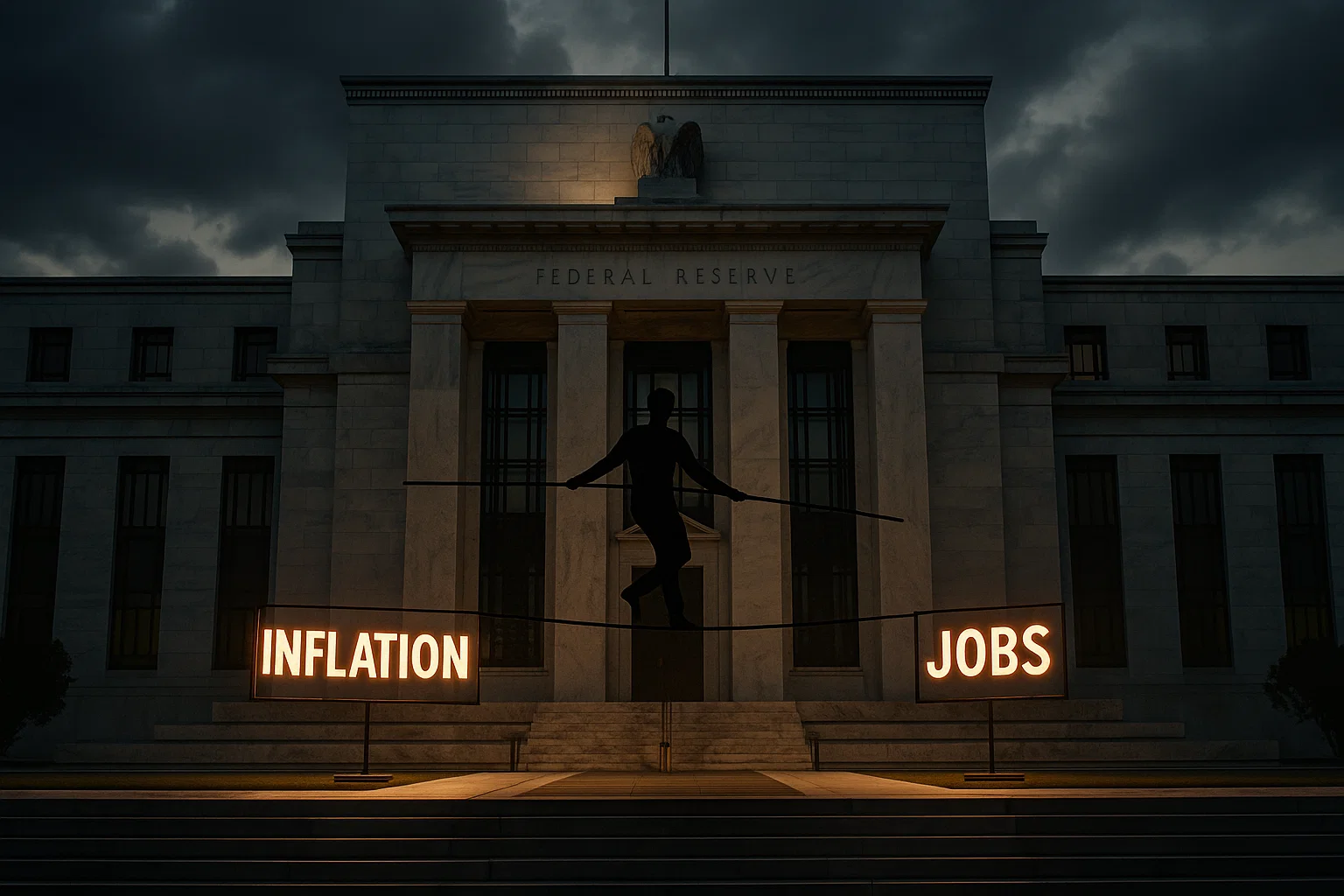
When markets say we are in a “worst kind of setup for the Fed,” they aren’t using hyperbole. Right now, the U.S. finds itself in the tough spot of sticky inflation and a weakening labor market — simultaneously. For investors, that’s a risky balancing act to navigate. The coming Fed meeting isn’t just another policy event; its choice will ripple across equities, bonds, housing, and sentiment.
What the Data is Showing
Here are the key economic signals:
| Indicator | Latest Reading / Change | Why It’s Concerning for the Fed |
|---|---|---|
| Consumer Price Index (CPI), August | +0.4% month-over-month; 2.9% year-over-year overall inflation. Business Insider | Above Fed’s 2 % target; shows inflation is re-accelerating. |
| Core CPI (excluding food & energy) | +0.3% m/m; ~3.1% y/y. Business Insider | Sticky underlying pressures, forcing Fed to think twice before cutting too fast. |
| Weekly jobless claims | 263,000 — highest in almost four years. AP News | Labor market is softening; rising layoffs signals weakening employment. |
| Past job growth revision | ~911,000 fewer jobs added over April 2024–March 2025 than previously reported. Reuters | Underlines that labor is weaker than earlier assumed. |
| Consumer inflation expectations (New York Fed Survey) | One-year ahead: 3.2% (up slightly); at 3-/5-year horizons: ~3.0%, ~2.9% stable. Federal Reserve Bank of New York | If people expect inflation to stay elevated, that can become self-fulfilling (in wages, pricing). |
So we have sticky inflation + slowing jobs market + inflation expectations not falling to complacency = a thorny policy problem.
The Policy Dilemma
The Federal Reserve has two primary mandates: price stability and maximum employment. Right now, each mandate is pulling in opposite directions:
- Inflation pressure from housing, shelter, food, and some goods (tariff-affected or otherwise) is elevated, above target.
- Labor market deterioration is becoming more visible: weaker hiring, more jobless claims, downward revisions of past employment.
The Fed has signaled that it will lean data-dependently. But when inflation is “sticky” and jobs are weakening, that can prompt hesitation: cut too early and risk reigniting inflation; wait too long and risk a sharper economic downturn.
Meetings like the one in September aren’t binary. The Fed is unlikely to pull the trigger on big changes unless the evidence convinces them the downturn in employment is broadening and inflation is clearly moderating in multiple sectors.
Scenarios
Here are plausible paths forward, and their likely implications for markets:
| Scenario | What the Fed Might Do | Market Reaction & Risk | Investor Takeaways |
|---|---|---|---|
| Base Case: modest cut in September | Fed cuts rates by 25 basis points. This is widely expected. Fox Business | Interest-rate sensitive sectors (real estate, credit firms) rally; bonds gain; risk assets appreciate somewhat. But inflation fears stay alive. | Use this as an opportunity to overweight sectors likely to benefit from rate cuts, but hedge against inflation risk (e.g., TIPS, commodities). |
| Cautious Fed: no cut, or hold off until more certainty | Inflation stays high; labor data stays weak but not catastrophic; Fed delays cutting. | Short-term bond yields stay elevated; equilibrium shifts such that riskier assets (tech) get more volatile. Investors may demand risk premiums. | Ensure portfolios have some dry powder; avoid overbidding on the “rate cut trade.” Defensive sectors could become more attractive. |
| Aggressive easing later in year | If employment weakens substantially and inflation abates, the Fed could commit to multiple cuts before year-end. | Big boost for growth stocks; yield curve steepens; carry trades pick up. Higher risk but higher reward. | Position selectively: identify names that benefit from lower rates and have resilient margins; avoid those hurt by weakening demand. |
What Should Investors Do?
Now, some specific moves or checks investors might consider, given the uncertainty.
- Stress test your portfolio for stagflation
Inflation + weak growth (stagflation) is not what’s ideal, but it’s possible. Bonds lose real value; equities that rely on high growth suffer. Consider:- Increasing exposure to inflation-hedged instruments (e.g., TIPS, real assets).
- Favoring companies with strong pricing power, low debt, stable cash flows.
- Monitor forward-looking inflation measures
Data to watch:- Consumer surveys (e.g. NY Fed expectations).
- Producer Price Indexes & core inflation excluding food/energy.
- Shelter and rent metrics (these tend to lag) because they exacerbate long-lasting inflation effects.
- Keep eye on labor market leading indicators
Claims, underemployment, revisions. Because weak employment tends to lag inflation in terms of policy. A sharp sudden drop would force a more dovish Fed. - Adjust fixed income exposure smartly
Long-dated treasuries are sensitive to inflation expectations. If inflation stays sticky, they perform poorly. Shorter duration, higher-quality credit may be safer. Floating rate vehicles could gain. - Be cautious in rate-sensitive sectors
Housing, REITs, utilities: rate cuts help; but if inflation or rates remain elevated, then financing costs and cap rates compress margins. Balance risk vs potential reward. - Maintain optionality
Given the risk of policy whiplash, keep some dry powder. Options, cash-rich names, or flexible strategies that can quickly rotate if signals shift.
Market Signals
There are signals worth rooting for (or warning investors about):
- Tariffs are gradually feeding into inflation. Some sectors—apparel, used cars, goods imported—are showing pass-through. If this effect continues, inflation won’t fall naturally.
- Consumer expectations remain elevated in the short term. That matters, because when people expect inflation, they demand higher wages, which feeds into firms’ pricing.
- Wholesale / producer inflation easing in some categories is a hopeful sign. The PPI surprised to the downside in August. That could precede relief for CPI.
These signals create a possible inflection: if we see two or more months of easing PPI + falling or flat core CPI + job claims rising, then the Fed may feel safer doing more than just one cut.
The Big Picture
- Valuation sensitivity is high right now. Growth valuations are vulnerable if inflation or interest rates surprise on the upside. Even modest rate hike fear can compress multiples, especially for long-duration assets.
- Credit spreads and default risks could widen if jobs deteriorate more broadly. Companies that borrowed at low rates, that have consumption-based revenue, or cycle exposure will be more exposed.
- Global capital flows could shift. If the U.S. persists with sticky inflation while other economies cut, dollar strength or weakness will matter. Emerging markets are particularly sensitive.
- Policy credibility is on the line. The Fed has fought hard to push inflation down; cutting prematurely risks a reversal. Investors are pricing in cuts, which may be partially priced in already. If the Fed disappoints, expect volatility.
What’s Likely
- A 25 basis point cut in September is still the most probable outcome, assuming nothing dramatic tilts the scale.
- But cuts beyond that will depend heavily on how the inflation data evolves in the next month or two, especially core inflation and inflation expectations.
- The labor market is slipping, but it’s not yet collapsed. The Fed will likely focus on whether weakening is broadening beyond sectors.
- Investors who assume a smooth path of multiple rate cuts are optimistic; risk that cuts are delayed, or only modest, remains significant.
Final Thoughts
Yes, this is the “worst kind of setup for the Fed”, sticky inflation that refuses to fall quickly, paired with labor market softening that raises risk of a downturn. For investors, that means being nimble, hedged, and very observant of data flow.
You don’t want to be caught flatfooted if inflation reaccelerates or if jobs collapse more broadly. Position for multiple scenarios rather than betting on just one.
About Author