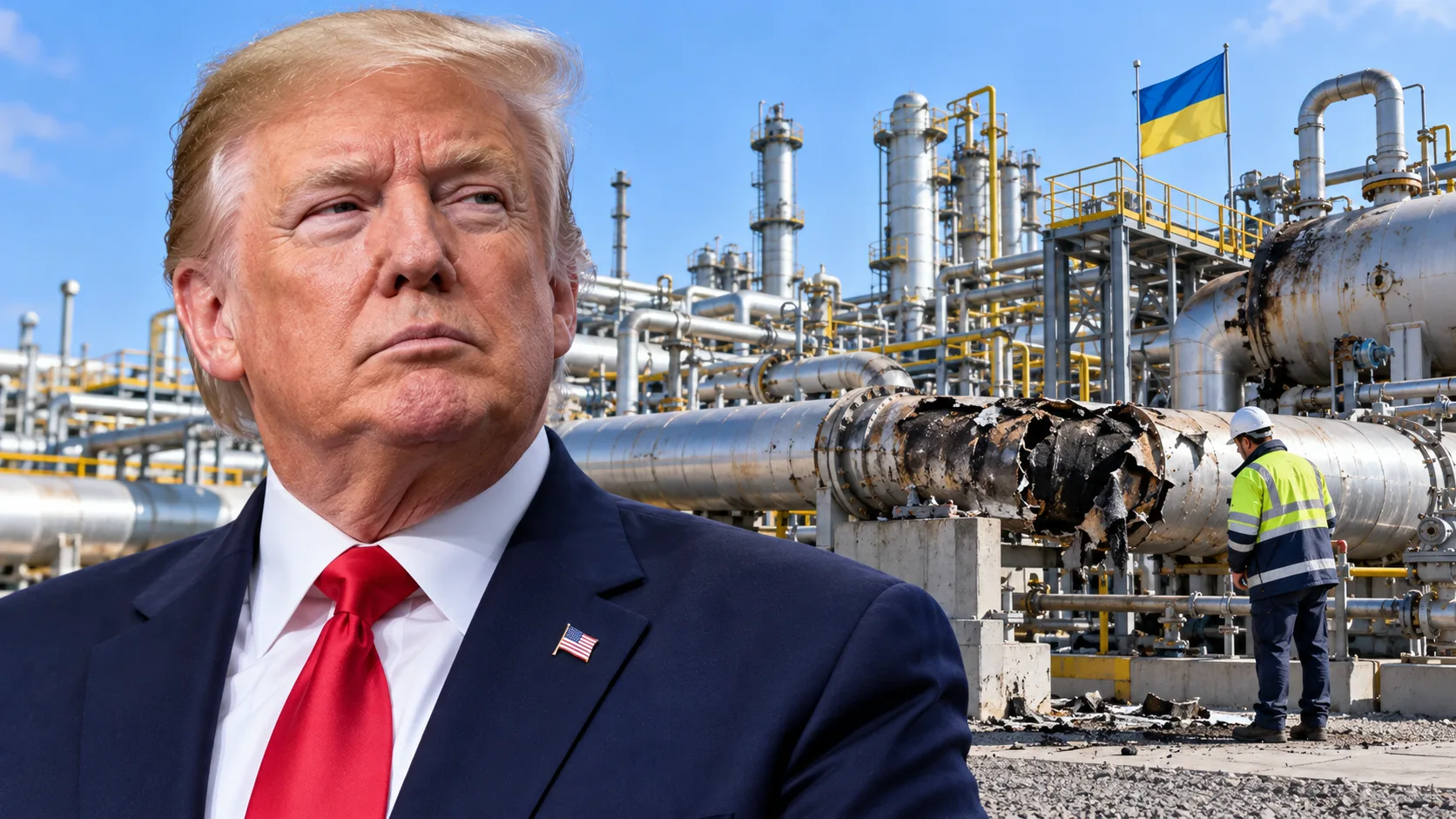
Reports that President Donald Trump has asked the European Union to impose tariffs of up to 100% on China and India for their Russian oil purchases are sending ripples through global markets. The Financial Times first broke the story, later confirmed to CNBC. The White House has yet to comment publicly, but two sources familiar with the meeting confirmed Trump made the proposal during talks with senior U.S. and EU officials in Washington.
The administration has signaled that the U.S. would “mirror” any tariffs the EU imposes on the two countries. Asking Europe to take the lead allows Washington to apply pressure on Russia’s energy customers while avoiding a direct escalation with Beijing or New Delhi.
Europe’s Wary Response
The European Commission declined to disclose meeting details, citing confidentiality. A spokesperson told CNBC: “The EU has engaged with all relevant global partners, including India and China, in the context of its sanctions enforcement efforts. This engagement will continue.”
Brussels pointed to its forthcoming 19th sanctions package against Moscow, highlighting new tools “which allow us to target circumvention through third countries” and called the U.S. a “crucially important partner” in its pressure campaign on Russia’s war economy. But EU officials appear hesitant to burn bridges with China and India, particularly as Brussels pursues a trade deal with New Delhi.
Timing and Trade Deal Conflicts
The timing of Trump’s request has raised eyebrows. Washington is actively negotiating a trade deal with India, and the U.S. already imposes a 50% tariff on Indian goods—including a 25% punitive duty tied to Russian oil purchases. India has labeled the tariffs “unfair, unjustified and unreasonable” while criticizing Western hypocrisy for continuing limited trade with Russia.
Ian Bremmer, founder of Eurasia Group, told CNBC that the latest demand is “hard to square with Trump’s efforts to get to a trade deal with India and China, which he prioritizes over getting a ceasefire in Ukraine (let alone things like Transatlantic collective security and deterrence).” Bremmer added, “It looks more like an attempt to shift responsibility for a stronger response to Europe, creating political cover for American inaction on the sanctions front while avoiding a direct hit to U.S.-China relations.”
Analysts: “Europe Should Say No”
Experts believe the EU is unlikely to comply. Bill Blain, market strategist and founder of London-based Wind Shift Capital, wrote in his Morning Porridge newsletter: “No one in Europe believes tariffs are an effective trade policy tool … Europe would prefer diplomacy to address issues, rather than outright trade war.”
He concluded: “Europe’s response should be ‘no.’ Trump kicked the hornets nest – let him deal with the consequences. But let’s see what happens.”
Bremmer of Eurasia Group echoed this sentiment, noting that Europe has struggled to fully wean itself off Russian energy and is unlikely to cut off its top goods import supplier. “Everyone knows if the Europeans haven’t been able to wean themselves off Russian energy themselves more than 3.5 years into the war, they sure as hell aren’t going to cut themselves off from their top goods import supplier,” he said.
Russia Connection: EU Still Importing Energy
The EU’s complicated relationship with Russia underpins its reluctance. According to European Commission data, bilateral trade with Russia totaled €67.5 billion ($78.1 billion) in 2024, including €35.9 billion in imports dominated by fuel and mining products and €31.5 billion in exports.
Russia’s share of EU pipeline gas imports dropped from over 40% in 2021 to about 11.6% in 2024, with Moscow accounting for less than 19% of total EU pipeline gas and LNG imports last year. But the bloc has not completely eliminated Russian LNG purchases—something Washington has encouraged, offering U.S. LNG as an alternative.
Trump has touted the framework trade deal signed with the EU, which imposes 15% tariffs on the bloc’s exports to the U.S. and includes European commitments to purchase U.S. LNG, oil and nuclear energy products. The administration expects offtake valued at $750 billion over the next three years. U.S. Secretary of Interior Doug Burgum told CNBC the administration aims to drive up the U.S.’s market share of Europe’s energy imports.
Chart: EU–Russia Trade Decline
Below is a snapshot of the EU’s imports of Russian energy products before and after the Ukraine war:
| Year | Russia’s Share of EU Pipeline Gas Imports (%) | Russia’s Share of EU LNG + Pipeline Gas Imports (%) |
|---|---|---|
| 2021 | 40+% | 40+% |
| 2024 | 11.6% | <19% |
Source: European Commission data compiled by Global Market News.
This chart illustrates the steep decline in Russian gas dependency—but also highlights that Europe still relies on Moscow for a portion of its energy needs, complicating any attempt to punish other nations for buying Russian oil.
Investor Implications: Where the Risks and Opportunities Lie
Trade Policy Risk
If the EU were to adopt Trump’s proposed tariffs, supply chains across multiple sectors—from electronics and automotive to pharmaceuticals and textiles—would face significant disruption. Even without implementation, the threat alone may prompt companies to reconsider sourcing strategies and hedge currency and trade risks.
Energy Market Volatility
Tariffs designed to curb Russian oil flows to India and China could distort global energy markets, shipping costs and insurance premiums. Firms involved in oil transport, refining and trade compliance would be directly affected.
Currency and Emerging Market Exposure
Retaliatory tariffs or capital flow restrictions from India and China could add volatility to emerging market currencies. EU inflation risks could rise, potentially influencing ECB policy and bond yields.
Opportunities in Alternative Markets
Supply chain diversification to Southeast Asia, Latin America or Eastern Europe could accelerate. U.S. LNG exporters, renewables developers and nuclear technology providers may benefit if Europe increases its purchases of non-Russian energy.
Compliance and Risk Services
As sanctions and tariffs proliferate, companies offering compliance software, trade logistics solutions and regulatory consulting stand to gain.
Key Takeaways for Investors
- Don’t assume a done deal: EU political and legal hurdles make sweeping 100% tariffs unlikely in the near term, but even partial measures can have outsized market impact.
- Map your exposure: Identify supply chain, customer and input risks tied to China and India and run scenarios at 25%, 50% and 100% tariff levels.
- Watch energy and shipping costs: Firms dependent on Russian oil-linked supply chains could face new compliance burdens and costs.
- Diversify early: Moving supply chains and customer bases now could help mitigate future shocks.
- Follow the negotiations: Diplomatic headlines can move markets even without formal policy action. Keep tabs on EU–India trade talks, EU internal debates and reactions from Beijing and New Delhi.
Bold and Confrontational
Trump’s push for the EU to slap 100% tariffs on India and China is bold and confrontational, underscoring how trade policy has become a frontline tool of geopolitics. Whether Europe goes along or not, the episode is a clear signal to investors: policy risk is rising, supply chains are vulnerable, and energy market shifts are accelerating. Those who act now—by hedging, diversifying and investing in compliance and alternative sourcing—will be better positioned for whatever comes next.
About Author